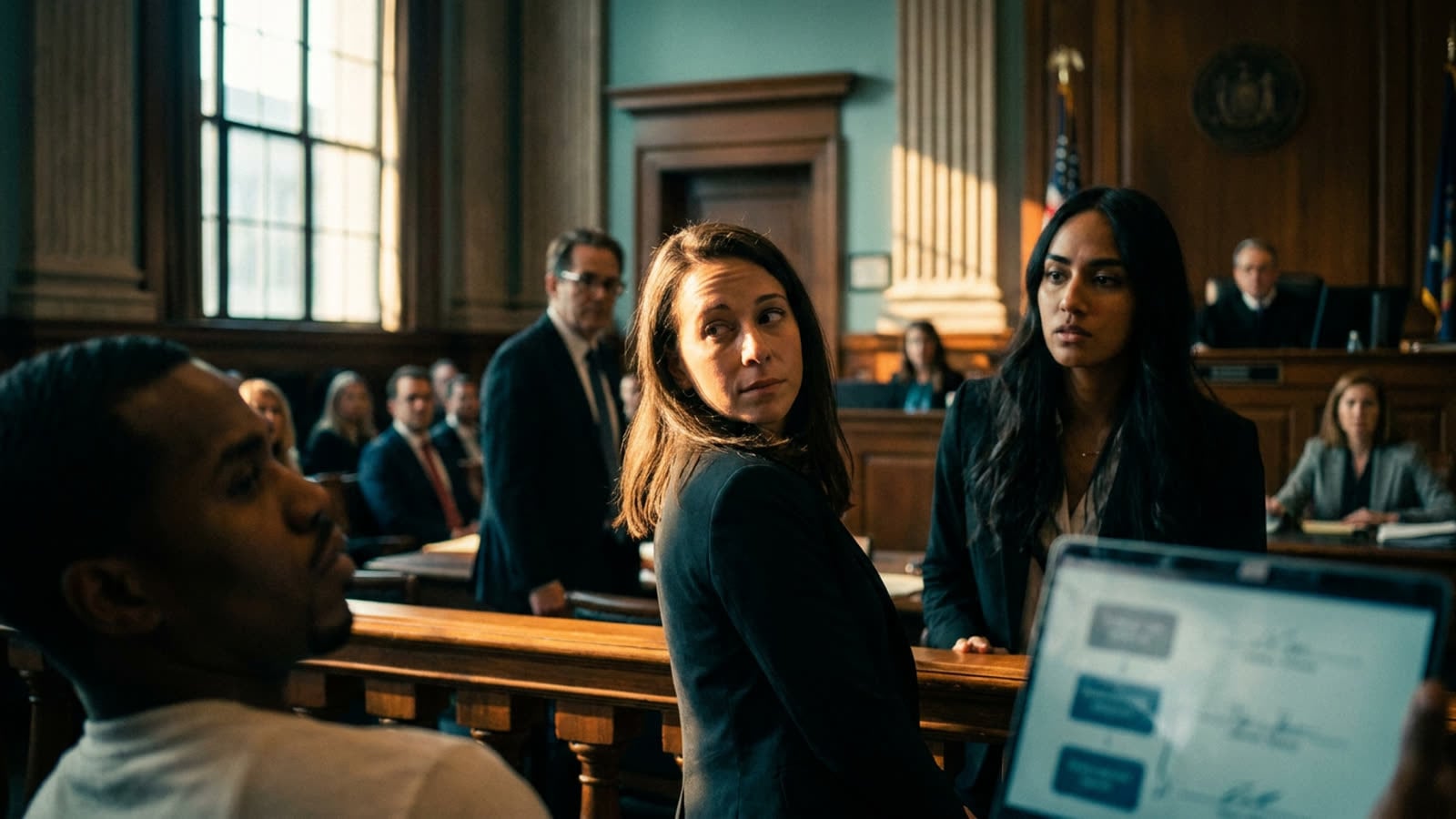
Every sprawling celebrity legal drama eventually finds its Ghislaine Maxwell figure—the trusted deputy whose proximity to power becomes its own kind of indictment in the court of public opinion. For Sean "Diddy" Combs, that person is Kristina Khorram, the chief of staff who spent years as the operational backbone of his entertainment empire and now finds herself at the uncomfortable intersection of loyalty, liability, and the public's insatiable appetite for understanding how alleged misconduct persists inside gilded walls.
Khorram's emergence as a figure of intense public interest speaks to something beyond prurient curiosity about celebrity scandal. It reflects a genuine cultural reckoning with the infrastructure of fame—the assistants, managers, lawyers, and fixers who constitute the invisible architecture around powerful people. These individuals occupy a peculiar moral territory: close enough to witness everything, dependent enough to rationalize anything.
The anatomy of a right hand
What did Khorram know, and when did she know it? The question has become a refrain in coverage of the Combs case, though it somewhat misses the point. The more interesting inquiry concerns the structural incentives that govern relationships between celebrities and their inner circles. Chiefs of staff to entertainment moguls exist in a compensation structure that rewards discretion above all else. Their value proposition is precisely their willingness to handle matters that cannot be discussed, to smooth over incidents that never officially occurred.
This is not unique to hip-hop or to Combs specifically. The entertainment industry has long operated on a model where senior assistants and executives function as both enablers and potential witnesses, their silence purchased through generous salaries, their complicity ensured through the knowledge that their careers depend entirely on one person's continued success and goodwill.
The testimony question
Whether Khorram cooperates with federal prosecutors remains unclear, but her potential value as a witness is obvious. Chiefs of staff control calendars, manage communications, and often serve as the single point of contact between their principals and the outside world. They know which calls were made, which meetings were scheduled, which requests were fulfilled. In an era before encrypted messaging became standard, they frequently had access to email accounts and phone records that could prove devastating in court.
The federal case against Combs involves allegations of racketeering, sex trafficking, and transportation for prostitution—charges that necessarily implicate organizational behavior rather than isolated incidents. Prosecutors in such cases typically seek to establish patterns, and patterns require witnesses who observed operations over extended periods. A longtime chief of staff represents exactly that kind of institutional memory.
Our take
The fascination with Khorram reflects our collective discomfort with the reality that celebrity misconduct rarely happens in isolation. It requires infrastructure, facilitation, and the active participation of people who could, theoretically, have said no or walked away. That most don't speaks to the intoxicating nature of proximity to power and the genuine difficulty of extracting oneself from lucrative arrangements built on willful blindness. Khorram may ultimately prove to be a victim, a villain, or something more complicated—a person who made a series of small compromises that accumulated into something indefensible. That ambiguity is precisely why she's become the trial's most compelling supporting character.