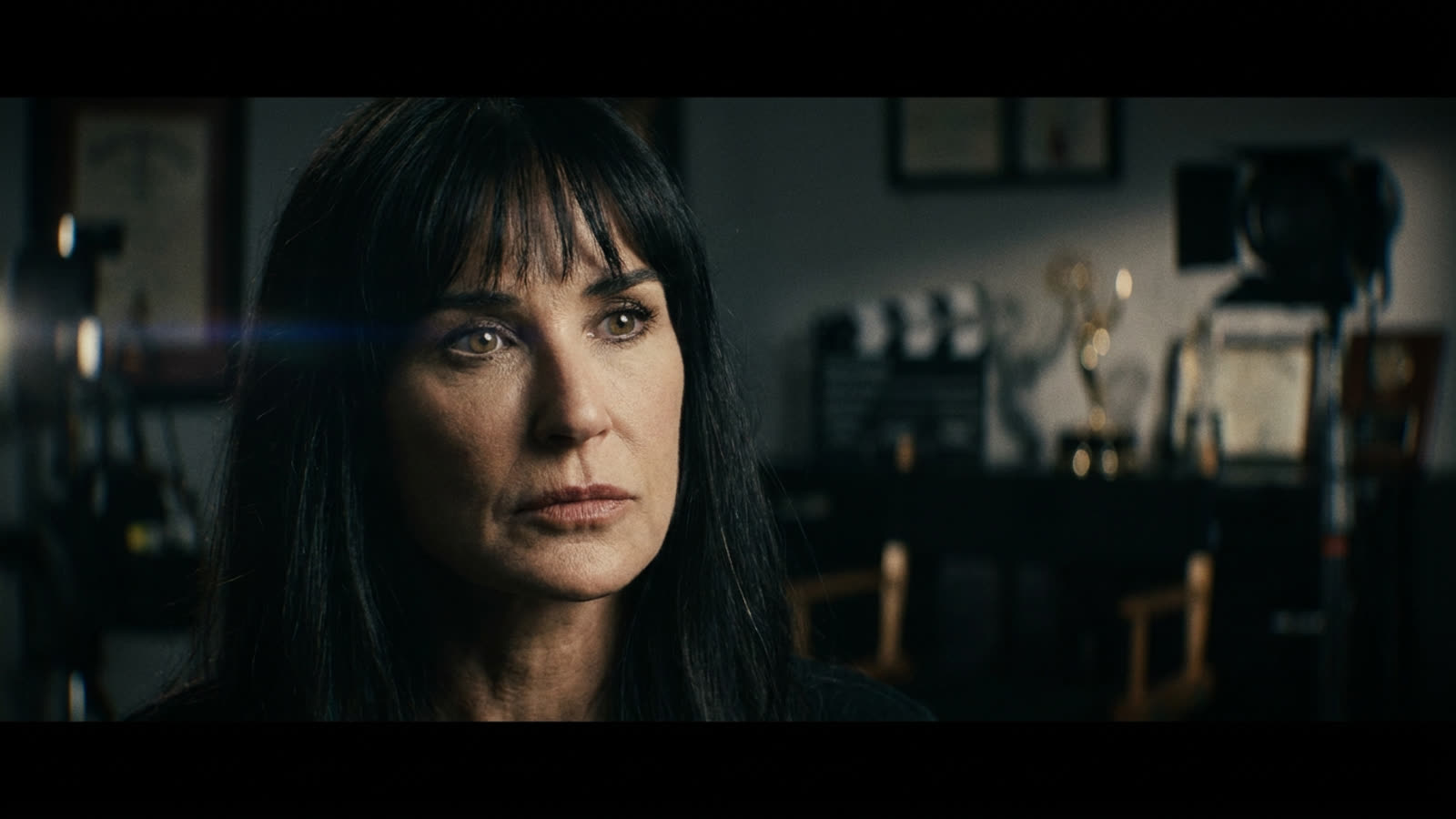
At the Cannes Film Festival jury press conference on Tuesday, Demi Moore offered what sounded like pragmatic wisdom about artificial intelligence in entertainment: "AI is here," she said, and Hollywood should "find ways in which we can work with it." To fight it, she added, "is to fight a battle we will lose."
The statement landed with the soft thud of conventional wisdom. Of course AI is here. Of course resistance is futile. But Moore's framing—and her acknowledgment that the industry is "probably not" doing enough on regulation—exposes a deeper confusion that has paralyzed Hollywood's response to generative technology since ChatGPT first started writing passable dialogue in late 2022.
The collapse of the resistance narrative
Two years ago, AI was the central grievance of the SAG-AFTRA and WGA strikes. Union leaders warned of digital resurrections, voice cloning, and algorithmic screenwriters. The contracts that ended those disputes included guardrails—consent requirements, disclosure mandates, compensation floors. At the time, these felt like hard-won victories.
They now look like speed bumps. Studios have quietly integrated AI into pre-visualization, script coverage, and post-production workflows. Smaller productions, operating outside guild jurisdiction, use generative tools with abandon. The technology has improved faster than anyone anticipated, and the enforcement mechanisms negotiated in 2023 were designed for a version of AI that no longer exists.
Moore's comments reflect this new reality. The question is no longer whether Hollywood will use AI, but whether anyone will shape how.
The regulation gap
When Moore says the industry probably isn't doing enough on regulation, she's being generous. Hollywood has done almost nothing. The major studios have lobbied against state-level AI disclosure laws. The guilds, having spent their political capital on the 2023 contracts, have been cautious about reopening negotiations. And the federal government, consumed by election-year paralysis, has produced no meaningful framework for synthetic media.
The European Union's AI Act, which takes full effect next year, will impose some requirements on content generated or manipulated by AI systems. But American studios have shown little interest in voluntarily adopting EU-style transparency standards for domestic releases. The result is a patchwork: stricter rules for films distributed in Europe, a free-for-all everywhere else.
What "working with AI" actually means
Moore's call for collaboration sounds reasonable until you ask: collaboration on whose terms? For performers, the existential questions remain unanswered. Who owns the training data when an AI learns to mimic your voice? What happens when a studio can generate a photorealistic performance without booking a single day on set? How do you negotiate residuals for a role that never required you to show up?
These aren't hypotheticals. They're already happening in video games, commercials, and low-budget streaming content. The theatrical film industry has been slower to adopt fully synthetic performances, but the economic logic is inexorable. Every efficiency gain for studios is a job that doesn't exist for a human.
Our take
Moore is right that fighting AI is probably a losing battle. But "finding ways to work with it" is not a strategy—it's a surrender dressed as sophistication. Hollywood's creative workforce needs something more concrete: portable rights to their likenesses, mandatory disclosure when AI is used in production, and compensation structures that account for the value of human performance even when that performance is digitally synthesized. The industry's current approach—vague optimism about collaboration, quiet resistance to regulation—serves no one except the companies that benefit from ambiguity. The battle may be lost, but the terms of defeat are still being written.