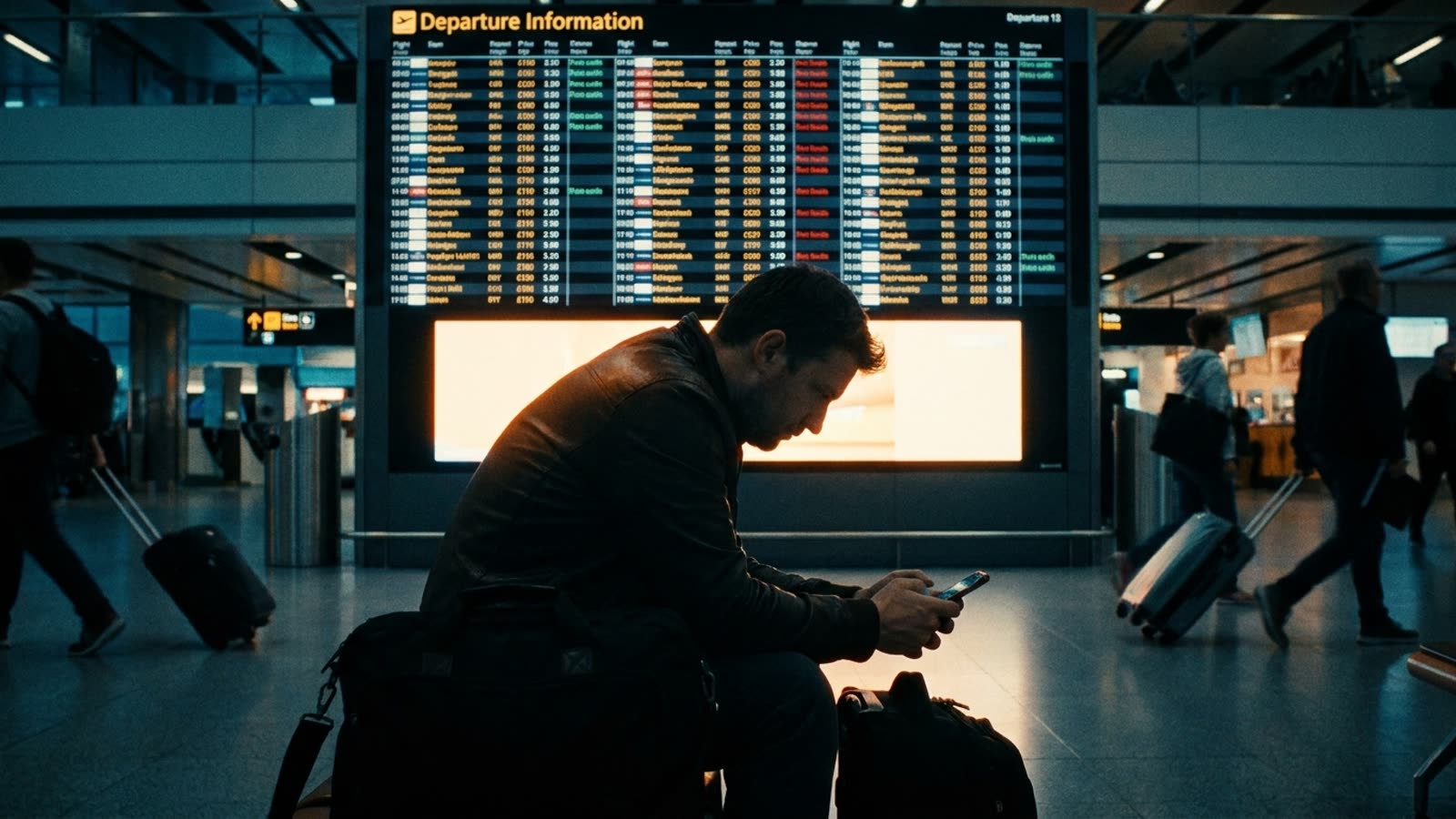
The person sitting next to you on your flight likely paid a completely different price for their ticket. Not just a little different — potentially hundreds of dollars more or less. This isn't a bug in the system; it's the entire point. Airlines have perfected a form of economic discrimination that would be illegal in almost any other industry, and they've convinced us it's normal.
The algorithm knows you're desperate
Airline pricing systems update fares up to 250,000 times per day. These aren't random fluctuations — they're calculated responses to dozens of variables that have nothing to do with the actual cost of flying you from point A to point B. The algorithms track search patterns, booking velocity, competitor pricing, historical demand curves, even local events and weather forecasts.
When you search for a flight, you're not just checking prices — you're feeding the beast. Airlines use sophisticated revenue management systems that monitor search queries to gauge demand. Clear your cookies all you want; they're tracking demand patterns at the route level, not just individual browsers. If searches for a particular route spike, prices rise automatically, sometimes within minutes.
The most cynical part: airlines deliberately hold back cheaper seats even when the plane is empty. Revenue management teams would rather fly with empty seats than sell them too cheaply too early. They're betting on business travelers booking last-minute at premium prices.
Why Tuesday at 3pm became a myth
The old wisdom about booking on Tuesday afternoons or exactly 54 days before departure is largely useless now. Modern airline pricing is far too sophisticated for simple rules. Instead, airlines use a practice called "fare buckets" — invisible inventory categories that have nothing to do with cabin class.
A typical domestic flight might have 15 different fare buckets in economy alone. As cheaper buckets sell out, only expensive ones remain. But here's the twist: airlines can shift seats between buckets instantly. That $200 seat that disappeared while you were entering your credit card info? It didn't sell — it was likely just moved to a higher bucket.
The most extreme version happens with "married segment logic." Airlines charge more for nonstop flights than connections, even when the nonstop is cheaper to operate. They know business travelers will pay premiums to avoid connections. Some carriers take this further — they'll charge more for a connecting flight if they detect you're using it to reach a popular final destination versus a less desirable one.
The house always wins
Airlines have turned themselves into casinos where the house edge is variable and hidden. They've mastered first-degree price discrimination — charging each customer the maximum they're willing to pay. It's economically efficient in the textbook sense, extracting maximum revenue from fixed capacity.
Basic economy fares were the masterstroke. By creating an intentionally degraded product — no seat selection, no changes, board last — airlines gave themselves cover to raise "regular" economy prices while pointing to basic as the affordable option. It's a psychological anchor that makes standard economy feel reasonable even as prices soar.
Our take
Airline pricing is what happens when perfect price discrimination meets weak competition and high barriers to entry. It's economically rational, technologically impressive, and ethically questionable. The algorithm doesn't care about fairness — it cares about extracting maximum revenue from each seat. The real tragedy isn't that airlines do this; it's that they've trained us to accept it as normal. In any other industry, charging different prices for identical products based on when someone books or how desperate they seem would spark outrage. In aviation, we call it Tuesday.