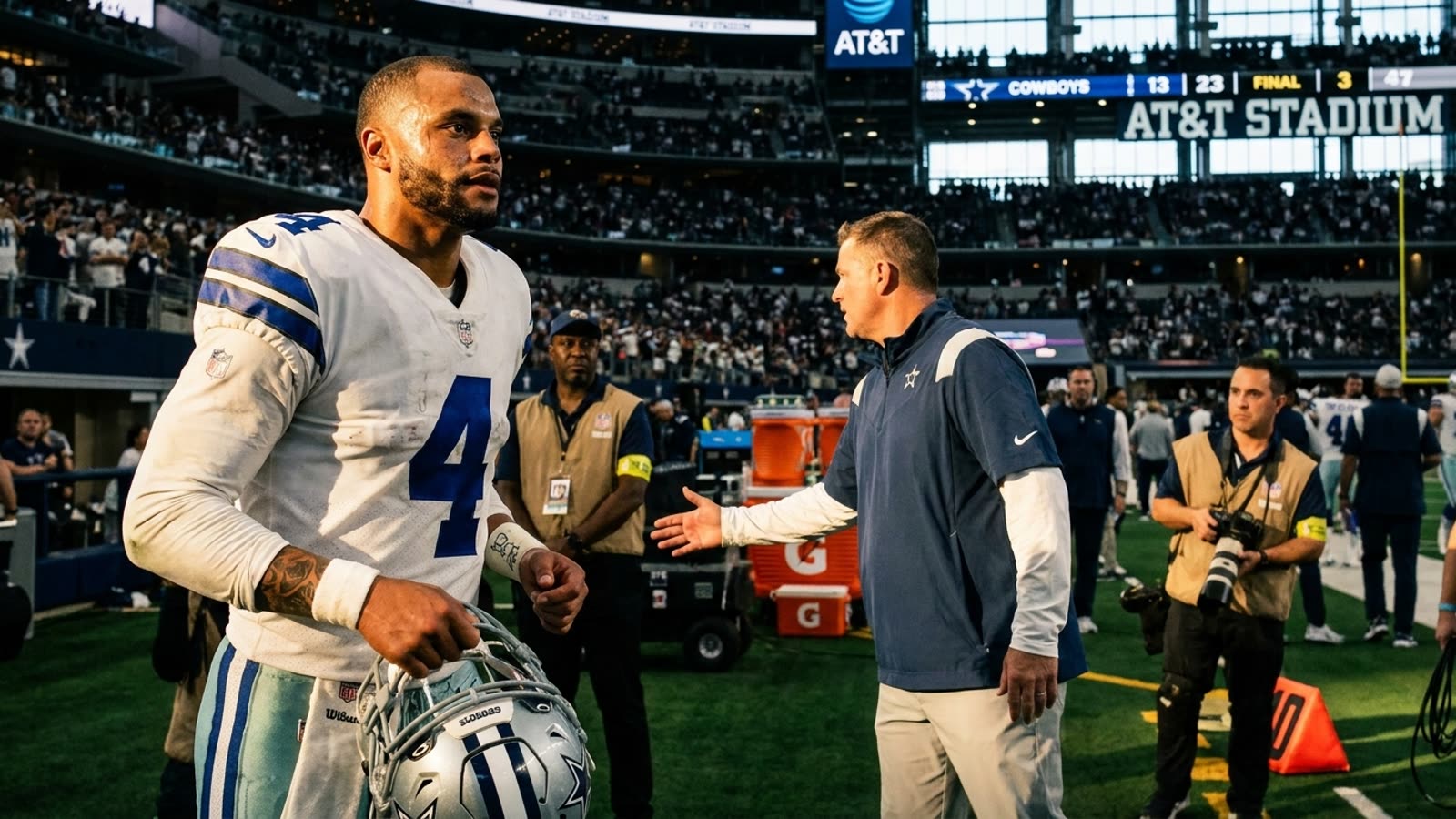
Dak Prescott, three-time Pro Bowler and the highest-paid player in NFL history by annual average, found himself on the receiving end of an unusual postgame critique Sunday: a stadium worker at AT&T Stadium reportedly called him out after the Cowboys' latest home defeat. Prescott, speaking to reporters Tuesday, made clear he was "irked" by the incident—a rare public acknowledgment of friction between a franchise quarterback and the infrastructure around him.
The details remain vague, but the optics are brutal. When you're losing at home and the people who work the building feel comfortable enough to voice their disappointment directly to your face, something has broken down. This is not a heckler in the stands or a hot-take artist on talk radio; this is someone employed by the organization, crossing a line that usually holds even in the worst of times. That it happened at all suggests the Cowboys' internal culture has frayed in ways that go beyond wins and losses.
The context makes it worse
Dallas entered 2026 with Super Bowl expectations, a $240 million quarterback extension for Prescott inked in 2024, and a roster theoretically built to contend. Instead, they are 3-3, with home losses piling up and the offense sputtering in key moments. Prescott's numbers are solid—he is not the problem, exactly—but he is also not lifting the team past its structural issues. The stadium worker's comment, however inappropriate, likely reflects a frustration shared by much of the fanbase: this team was supposed to be better, and the man under center was supposed to make it so.
The Cowboys have long operated as a soap opera, with Jerry Jones ensuring that every internal tension eventually becomes public. But this incident is different. It is not a calculated leak or a strategic media play; it is a spontaneous moment of disrespect from someone who should be invisible. That Prescott felt compelled to address it at all—rather than brush it off—suggests it stung more than he would like to admit.
Our take
Prescott has every right to be annoyed, but the bigger story is what this moment reveals about the Cowboys' trajectory. When the help staff starts chirping, it means the losing has metastasized into the walls. Dallas has two choices: win enough games in the next month to reset the narrative, or watch the entire operation spiral into the kind of dysfunction that ends coaching tenures and front-office careers. Prescott's irritation is understandable. His urgency should be higher.