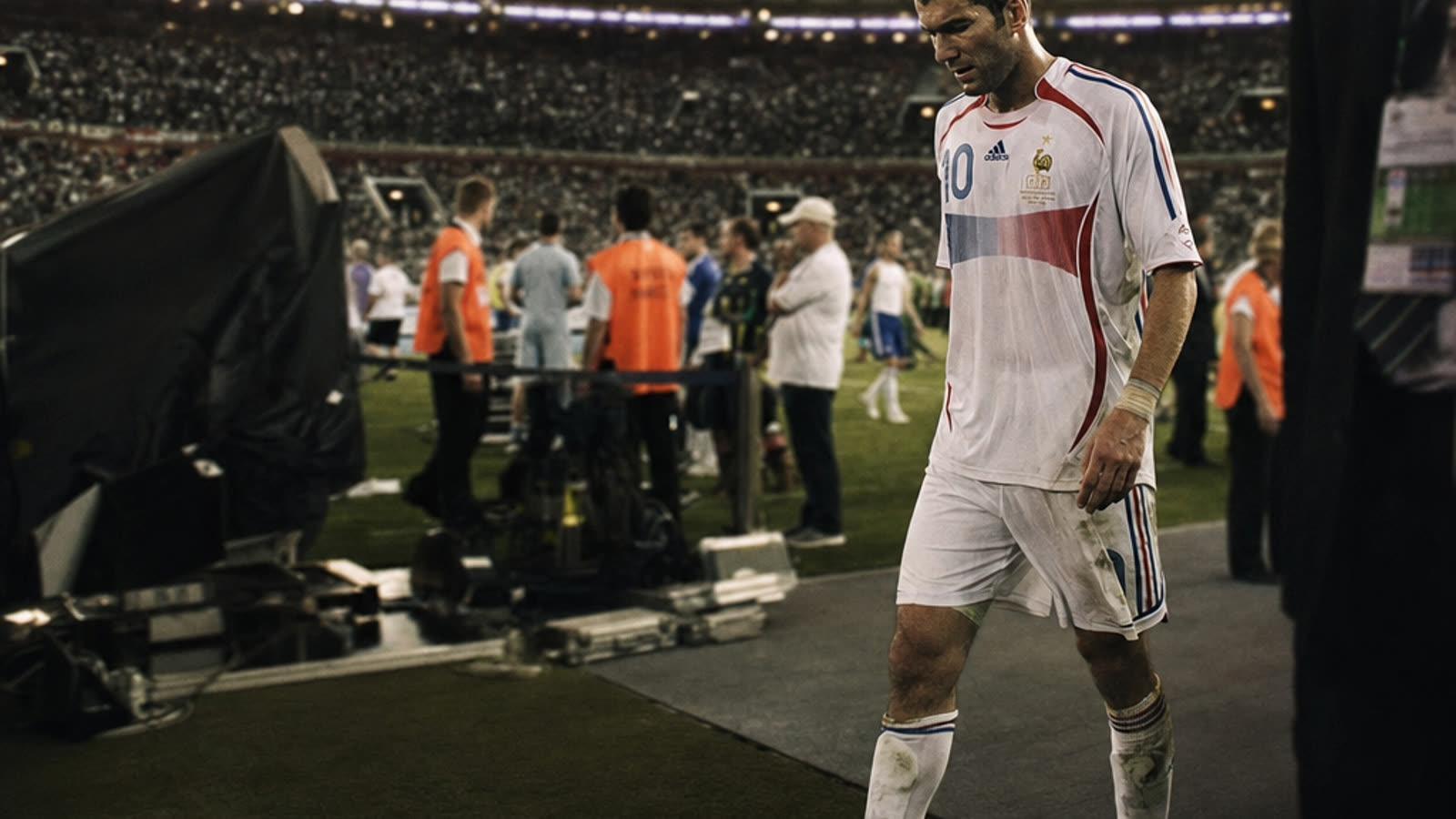
In the one hundred and tenth minute of the 2006 World Cup final, with the score level and penalties looming, Zinedine Zidane walked away from the ball, turned, and drove his forehead into Marco Materazzi's chest. The red card that followed ended not just a match but an entire career—the most decorated French footballer of his generation departing the grandest stage in the ugliest possible fashion. It was, and remains, sport's purest distillation of the gap between what we expect from our heroes and what they actually are.
The facts are well-established. Materazzi said something. Zidane reacted. Italy won on penalties. France mourned. But the facts have never been the point. What makes the headbutt endure is its refusal to resolve into a clean narrative.
The provocation question
Materazzi eventually confirmed he insulted Zidane's sister, though the exact words have shifted across retellings. For years, this framing offered a kind of exculpation: Zidane was defending family honor, a hot-blooded Mediterranean code that audiences could romanticize even while disapproving. Yet this reading demands we accept that a thirty-four-year-old man who had navigated the pressure cookers of Real Madrid, Juventus, and three World Cups somehow lost all impulse control over a verbal slight he had surely heard variations of throughout his career. The provocation was real. The response was still a choice.
Greatness as volatility
Zidane's career was never the smooth arc of a Messi or a Federer. He collected red cards the way others collected assists. The same intensity that produced the volley against Leverkusen—still the most beautiful goal in Champions League final history—also produced stamps, headbutts, and petulant dismissals. To watch Zidane at his peak was to watch someone operating at a frequency that could tip into genius or chaos depending on variables invisible to everyone, possibly including himself. The Berlin headbutt was not an aberration; it was the logical extreme of a temperament that had always been his gift and his liability.
Why it still matters
Modern football has grown adept at managing its narratives. Media training, PR handlers, and the relentless polish of social media have made genuine spontaneity rare. The headbutt endures partly because it was so unmanaged—a moment of pure, inexplicable humanity broadcast to a billion people. It also endures because it denies closure. Zidane has never fully explained it, never apologized in a way that satisfied, never allowed the incident to be packaged into a redemption story. He simply walked past the trophy, down the tunnel, and into retirement.
Our take
We have spent two decades trying to decide whether the headbutt diminished Zidane's legacy or somehow completed it. The honest answer is that it did both, and that is precisely why it still haunts us. Sport promises that talent and discipline will be rewarded, that the final act of a great career should be triumphant or at least dignified. Zidane's exit offered neither. It offered only the uncomfortable truth that the same fire that makes someone extraordinary can consume them at the worst possible moment. That is not a lesson anyone wanted from a World Cup final, which is exactly why we cannot stop returning to it.