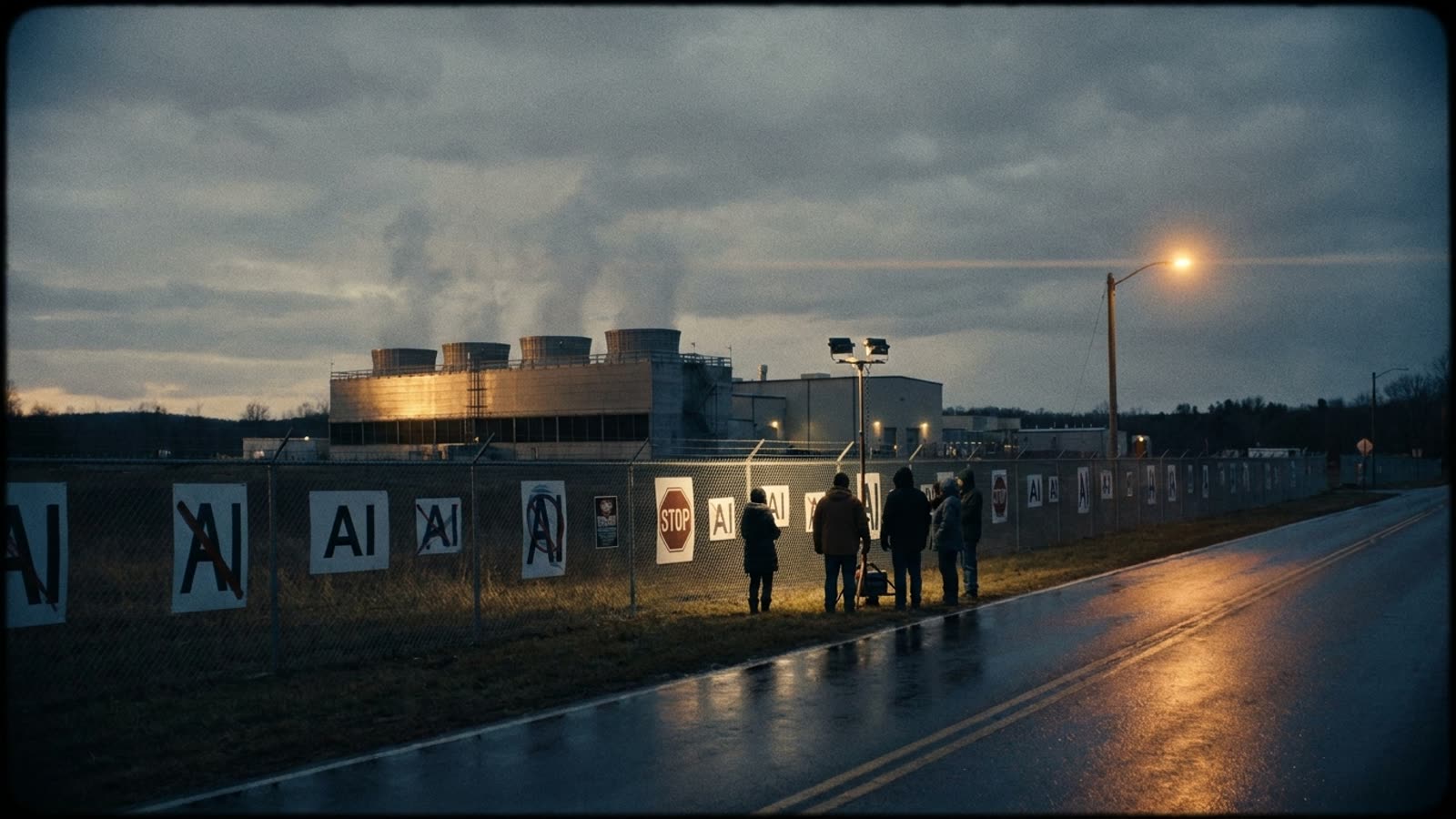
The construction of massive AI data centers across the American heartland has become the unlikely front line in a new information war, with Chinese and Russian operatives working to weaponize legitimate community concerns into full-blown opposition movements.
Intelligence assessments shared with Western allies reveal a sophisticated campaign that amplifies fears about water consumption, energy strain, and environmental degradation in communities slated for new compute facilities. The operations don't invent grievances—they supercharge existing ones, turning routine zoning disputes into referenda on technological sovereignty.
The strategic calculus
The logic is elegant in its simplicity. Every data center delayed in Arizona or Virginia is a facility that won't train the next generation of American AI models. Every community that rejects a hyperscaler campus is compute capacity that doesn't come online. Beijing and Moscow have recognized that the AI race will be won not just in research labs but in the mundane bureaucracies of county planning commissions.
The campaigns operate through familiar channels: social media amplification, astroturfed local groups, and strategic placement of stories in sympathetic outlets. But they've grown more sophisticated, learning to speak the language of environmental justice and local control that resonates across the American political spectrum.
The uncomfortable truth
What makes the operation particularly effective is that the underlying concerns aren't fabricated. Data centers do consume enormous quantities of water for cooling. They do strain electrical grids. Communities do bear externalities while tech giants capture the value. Foreign actors aren't creating these tensions—they're exploiting the gap between Big Tech's promises and local realities.
This presents a genuine policy dilemma. Dismissing all opposition as foreign-influenced delegitimizes valid concerns. Yet ignoring the coordinated amplification allows adversaries to set the pace of American infrastructure development.
The response gap
Washington has been slow to develop a coherent counter-strategy. The Biden administration's approach of massive subsidies for domestic compute assumed the building would be the easy part. It wasn't. The Trump administration's instinct toward executive action runs into the inconvenient reality that zoning remains stubbornly local.
Meanwhile, the campaigns continue. A proposed facility in rural Nebraska faces opposition that materialized with suspicious speed. A Virginia county reversed its approval after a sudden surge of public comment. Each delay is small; cumulatively, they represent a meaningful drag on American AI capacity.
Our take
The Chinese and Russian playbook here deserves grudging respect for its sophistication. Rather than attacking American AI directly—which would trigger nationalist backlash—they've identified the soft underbelly of democratic infrastructure development: the gap between national strategic priorities and local democratic preferences. The solution isn't to override communities but to actually address their concerns, something neither party has shown much appetite for. Until Washington figures out how to make data centers genuinely beneficial to host communities rather than extractive, adversaries will keep finding willing audiences for their message.