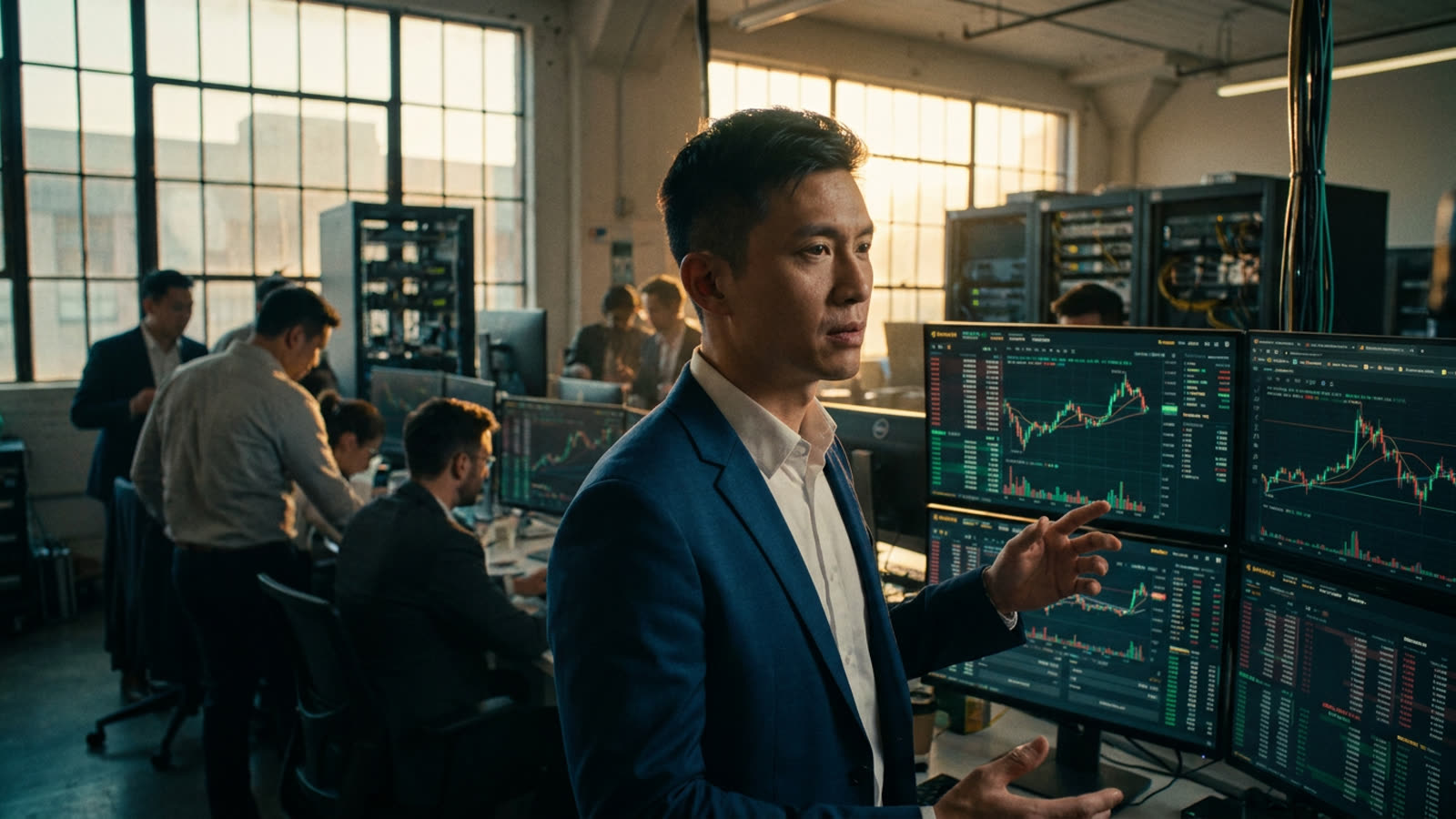
Changpeng Zhao has a message for America: he was misunderstood. The Binance founder, who pleaded guilty to federal money-laundering charges and served four months in federal custody in 2024, is now making the rounds with a carefully calibrated rehabilitation campaign, telling interviewers he hopes to boost the U.S. crypto industry he once fled. It is an audacious pivot — and one the industry may have no choice but to embrace.
The man known as CZ built the world's largest cryptocurrency exchange by volume while operating in deliberate regulatory ambiguity, serving American customers through offshore structures while competitors like Coinbase spent years and hundreds of millions on compliance. His guilty plea and the $4.3 billion settlement Binance paid to U.S. authorities in late 2023 represented the largest corporate resolution in crypto history. Now, barely eighteen months later, he is reframing that history as a misunderstanding rather than a strategy.
The rehabilitation playbook
Zhao's approach follows a familiar template for disgraced tech founders: acknowledge mistakes in the vaguest possible terms, emphasize personal growth, and pivot to a forward-looking narrative about building. His recent comments suggest he sees an opening in the current regulatory environment, where the Trump administration has signaled a more accommodating stance toward digital assets than its predecessor. The calculation is straightforward: if Washington is willing to reset relations with the crypto industry, why not with its most notorious figure?
The timing is deliberate. With Bitcoin trading near all-time highs and institutional adoption accelerating through spot ETFs, the industry's center of gravity is shifting back toward the United States. Zhao, despite his legal baggage, still commands enormous influence — Binance remains the dominant global exchange, and his personal following in crypto circles rivals that of any founder. A rehabilitated CZ who can operate in American daylight would be a significant asset.
Why the industry needs this to work
Here is the uncomfortable truth: crypto's relationship with American regulators was poisoned in part by Binance's years of defiance, but the industry's future depends on access to U.S. capital markets and institutional investors. The sector needs credible intermediaries who can speak both languages — the technical vernacular of blockchain developers and the compliance-first dialect of Washington. Zhao, for all his baggage, understands both worlds.
The alternative is an industry permanently bifurcated between a compliant but constrained American sector and a freewheeling offshore ecosystem that serves everyone else. That bifurcation already exists, but it limits crypto's ability to achieve the mainstream financial integration its proponents promise. If Zhao can genuinely rebuild trust with U.S. authorities — a substantial if — he becomes a template for how the industry's offshore past can be reconciled with its onshore future.
Our take
Zhao's redemption tour is self-serving, obviously. But self-interest and industry interest are not mutually exclusive here. The crypto sector spent years celebrating regulatory arbitrage as a feature rather than a bug, and Zhao was its most successful practitioner. His willingness to now advocate for constructive engagement with American regulators — even if motivated by personal rehabilitation — represents a maturation the industry desperately needs. Whether Washington will accept the outstretched hand of a convicted felon is another question entirely. The smart bet is that money talks, and Zhao still has plenty of it.