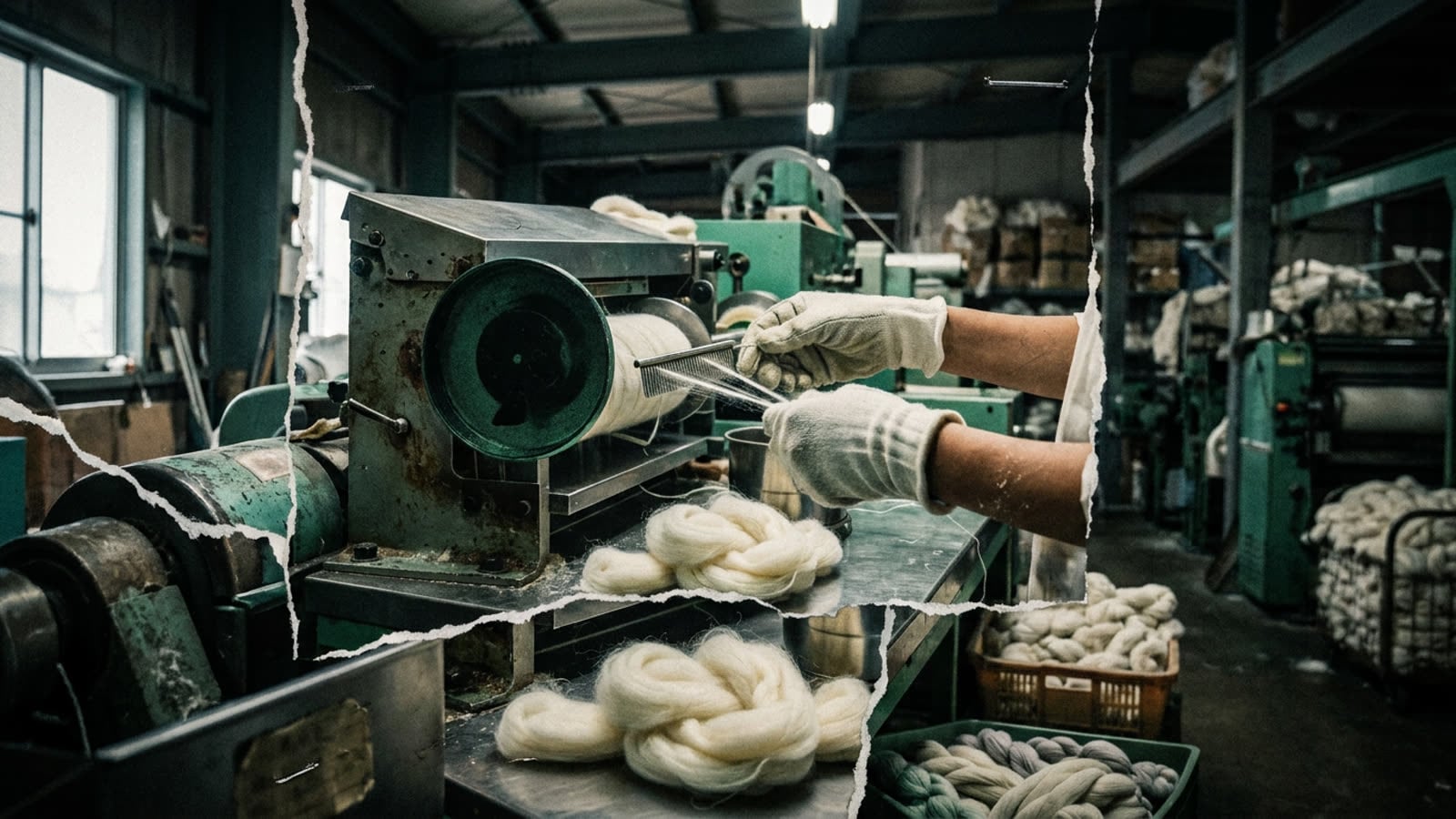
The cashmere sweater folded on a department store table represents one of the odder supply chains in global commerce. Before it was a garment, it was the undercoat of a goat shivering through a Mongolian winter, combed out by hand during a brief spring window, sorted by color and fineness, washed in facilities that may be thousands of miles from where the animal grazed, spun into yarn, knitted or woven, finished, and shipped—often crossing more borders than a diplomatic pouch. The price tag at the end of this journey can range from forty dollars to four thousand, and the difference between those two sweaters is both smaller and larger than most shoppers realize.
Cashmere's luxury status rests on scarcity and sensation. The fiber comes only from the soft underdown of certain goat breeds, primarily raised in Mongolia, Inner Mongolia, and parts of Central Asia. Each goat produces a small amount annually—enough for perhaps one sweater every few years when you account for processing losses. The fiber's appeal is tactile: finer than sheep's wool, it creates a warmth-to-weight ratio that feels almost implausible against the skin.
The herder's calculus
Mongolia's cashmere industry employs a significant portion of the country's rural population, and the economics are brutal. Herders sell raw cashmere to middlemen at prices that fluctuate wildly based on global demand, weather patterns, and the health of their herds. A harsh winter can devastate flocks. A mild one produces coarser fiber, since the goats don't need to grow as dense an undercoat. Climate change has made both extremes more common, introducing volatility into a livelihood that was already precarious.
The expansion of cashmere herding has also contributed to desertification across the Mongolian steppe. Goats, unlike sheep, pull grass up by the roots, and as herders increased flock sizes to meet global demand, grasslands degraded. The industry now faces the uncomfortable reality that its growth may have undermined the ecosystem that sustains it.
The quality question
What separates a premium cashmere garment from a budget one is partly fiber quality—measured in microns of diameter and length of individual hairs—and partly construction. The finest fibers come from specific regions and require careful sorting. But the mass-market cashmere boom of recent decades has flooded stores with sweaters made from shorter, coarser fibers that pill quickly and lose their shape.
Brands have learned that consumers often cannot distinguish quality by touch alone, at least not in a store. The word "cashmere" on a label does most of the selling. This has created a market where price signals are unreliable: an expensive sweater might use the same grade fiber as a cheap one, with the difference absorbed by brand premium, retail markup, or marginally better finishing.
Our take
Cashmere is one of those products where the romance of the material—nomads, high plateaus, ancient trade routes—papers over a supply chain that is environmentally stressed and economically opaque. The sweater in your closet is genuinely remarkable: a collaboration between animal biology, human labor, and global logistics that produces something unreasonably soft. But the industry's future depends on whether it can reconcile growing demand with finite grasslands and fairly compensated herders. For now, the most honest thing a consumer can do is accept that they probably don't know what they're paying for—and that the goat who grew their sweater's fiber had a harder year than they did.