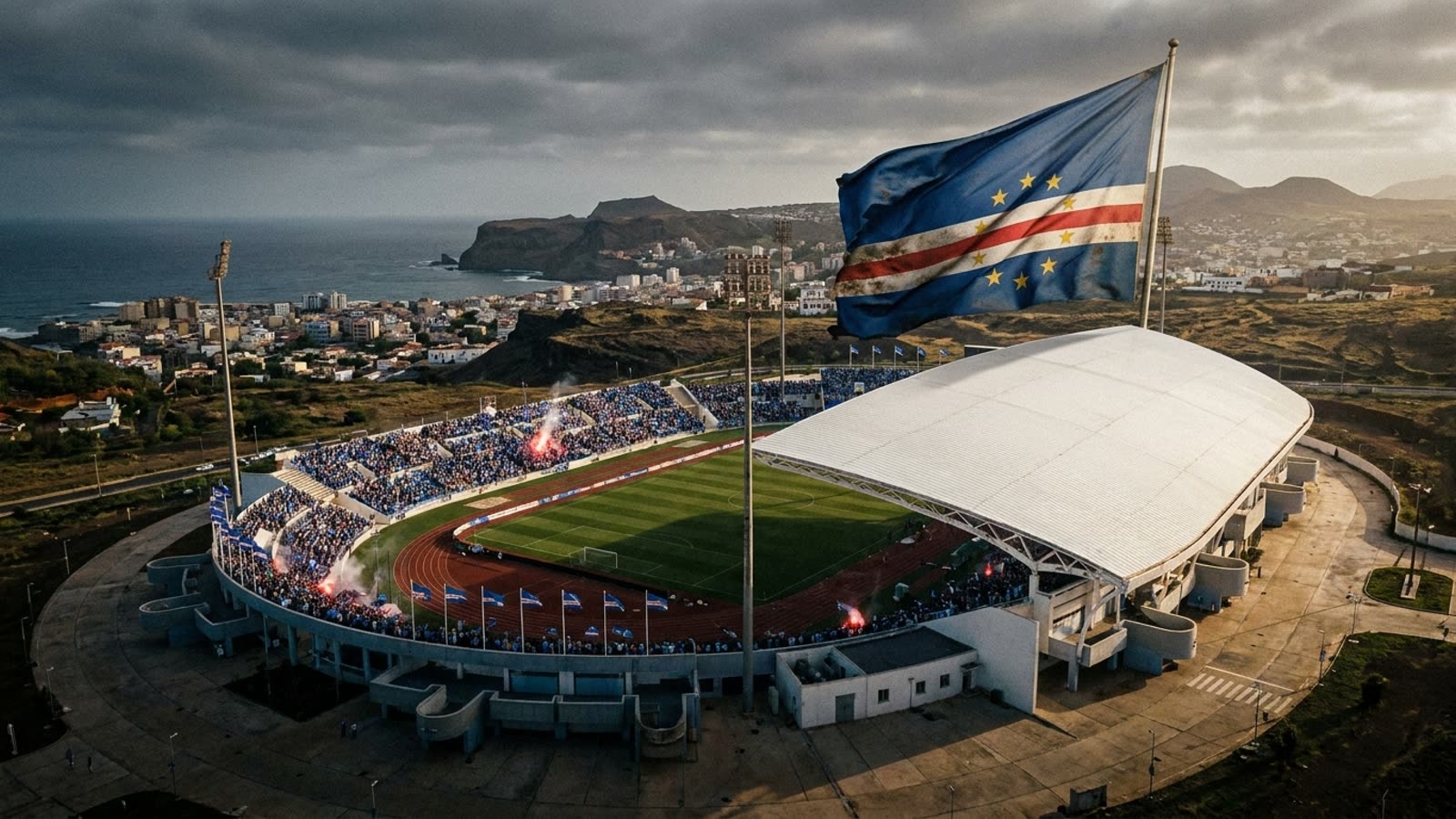
A nation of 600,000 people, scattered across ten volcanic islands off the West African coast, has no business being at a World Cup. Cabo Verde is there anyway, and their presence in the United States this summer represents something more profound than a feel-good underdog narrative — it's a case study in what happens when football development, diaspora networks, and sheer institutional competence align in a country that logic says should never compete at this level.
The numbers are almost absurd. Cabo Verde's population is roughly equivalent to that of Albuquerque, New Mexico. Their domestic league operates semi-professionally at best. The national team's annual budget wouldn't cover a single Premier League player's weekly wages. Yet here they are, mixing it with the giants of world football, having navigated a brutal African qualifying campaign that eliminated far larger, far wealthier nations.
The diaspora advantage
Cabo Verde's secret weapon has been hiding in plain sight for decades: its people leave. Emigration has been a defining feature of Cabo Verdean life since the colonial era, and today more Cabo Verdeans live abroad than on the islands themselves. Communities in Portugal, the Netherlands, France, and the United States have produced footballers who grew up in sophisticated European academies while retaining eligibility for their ancestral homeland.
This isn't unique — plenty of small nations tap their diasporas — but Cabo Verde has been unusually effective at it. The federation has cultivated relationships with dual-nationals for years, making the case that representing Cabo Verde offers something the giants cannot: genuine meaning, family connection, and the chance to be a pioneer rather than a squad filler.
What joy looks like
There's something clarifying about watching Cabo Verde play. The pressure that crushes established football nations — the weight of expectation, the fear of failure, the cynicism of supporters who've seen it all — simply doesn't exist. Every match is already a victory. Every goal is historic. The players and fans seem to understand, in a way that eludes more decorated nations, that this is supposed to be fun.
The tournament itself becomes the achievement. Whether Cabo Verde advances from their group or exits after three matches, they've already accomplished something their grandparents couldn't have imagined. That freedom shows in how they play: aggressive, adventurous, unburdened by the defensive crouch that afflicts teams terrified of embarrassment.
Our take
Cabo Verde's World Cup run is the tournament's purest story — not because underdogs are inherently noble, but because it reveals what football can still be when stripped of its usual cynicism. In an era when the sport's elite clubs operate as quasi-sovereign wealth funds and qualification is increasingly a function of GDP, a volcanic archipelago with more emigrants than residents has gate-crashed the party. They won't win the World Cup. They don't need to. They've already proven that the beautiful game still has room for the beautifully improbable.