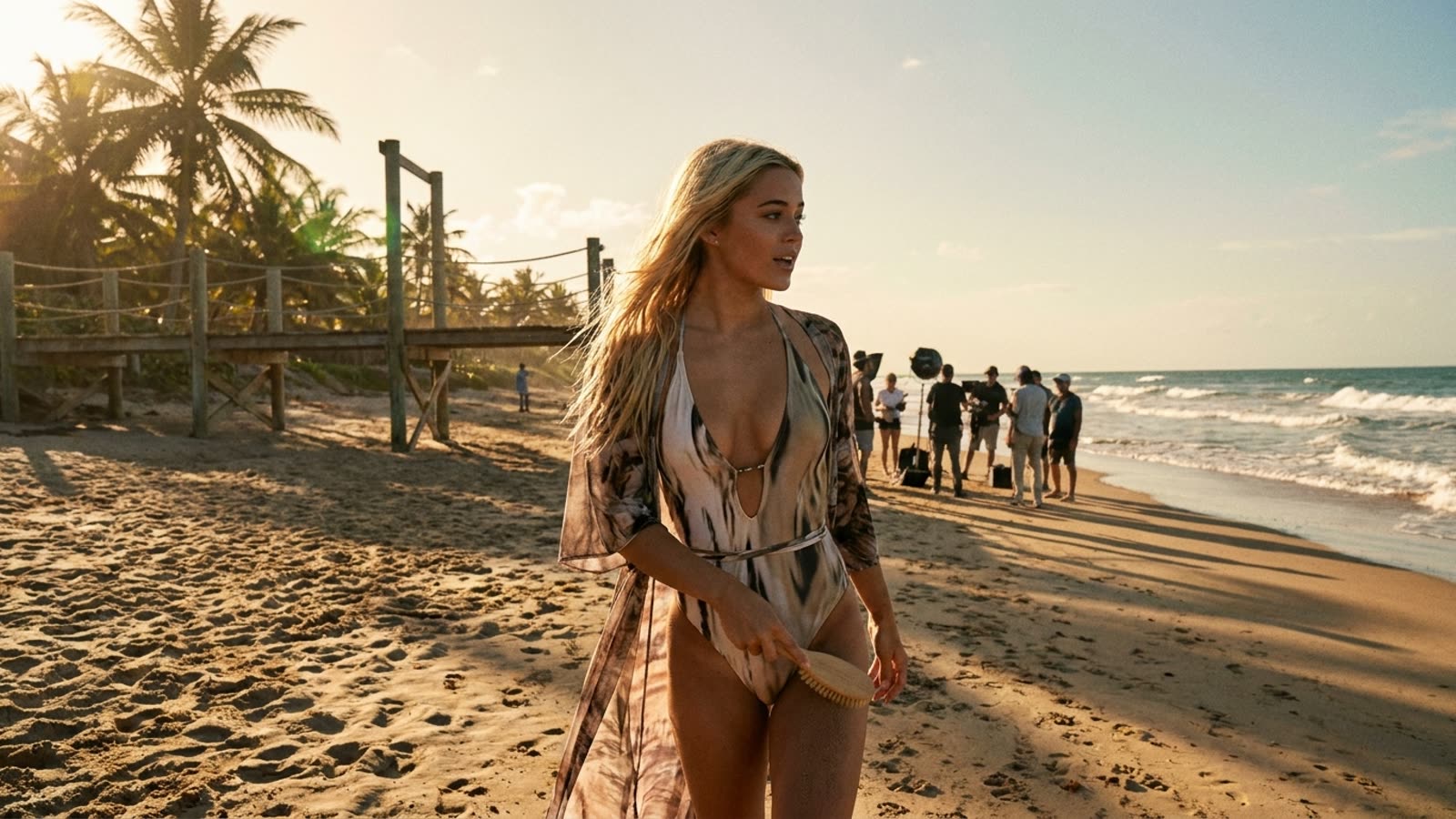
The question of what constitutes a model in 2026 has become almost quaint. Brooks Nader, the Louisiana-born Sports Illustrated Swimsuit veteran, and Olivia Dunne, the LSU gymnast who parlayed floor routines into a reported eight-figure NIL empire, represent two distinct paths to the same destination: a hybrid celebrity class that renders traditional talent categories meaningless.
Nader came up through the conventional pipeline—discovered via SI's open casting call in 2019, she leveraged the swimsuit franchise's still-considerable platform into brand deals, reality television appearances, and a presence at every event where cameras gather. Dunne arrived via the NIL revolution that transformed college athletics into a legitimate influencer incubator, her 12 million TikTok followers making her more commercially valuable than most professional athletes before she'd competed in a single elite meet.
The convergence economy
What's notable about their current positioning is how indistinguishable their professional activities have become. Both attend the same parties, court the same sponsors, and occupy the same visual grammar of content creation—bikini shots, workout clips, behind-the-scenes glimpses at photo shoots. The distinction between "model" and "athlete-influencer" has collapsed into a single job description: be photographable, be followable, be bookable.
This isn't a criticism so much as an observation about market efficiency. The fashion and beauty industries spent decades maintaining artificial barriers between editorial models, commercial models, celebrity spokespeople, and athletes. Social media dissolved those categories by creating a universal currency—engagement—that doesn't care whether you earned your audience through runway walks or backflips.
What the brands want
The economics favor this convergence. A traditional model might deliver prestige but limited reach; a pure influencer might deliver reach but questionable credibility. Nader and Dunne offer both: the aesthetic polish that satisfies brand managers and the authentic audience connection that satisfies performance marketers. They're not competing with each other so much as jointly proving a concept.
For Dunne specifically, the post-collegiate transition is the real test. College athletes enjoy a built-in narrative arc—the season, the championships, the team drama—that sustains content without much creative effort. What happens when she's no longer Livvy Dunne, LSU gymnast, but simply Livvy Dunne, professional famous person? Nader's career suggests the answer: you become a full-time content operation, attending events as both participant and product.
Our take
There's something both democratizing and dispiriting about this evolution. Democratizing because the old gatekeepers—modeling agencies, sports leagues, magazine editors—no longer control access to commercial success. Dispiriting because the new gatekeepers are algorithms that reward a fairly narrow aesthetic and behavioral template. Nader and Dunne are winning the game as it's currently structured, but the game itself has become remarkably uniform. Every platform, every brand, every event wants the same thing: young, attractive, available, and optimized for engagement. The only real question is which door you walked through to get there.