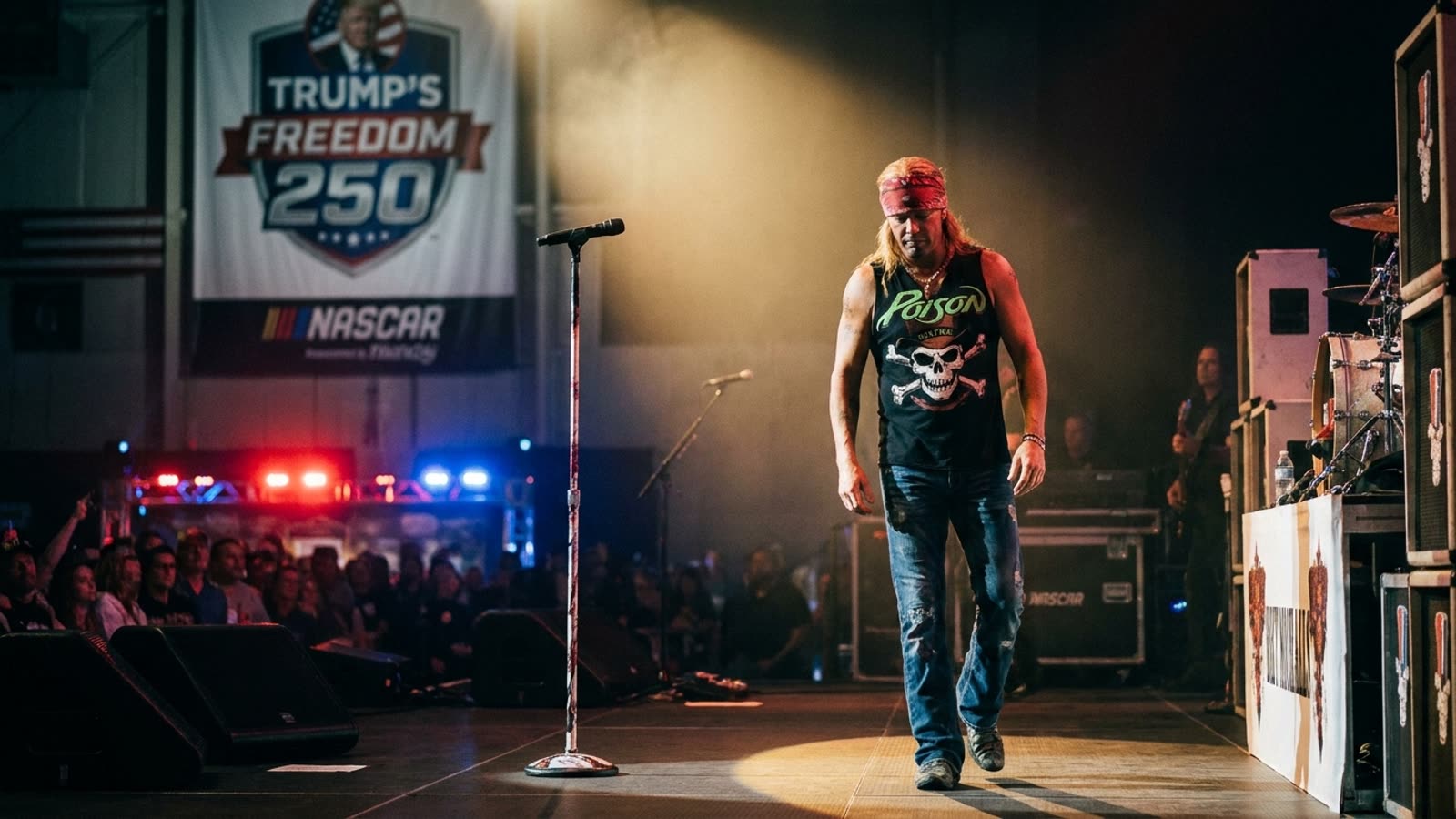
For four decades, Bret Michaels has managed the neat trick of being famous without being controversial. The Poison frontman built a second act on reality television charm and corporate-friendly nostalgia tours, becoming the rare rock star your Republican uncle and your liberal niece could both tolerate at Thanksgiving. That careful balance ended this week when Michaels quietly withdrew from the Trump-backed Freedom 250 concert, a decision that says less about his politics than about the impossibility of apolitical celebrity in 2026.
The Freedom 250, scheduled to coincide with a NASCAR event later this summer, has positioned itself as a celebration of American values with an unmistakably partisan tilt. The concert's alignment with the Trump brand made it catnip for a certain audience and kryptonite for another—precisely the kind of binary that Michaels has spent his post-Poison career avoiding.
The business of being likable
Michaels, now 63, has been remarkably successful at monetizing nostalgia without alienating anyone. His diabetes advocacy work, his stint on Celebrity Apprentice (which he won in 2010), and his endless summer-shed touring have kept him relevant to audiences who couldn't name another Poison song beyond "Every Rose Has Its Thorn." That broad appeal is worth real money—corporate gigs, casino residencies, and brand partnerships all depend on a performer who doesn't make half the room uncomfortable.
Withdrawing from a Trump-affiliated event will inevitably cost him some fans. But performing at one might have cost him more. The calculus has shifted: in 2016, showing up at a political event was a choice. In 2026, it's a declaration.
The vanishing middle ground
Michaels joins a growing list of entertainers who have discovered that the center cannot hold. Kid Rock leaned hard into MAGA identity and found a lucrative niche. Bruce Springsteen has been openly partisan for decades. But the Michaels model—be everywhere, offend no one—requires a cultural consensus that no longer exists.
The Freedom 250 dropout is notable precisely because Michaels isn't known for political statements. He's not canceling a show in protest; he's simply declining to be associated with something that would define him in ways he can't control. It's defensive positioning, not activism.
Our take
There's something almost poignant about watching Bret Michaels navigate this. He's a survivor—of the hair-metal collapse, of a brain hemorrhage, of reality TV's churn—and survivors know when to exit a room. The Freedom 250 decision won't make him a hero to the left or a villain to the right; it will simply preserve his ability to play state fairs in swing states without incident. In an era that demands you pick a team, Michaels has chosen the only team that still pays: the one that just wants to hear "Nothin' But a Good Time" and forget about everything else for an hour.