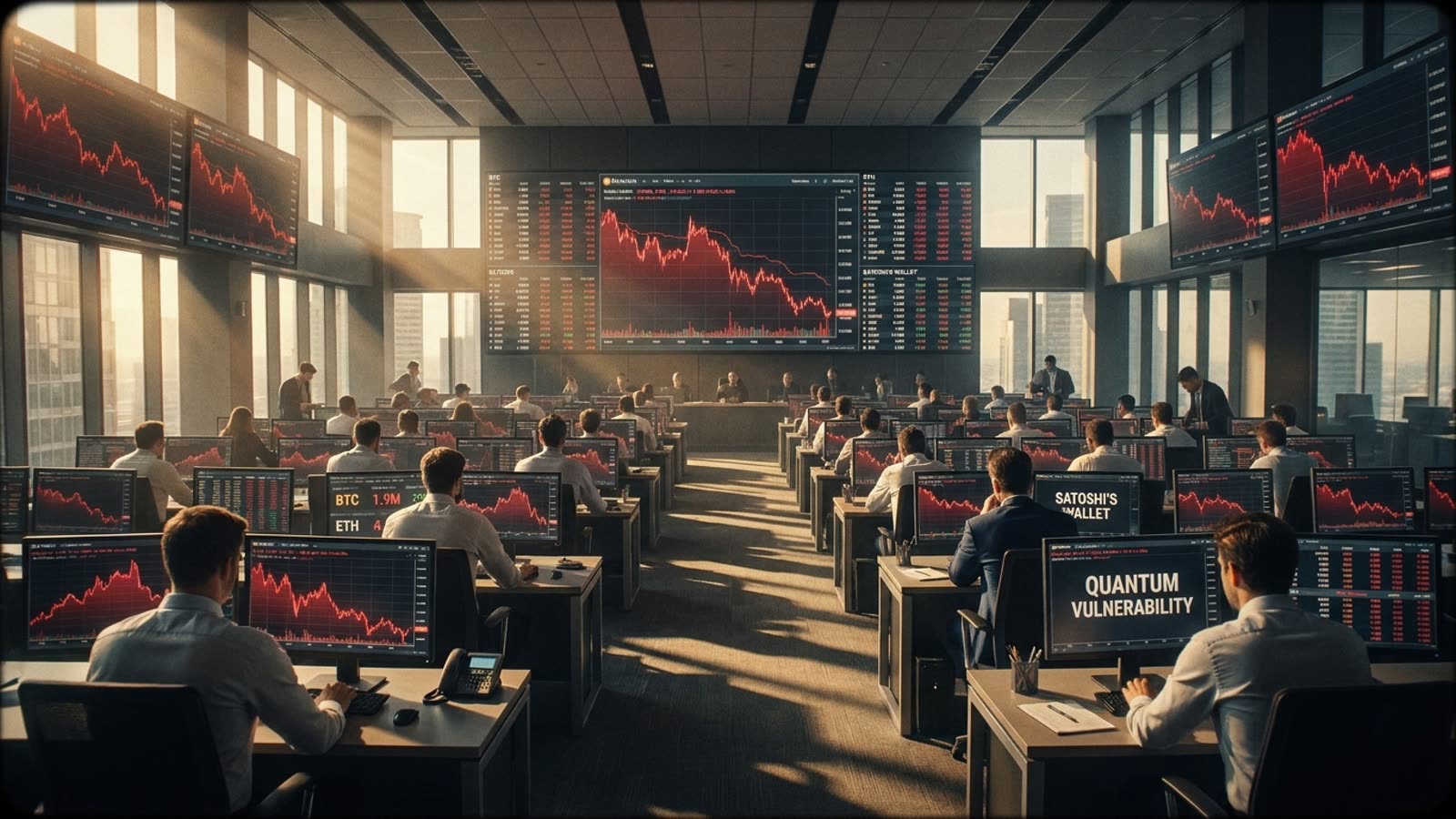
The quantum computing conversation in crypto circles has always centered on the wrong target. While the industry obsesses over whether future quantum machines could crack the private keys protecting active wallets, the more existential risk sits in plain sight: the estimated one million Bitcoin in addresses linked to Satoshi Nakamoto and other early adopters, coins secured by cryptographic methods that quantum computers could theoretically break far sooner than modern standards.
This is the argument gaining traction among a subset of Bitcoin's earliest investors, who fear the network's founding mythology contains the seeds of its potential undoing. The concern isn't hypothetical wallet theft—it's the possibility that quantum-capable adversaries could move coins that the market has long assumed were permanently lost or voluntarily frozen.
The pay-to-public-key problem
Bitcoin's earliest transactions used a format called pay-to-public-key, which exposes the public key directly on the blockchain. Modern transactions use pay-to-public-key-hash, adding a layer of protection that requires attackers to first reverse a hash function before attempting to derive the private key. The distinction matters enormously in a quantum context: Shor's algorithm, the theoretical quantum attack vector, works against the elliptic curve cryptography protecting public keys but struggles against hash functions.
Satoshi's coins, mined in 2009 and early 2010, overwhelmingly use the older format. So do coins from other early miners and adopters who never moved their holdings to updated address types. Estimates vary, but somewhere between two and four million Bitcoin—worth hundreds of billions of dollars at current prices—sit in these vulnerable addresses.
The market confidence question
The practical timeline for quantum attacks remains deeply uncertain. Most experts place meaningful cryptographic threats at least a decade away, possibly longer. But markets price in tail risks, and the mere credible possibility of Satoshi's coins moving would constitute a category-five event for Bitcoin's price and narrative.
The network's response options are limited and politically fraught. A soft fork could theoretically deprecate vulnerable address types, but this would require broad consensus to effectively confiscate coins from addresses that haven't transacted in years—a move that cuts against Bitcoin's core property-rights ethos. Alternatively, the community could simply accept the risk and hope quantum computing advances more slowly than pessimists predict.
Our take
Bitcoin's founding mythology depends on Satoshi's coins remaining untouched—proof of the creator's altruism and commitment to decentralization. Quantum computing threatens to transform that mythology from asset to liability. The network will eventually need to confront whether protecting its oldest coins is worth the systemic risk they represent, a conversation the community has successfully avoided for seventeen years. The clock, however quantum it may be, is ticking.