The tech industry spent a decade insisting it was apolitical — a meritocratic engine of progress that transcended the grubby transactionalism of Washington. That fiction required ignoring lobbying budgets, revolving-door hires, and the occasional Senate testimony. It cannot survive a $92 million receipt.
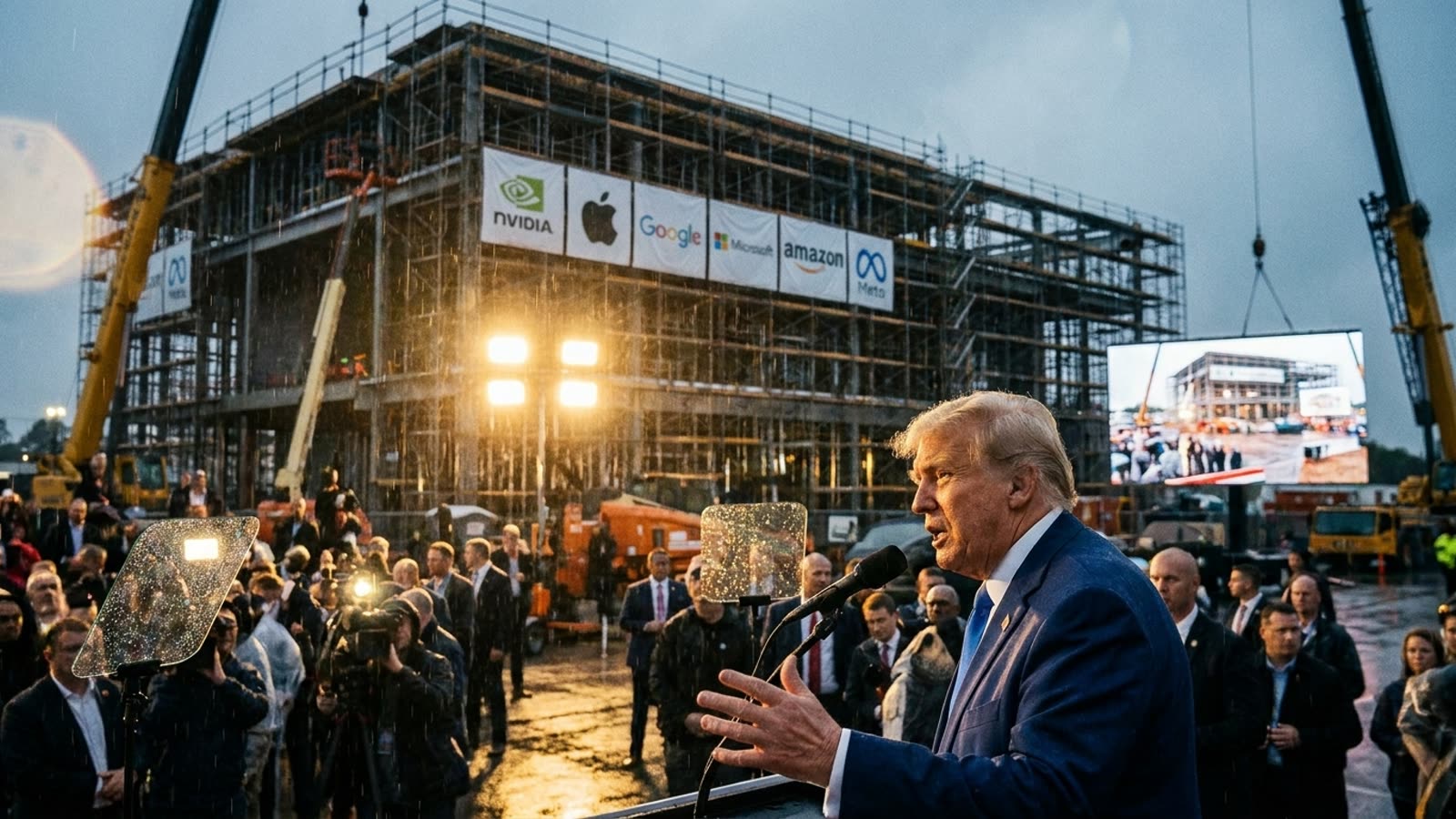
The Washington Post's newly published donor list for Donald Trump's ballroom project reads like a who's who of AI infrastructure: Nvidia, Apple, Google, Microsoft, Amazon, and Meta each contributed to the construction of what the administration calls a signature venue for state functions. The combined figure — $92 million from six companies that collectively control the foundational layers of artificial intelligence — represents something more than philanthropy or civic duty. It is a down payment on regulatory goodwill at the precise moment these firms need it most.
The AI calculus
The timing is not subtle. Every company on that list faces imminent regulatory decisions that will shape the AI industry for decades. Nvidia dominates the GPU market that powers large language models; its export controls to China remain under active review. Google and Microsoft are locked in antitrust proceedings while simultaneously racing to embed AI into every product. Meta is betting its future on open-weight models that regulators could treat very differently than closed systems. Amazon's cloud division underwrites half the AI startups in existence. Apple, the latecomer, is scrambling to catch up on device-side AI.
Each firm has specific, quantifiable interests in maintaining friendly relations with the executive branch. The ballroom donation is not a bribe — it is something more durable: a demonstration of alignment, a signal that these companies understand the new rules of engagement.
The neutrality collapse
Silicon Valley's political awakening has been gradual, then sudden. A decade ago, tech executives cultivated an image of reluctant participants in democracy, forced by circumstance to engage with regulators who simply did not understand innovation. That posture crumbled during the first Trump administration, fractured further during the Biden years, and has now been replaced by something blunter: open, transactional participation in the political system.
The shift matters beyond symbolism. When the companies that build AI infrastructure are also the companies funding presidential vanity projects, the regulatory capture is not hypothetical — it is architectural. The same executives who will testify before Congress about AI safety are writing checks to the administration that will decide what safety means.
Our take
The $92 million is not scandalous in the traditional sense. It is legal, disclosed, and arguably rational given the stakes. What it represents is the final abandonment of a useful fiction: that technology companies operate in a realm separate from ordinary political economy. They do not. They are participants in a system of mutual dependency with the state, and they have decided that visibility beats discretion. The neutrality myth served its purpose — it bought time, deflected scrutiny, and allowed rapid scaling. Its death will be mourned only by those who believed it.