Joe Biden is now suing the Justice Department he once led, an extraordinary legal maneuver that underscores how thoroughly the norms of executive privilege have collapsed in the post-Trump era.
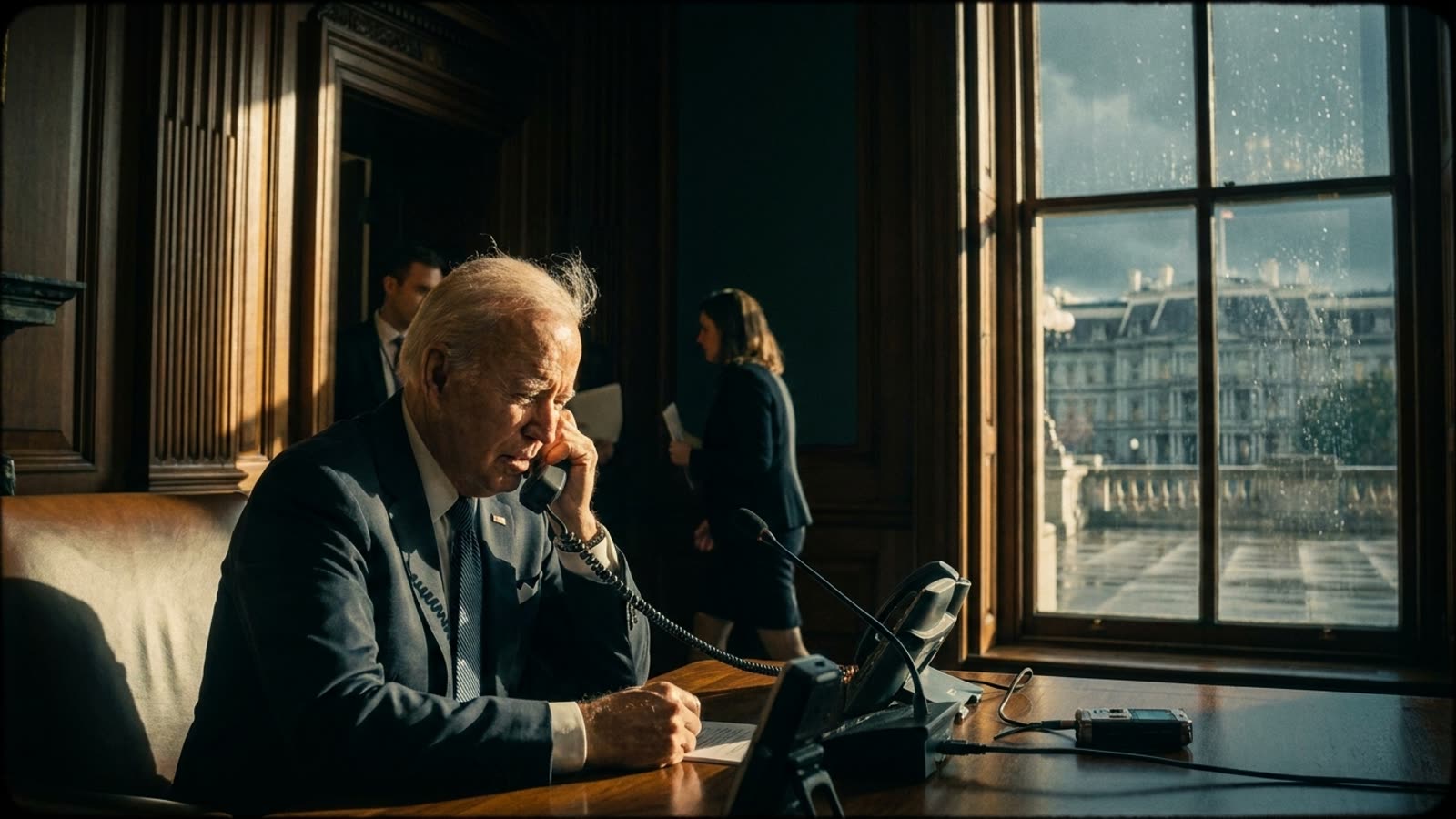
The lawsuit, filed this week in federal court, seeks to prevent the release of audio recordings from Biden's 2023 interview with special counsel Robert Hur, who investigated the former president's handling of classified documents. The recordings have become a political flashpoint: Republicans in Congress have demanded them, arguing the transcripts alone do not capture Biden's demeanor and mental acuity during the questioning. Biden's team counters that releasing the tapes would chill future cooperation between presidents and investigators.
The Hur report's long shadow
Hur's February 2024 report declined to charge Biden but described him as a "well-meaning, elderly man with a poor memory"—language that inflicted lasting political damage and contributed to Democratic anxieties about Biden's fitness for the 2024 campaign he ultimately abandoned. The audio, Biden's lawyers argue, would be weaponized for partisan purposes rather than any legitimate oversight function. But that argument cuts both ways: if the transcripts are accurate, what exactly is being protected?
The Justice Department under Attorney General Pam Bondi has signaled it will not fight the congressional subpoena, effectively leaving Biden to wage this battle as a private citizen. That posture is itself remarkable—a sitting administration declining to shield a predecessor's executive communications, even when doing so might establish precedents that constrain future presidents.
A constitutional no-man's-land
The case lands in legal territory that courts have rarely mapped. Executive privilege traditionally belongs to the office, not the individual, yet former presidents have successfully asserted it in limited circumstances. Biden's suit argues that compelled disclosure would violate separation of powers and his due-process rights. Legal scholars are divided: some see a colorable claim rooted in Nixon-era precedents; others view it as a rearguard action with slim odds once a former president no longer controls the executive branch's litigation posture.
What is certain is that the fight will not conclude quickly. Appeals are inevitable, and the Supreme Court—already navigating fraught questions about presidential immunity in Trump-related cases—may eventually weigh in.
Our take
Biden's lawsuit is legally defensible and politically understandable, but it also reflects how badly the guardrails have eroded. When a former president must sue his own former department to preserve what was once routine confidentiality, the system is not functioning—it is merely litigating. The recordings may or may not reveal anything the transcripts do not. The precedent, however, will shape how every future president calculates the risks of cooperating with investigators. That is the real cost, and no court can fully repair it.