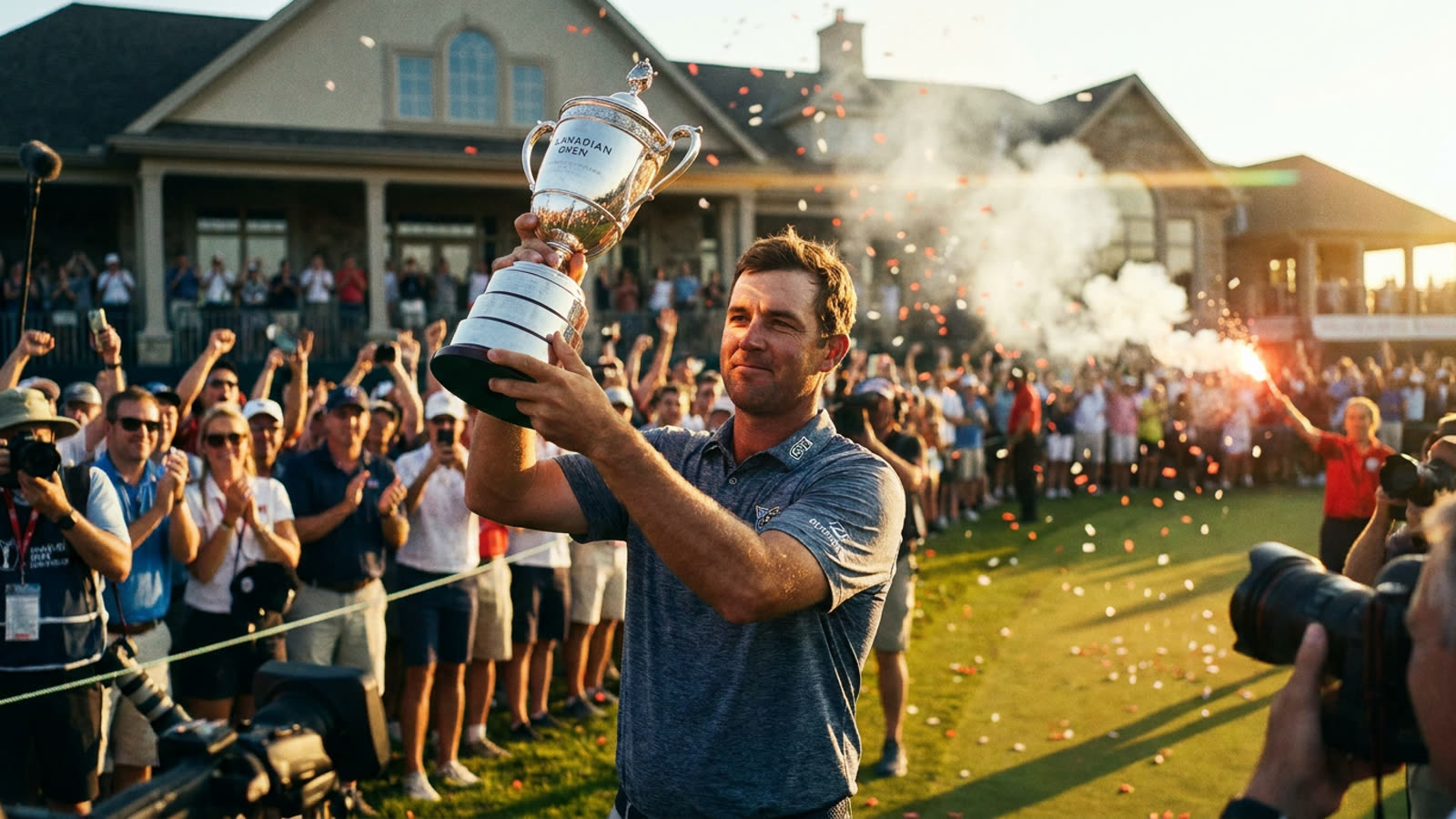
Professional golf has spent the better part of a decade celebrating its young disruptors—players who win majors before they can legally rent a car, who sign equipment deals worth more than some national GDPs, who treat the PGA Tour as a stepping stone rather than a destination. Beau Cauley's victory at the Canadian Open this weekend offers a quiet rebuke to that narrative. At 36, after more than a decade of grinding through Monday qualifiers, sponsor's exemptions, and the purgatory of conditional status, Cauley finally has a trophy.
The win itself was workmanlike rather than spectacular. Cauley held a two-shot lead entering the final round at Hamilton Golf and Country Club and played the kind of conservative, mistake-free golf that television commentators politely call "veteran savvy" and that younger players might dismiss as boring. He made no birdies on the back nine. He didn't need to. Sometimes the most impressive thing a golfer can do is not lose.
The long road to Hamilton
Cauley turned professional in 2012, the same year Rory McIlroy won his second major and Jordan Spieth was still an amateur at Texas. The intervening years brought flashes of promise—a handful of top-ten finishes, occasional Korn Ferry Tour success, the persistent sense that a breakthrough was perpetually imminent. Golf is littered with such careers, players who possess undeniable talent but never quite convert it into the wins that separate journeymen from stars.
What distinguishes Cauley is his refusal to accept that distinction. He has retooled his swing at least three times, changed coaches, experimented with equipment, and maintained his Tour card through a combination of stubbornness and just-good-enough finishes. The Canadian Open field included multiple players ranked inside the world's top twenty. Cauley entered ranked outside the top two hundred.
What the win means—and doesn't
A single victory at 36 will not transform Cauley into a household name. His exemption status improves, his bank account swells, and his confidence presumably benefits, but the fundamental calculus of professional golf remains unchanged. The sport rewards consistency over time, and one win does not a career make.
Yet there is something instructive in Cauley's persistence. The PGA Tour increasingly resembles other professional leagues in its emphasis on star power and marquee names. LIV Golf's defections accelerated this trend, concentrating attention on a shrinking pool of elite players while the middle class of professional golf struggles for visibility and financial security. Cauley's win is a reminder that the Tour still accommodates late bloomers, that the meritocracy—however imperfect—occasionally delivers on its promise.
Our take
We are not sentimental about journeyman narratives. Golf's economics remain brutal for players outside the top tier, and one trophy does not solve the structural problems facing mid-career professionals. But Cauley's victory deserves recognition precisely because it is unfashionable. In a sport increasingly defined by youth, wealth, and geopolitical drama, a 36-year-old winning his first title through sheer persistence is almost countercultural. The Canadian Open will not be remembered as a major moment in golf history. For Beau Cauley, it doesn't need to be.