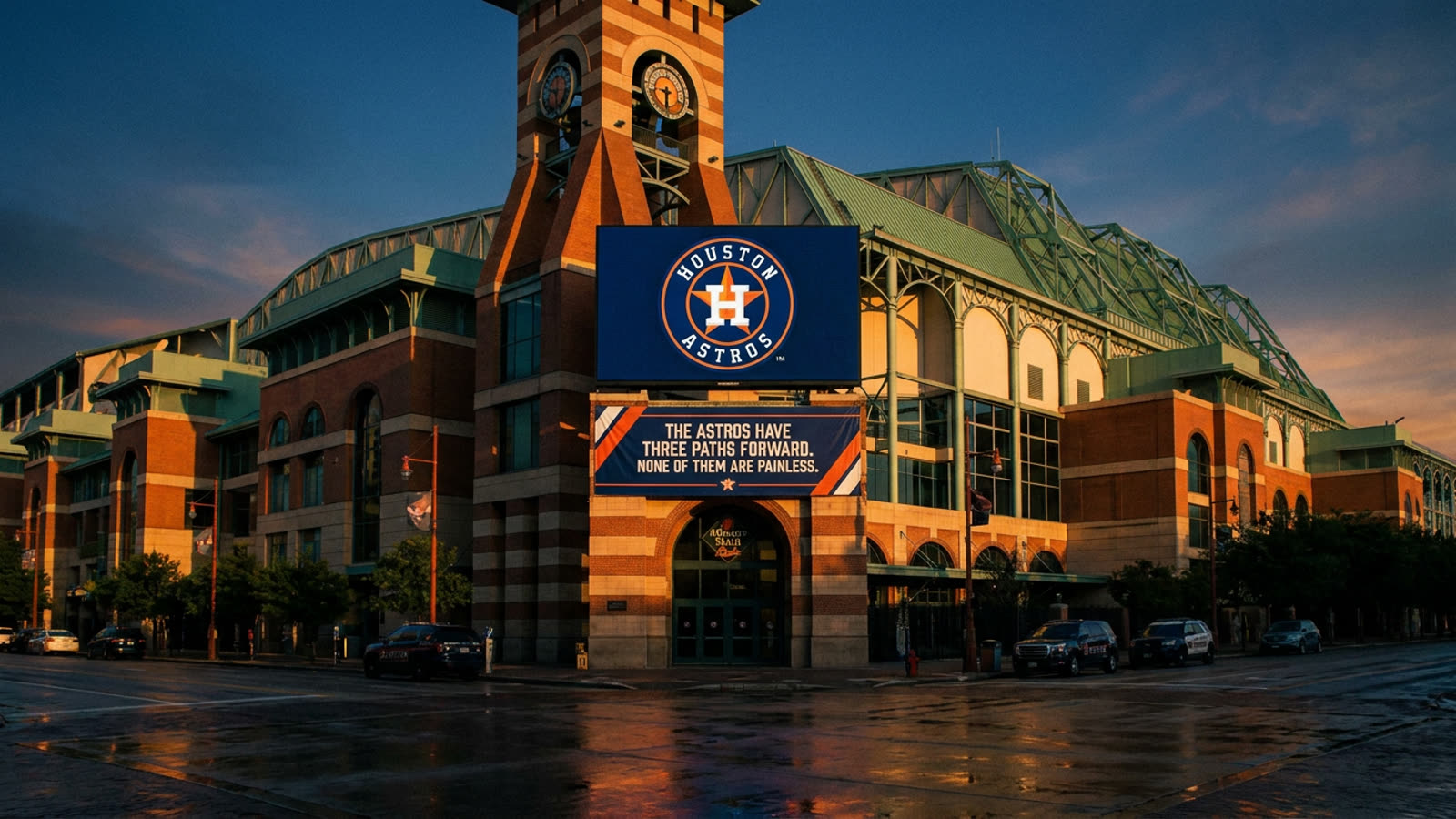
The Houston Astros built one of baseball's great modern dynasties on a simple formula: stockpile elite talent, spend when it matters, and never blink first. Seven consecutive American League Championship Series appearances. Two World Series titles. A decade of October baseball that made Minute Maid Park the sport's most hostile environment for visitors.
Now the formula is breaking down, and the franchise that once seemed to operate three moves ahead of everyone else is staring at a deadline with no obvious correct answer.
The stay-the-course mirage
The most tempting path is also the most dangerous: do nothing dramatic, bet on health, and trust that Jose Altuve, Alex Bregman, and the remaining core can manufacture one more run. It's the path of least organizational resistance, the one that keeps the clubhouse intact and the fan base engaged through September.
It's also a path that ignores arithmetic. Altuve is 36. Bregman is a free agent after this season. The pitching staff that once featured Justin Verlander and Gerrit Cole now relies on arms with significantly less October pedigree. The Astros aren't bad—they're mediocre, which in some ways is worse. Bad teams get high draft picks. Mediocre teams get first-round exits and the same problems next year.
The surgical middle ground
A more sophisticated approach would be selective selling: move pending free agents like Bregman for prospects while retaining the pieces that fit a 2027-2028 contention window. This requires Houston to admit something it has resisted for years—that the current iteration of this team has peaked.
The return on Bregman could be substantial. He remains one of baseball's best third basemen, a switch-hitter with postseason experience that contenders covet. But trading him signals to Altuve, to Yordan Alvarez, to the organization's identity that the championship window has closed. Front offices can rationalize such moves. Clubhouses rarely forgive them.
The full teardown
Then there's the nuclear option: trade everyone with value, accelerate the rebuild, and emerge in three years with a farm system capable of sustaining another decade of contention. It's what the Astros themselves did in the early 2010s, when they lost 100 games three consecutive seasons before drafting Carlos Correa, George Springer, and the foundation of everything that followed.
The problem is that teardowns require institutional patience that ownership groups rarely possess after tasting success. The Astros have conditioned their market to expect October baseball. Empty Octobers mean empty suites, reduced television ratings, and difficult conversations with sponsors who signed deals expecting playoff inventory.
Our take
Houston will likely choose the middle path—not because it's optimal, but because it's the only one that lets the organization tell itself it's still competing while quietly preparing for what comes next. Bregman will be traded. The return will be underwhelming. And the Astros will enter 2027 as neither contenders nor rebuilders, stuck in the purgatory that claims every dynasty eventually. The only question is whether they'll have the courage to admit it before the market does.