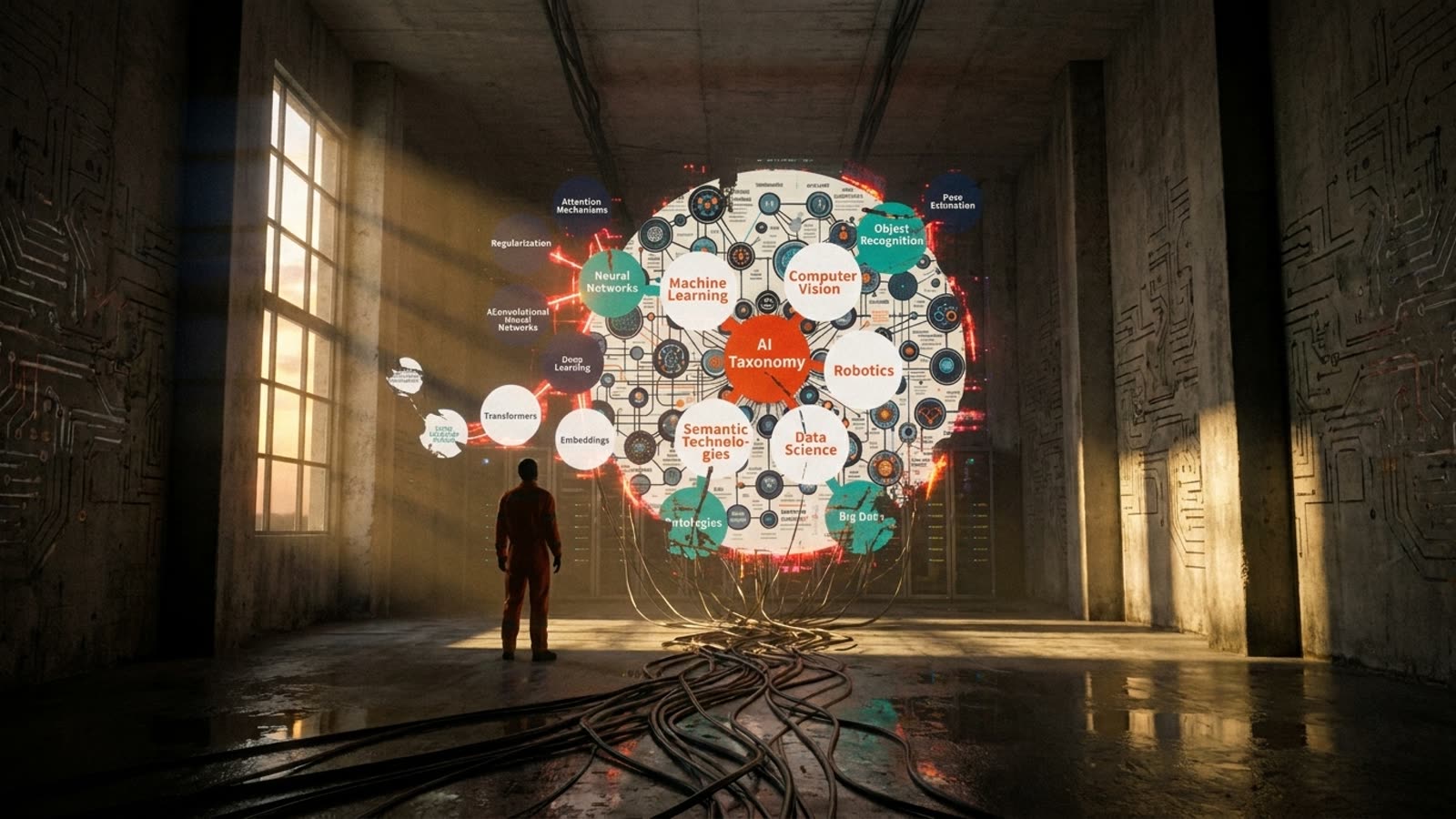
There is a peculiar phenomenon spreading through digital newsrooms that reveals more about the state of technology coverage than any breathless feature on foundation models ever could: the empty category. Visit any major entertainment or general-interest publication's technology vertical and you will find, nestled among the genuine scoops and product announcements, items tagged simply "ARTIFICIAL INTELLIGENCE" — no headline, no hook, no discernible news event. Just the category itself, promoted as if the words alone constitute information.
This is not a glitch. It is the logical endpoint of an editorial strategy that treats AI as ambient content rather than a beat requiring actual reporting.
The taxonomy trap
Publications have spent the past three years building elaborate category architectures around artificial intelligence, hiring dedicated AI editors, launching AI newsletters, and promising advertisers premium placement against AI-adjacent content. The problem is that genuine AI news — the kind that moves markets, shapes policy, or changes how ordinary people interact with technology — does not arrive on a predictable schedule. Foundation model releases cluster. Regulatory developments stall for months, then cascade. Corporate AI strategies often amount to press releases announcing intentions rather than products.
What remains is the pressure to fill the taxonomy. And so editors resort to the journalistic equivalent of a holding pattern: pushing the category label itself as if it were content, trusting that the audience's Pavlovian response to those two words will generate sufficient engagement to satisfy the metrics dashboard.
The attention economy's empty calories
This matters because it trains audiences to expect nothing from AI coverage while simultaneously consuming more of it. The category becomes a vibe rather than a subject — something to scroll past while feeling vaguely informed, like checking a stock ticker without understanding what the numbers mean. Publications get their impressions; readers get their dopamine; and the actual work of explaining what artificial intelligence is doing to labour markets, creative industries, scientific research, and democratic institutions goes undone.
The irony is that there has never been more genuine AI news worth covering. The past month alone has produced consequential developments in AI infrastructure investment, regulatory frameworks for tokenised assets intersecting with machine learning, and workforce automation at major financial institutions. But covering those stories requires expertise, sourcing, and the willingness to publish at the pace of actual events rather than the pace of content calendars.
Our take
The empty AI category is a small indignity, but it is symptomatic of a larger abdication. Technology journalism at its best serves as a translation layer between complex systems and the public that must live with their consequences. When publications treat "ARTIFICIAL INTELLIGENCE" as a self-explanatory commodity rather than a subject demanding rigour, they are not merely being lazy — they are ceding the interpretive ground to the companies building these systems and the investors funding them. The audience deserves better than a tag masquerading as a story.