Three years ago, Anthropic positioned itself as the responsible alternative to OpenAI—a company founded by ex-OpenAI researchers who believed their former employer had grown reckless in the pursuit of artificial general intelligence. Now Anthropic is fielding investment offers that would value it at nearly $1 trillion, potentially surpassing the very rival it was created to counterbalance.
The irony is not lost on industry observers. Anthropic's pitch to investors has always been that it would develop powerful AI systems while maintaining rigorous safety standards, a proposition that initially seemed to trade growth for prudence. That trade-off appears to have evaporated. The company's revenue has surged to the point where it no longer needs to court investors—they're coming to it, checkbooks open, eager to own a piece of what may become the most valuable private company in history.
The numbers behind the frenzy
While Anthropic hasn't disclosed specific revenue figures, the Financial Times reports that the company's growth trajectory has been steep enough to justify valuations that seemed absurd even twelve months ago. Claude, its flagship AI assistant, has carved out significant enterprise market share, particularly among customers who cite safety and reliability as primary concerns. The company has also benefited from the broader AI infrastructure buildout, with cloud providers paying handsomely for access to its models.
A valuation approaching $1 trillion would place Anthropic in rarefied company—above all but a handful of public corporations globally. It would also represent one of the fastest wealth-creation events in business history, compressing what took Apple and Microsoft decades into a matter of years.
The safety paradox
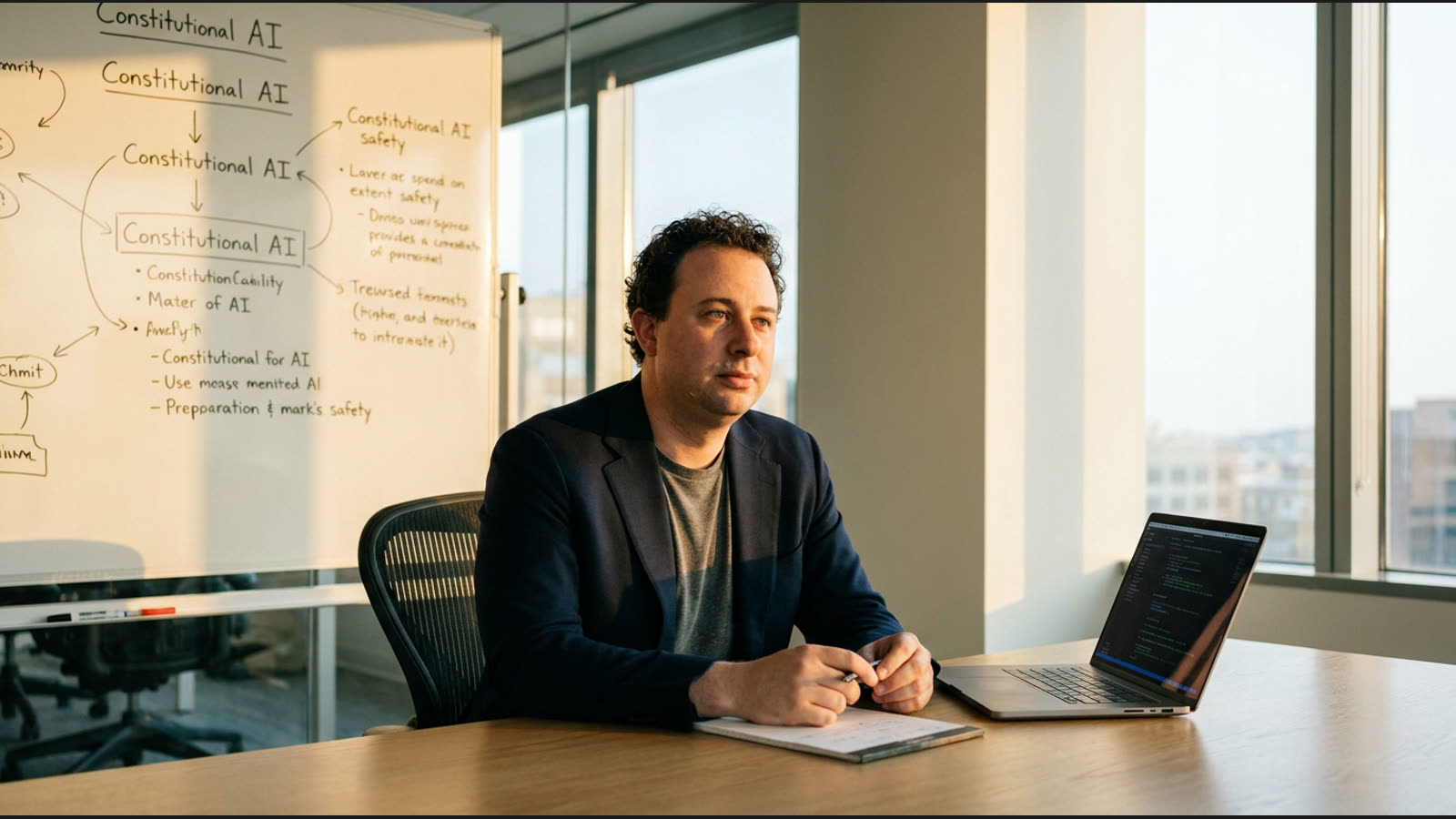
Anthopic's founding mythology centered on constitutional AI and interpretability research—technical approaches designed to make AI systems more predictable and aligned with human values. The company has published extensively on these topics and maintains a research agenda that, by Silicon Valley standards, is unusually focused on long-term risks.
But a trillion-dollar valuation creates its own gravitational pull. Investors at that scale expect returns commensurate with the risk, which typically means aggressive commercialization, rapid scaling, and the kind of competitive pressure that doesn't pair naturally with caution. The question Anthropic will soon face is whether its safety-first culture can survive contact with the expectations of sovereign wealth funds and growth equity titans.
What OpenAI's stumbles taught the market
Anthopic's ascent has been aided by OpenAI's self-inflicted wounds. The Sam Altman boardroom drama of 2023, followed by ongoing questions about governance and commercialization, created an opening for a competitor that could credibly claim to be the adult in the room. Enterprise customers, particularly in regulated industries, have increasingly turned to Claude as a hedge against OpenAI's perceived volatility.
The market, it turns out, was hungry for a second horse in the frontier AI race—not because it doubted OpenAI's technical capabilities, but because concentration risk in a technology this consequential made everyone nervous.
Our take
Anthopic's potential trillion-dollar valuation is either a vindication of safety-conscious AI development or the beginning of its corruption—possibly both. The company has demonstrated that you can build commercially successful AI products without abandoning research rigor, but it has not yet demonstrated that you can maintain that balance at the scale it's about to reach. The founders who left OpenAI because they feared it had lost its soul will soon discover whether the soul can survive a valuation that would make most nation-states envious.