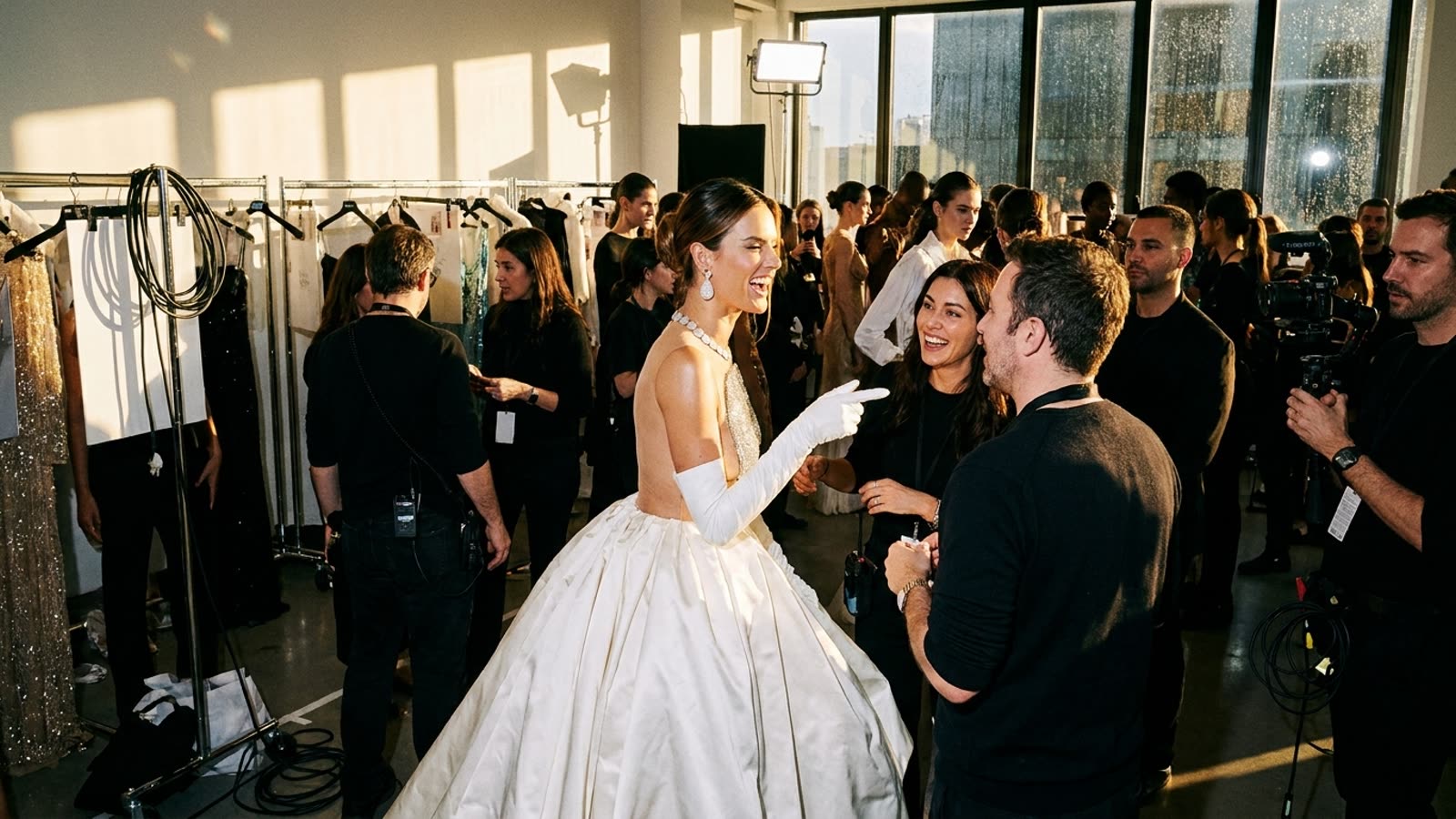
The nepo-baby discourse reached its fever pitch in 2022 and never quite subsided, but something interesting happened while we were all busy cataloguing famous offspring: a few of them got genuinely good at their jobs. Amelia Gray Hamlin, 25, daughter of Lisa Rinna and Harry Hamlin, has emerged as perhaps the most compelling case study in how to convert inherited access into earned credibility.
Her trajectory is worth examining not because celebrity children succeeding is novel—it isn't—but because Hamlin has managed something her peers often fail to achieve: she has become more famous for her work than for her parents or her romantic history.
The strategic pivot
Hamlin's early public profile was inextricable from The Real Housewives of Beverly Hills, where she appeared as a teenager alongside her mother. The tabloid years followed predictably: a relationship with Scott Disick (19 years her senior) generated the kind of coverage that typically calcifies into permanent identity. Many young women in her position have found themselves unable to escape the gossip-page gravity well.
Instead, Hamlin invested in the craft. She walked for Versace, Miu Miu, and Lanvin. She landed campaigns that didn't require her to stand next to a Kardashian-adjacent ex. By 2025, she had become a fixture at fashion weeks in a capacity that felt earned rather than inherited—a distinction the industry's gatekeepers notice even when they pretend not to.
The Claudia Tihan question
The current social-media discourse pitting Hamlin against fellow model Claudia Tihan reveals how the public still processes these careers. Tihan, a Brazilian-Canadian model with a substantial Instagram following, represents the influencer-to-model pipeline that runs parallel to the nepo-baby track. Both routes face skepticism from fashion purists; both require their practitioners to prove they belong.
The comparison is somewhat artificial—modeling isn't a zero-sum competition—but it illuminates how audiences evaluate legitimacy. Hamlin's advantage is institutional validation: the houses that book her confer credibility that follower counts cannot replicate. Tihan's advantage is audience ownership: her fans chose her before any brand did.
Our take
The nepo-baby conversation was always more interesting as industrial analysis than as moral judgment. Every industry has dynasties; fashion simply makes them more photogenic. What Hamlin demonstrates is that the second-generation advantage is real but insufficient. Access gets you in the room. Staying there requires something else—call it work ethic, call it taste, call it the good sense to stop dating men who appeared on Keeping Up with the Kardashians. Whatever it is, she appears to have figured it out.