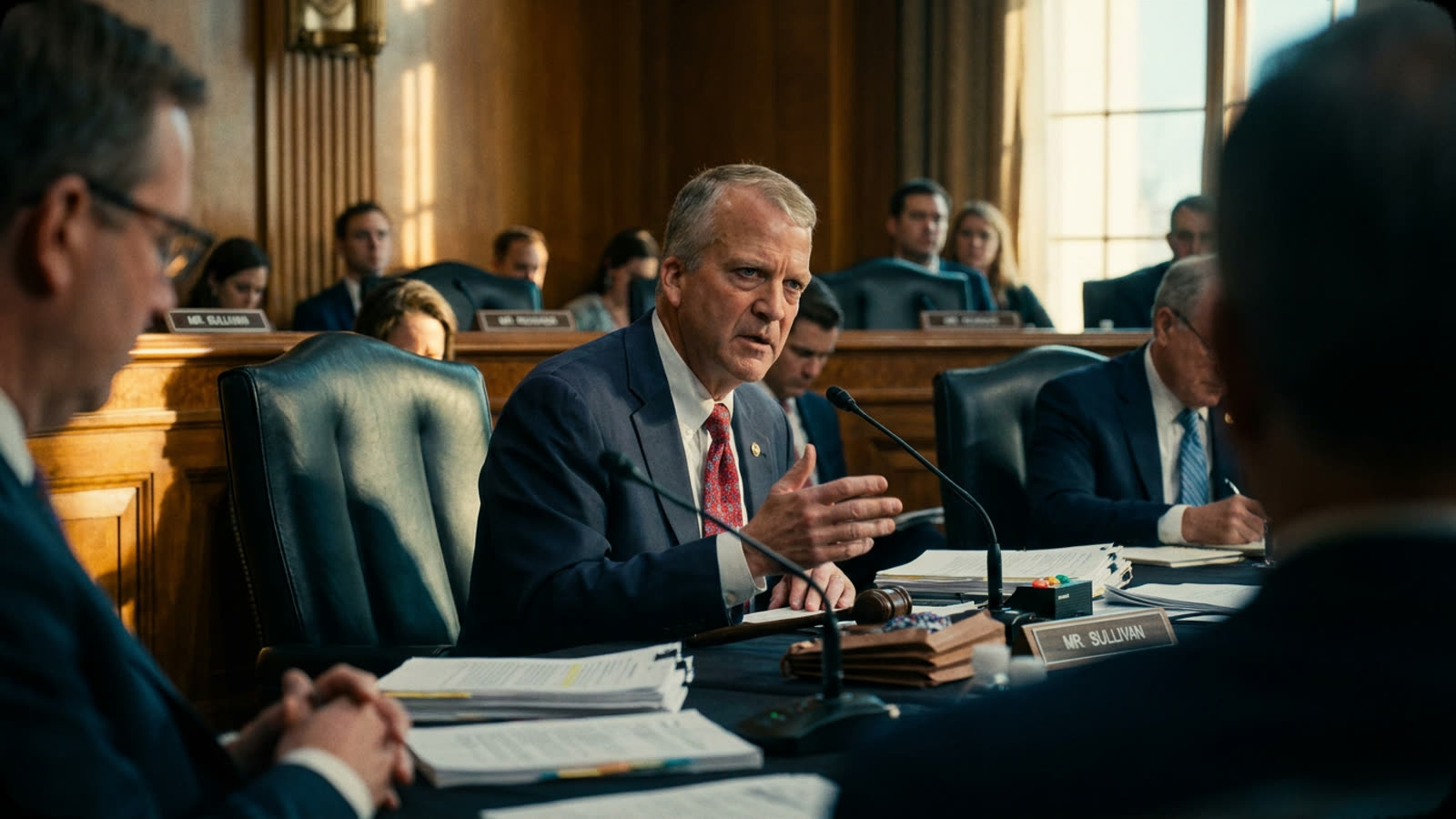
Alaska's upcoming Senate race now features two candidates named Dan Sullivan on the ballot, and a state judge has just ruled that voters will have to figure out which one they actually want.
The decision, handed down this week, reinstates the lesser-known Dan Sullivan—a former Anchorage mayor with no relation to the incumbent Republican senator—after election officials had attempted to remove him on grounds that his candidacy created unacceptable voter confusion. The judge disagreed, ruling that sharing a name with a sitting senator is not, in fact, disqualifying.
The accidental doppelgänger
The two Dan Sullivans occupy different political universes. Senator Dan Sullivan, the incumbent, is a Trump-aligned Republican seeking his third term, a former assistant secretary of state, and a reliable vote for the party's priorities. The other Dan Sullivan served as Anchorage's mayor from 2009 to 2015 as a moderate Republican, then largely faded from statewide politics. His decision to enter this race—running as an independent—has generated speculation ranging from genuine civic ambition to something more strategically mischievous.
Alaska's Division of Elections had sided with the incumbent's camp, removing the former mayor from the ballot on the theory that two identical names would create chaos in a state already running one of America's most complex voting systems. Alaska uses ranked-choice voting, meaning voters must navigate not just candidate selection but preference ordering. Adding a name collision to that mix seemed, to officials, like asking for trouble.
The procedural democracy problem
The judge's reasoning was straightforward: ballot access is a constitutional right, and the state cannot strip it away simply because a candidate's name is inconvenient. The ruling noted that other states have managed elections featuring candidates with identical names—including a memorable 2018 Texas race with two Michael Smiths—without the republic collapsing.
But Alaska presents unique complications. The state's electorate is small, geographically dispersed, and accustomed to unusual political dynamics (this is, after all, the state that elected a write-in candidate to the Senate in 2010). Ranked-choice voting already demands more from voters than traditional ballots. Critics of the reinstatement argue that adding a same-name candidate isn't just confusing—it's an invitation for ballots to be invalidated when voters fail to specify which Sullivan they meant.
The incumbent's campaign has signaled it may appeal, though time is running short before ballots must be finalized. Meanwhile, the former mayor has maintained that he has every right to run and that voters are perfectly capable of distinguishing between two people who happen to share a name.
Our take
This is democracy functioning exactly as designed, which is to say: messily. The judge is correct that you cannot bar someone from running for office because their name is already taken. But the ruling also exposes how little our electoral infrastructure accounts for edge cases that, in a nation of 330 million people, are statistically inevitable. Alaska will now conduct an experiment in whether ballot design, voter education, and ranked-choice mechanics can handle a challenge that sounds like a law school hypothetical. The answer will matter beyond Alaska—because if the system cannot survive two Dan Sullivans, it certainly cannot survive the more creative forms of confusion that determined actors might engineer in the future.