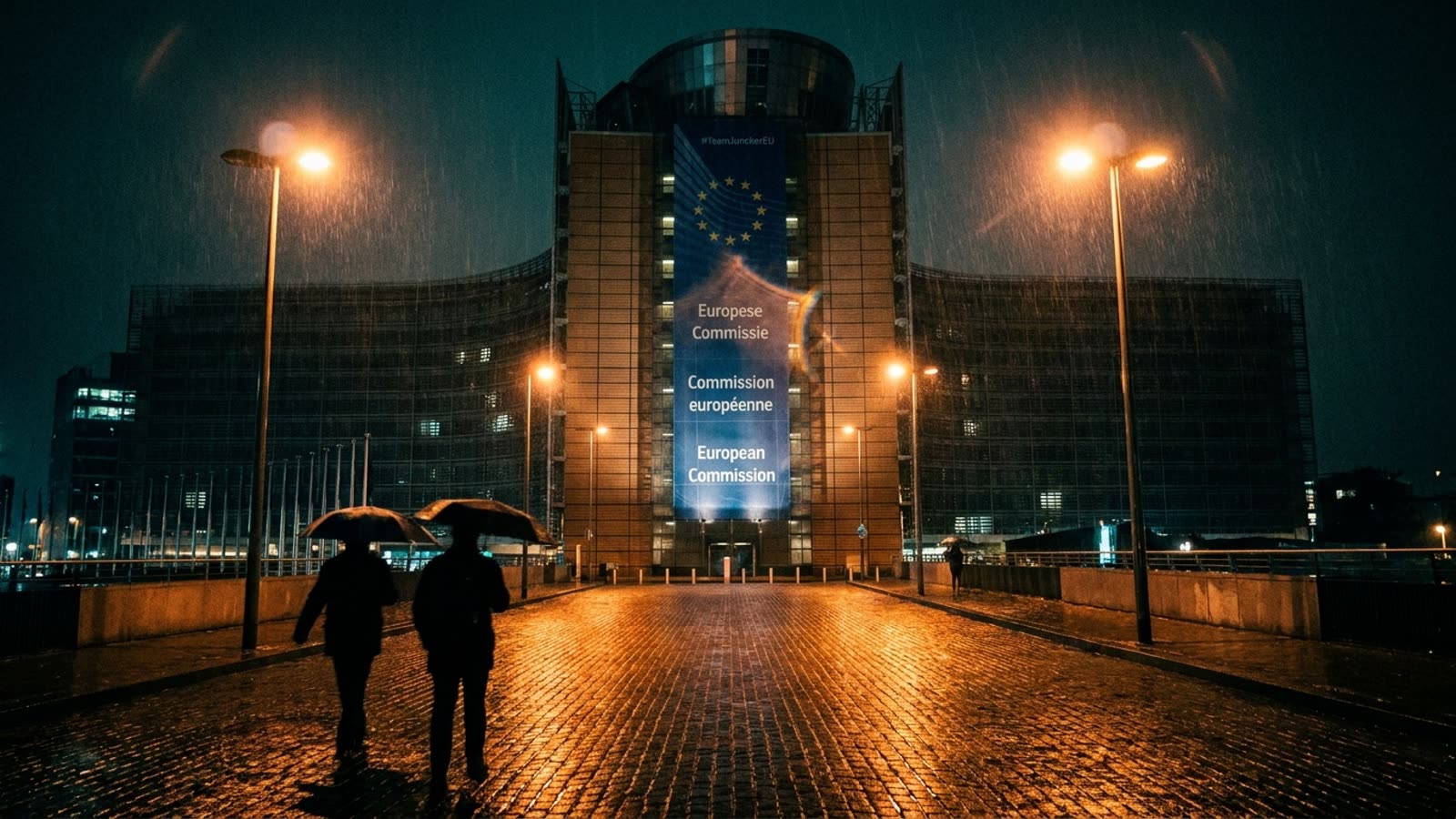
The European Union has a parliament, but it cannot propose laws. It has a council of national ministers, but they can only react to what's placed before them. The power to initiate legislation—every directive, every regulation, every trade negotiation mandate—belongs exclusively to an institution that no citizen directly elects: the European Commission.
This arrangement baffles Americans accustomed to congressional initiative and frustrates Europeans who sense that something important happens in Brussels but cannot quite locate who is responsible. The Commission is neither a cabinet nor a civil service nor a think tank, though it functions as all three simultaneously. Grasping its mechanics is essential to understanding why the EU moves the way it does—slowly, technocratically, and with a strange combination of ambition and caution.
The monopoly on ideas
The Commission's defining power is the "right of initiative." No law reaches the European Parliament or the Council of the EU unless the Commission drafts it first. This sounds procedural until you realize its implications: the entire legislative agenda of a bloc representing over four hundred million people flows through a single institutional bottleneck.
The Parliament can request legislation, and increasingly does. The Council can plead. But the Commission can simply decline, and often does, citing insufficient legal basis or political timing. This gatekeeping function means that what the Commission chooses not to propose matters as much as what it advances. Entire policy areas can remain dormant for years because no commissioner champions them.
The college and its curious democracy
Each member state nominates one commissioner, creating a college of twenty-seven. The Commission president—currently the most visible face of the institution—is nominated by the European Council and confirmed by Parliament, a process that has grown more contentious as the Parliament asserts itself.
Once seated, commissioners are legally obligated to serve the Union's interest, not their home country's. In practice, this creates a productive tension. A commissioner from a small Baltic state and one from Germany formally hold equal votes, and decisions within the college are typically reached by consensus rather than formal balloting. The result is an institution that moves cautiously, building internal coalitions before going public.
Beneath the commissioners sit the Directorates-General, the permanent bureaucracy that drafts the actual text. These civil servants—recruited through competitive examination and serving for careers—provide continuity across political cycles. A directive on digital markets may bear a commissioner's name, but its architecture reflects years of staff work, stakeholder consultations, and legal vetting.
Guardian of the treaties
The Commission's second great role is enforcement. When a member state fails to transpose a directive into national law, or when a company violates competition rules, the Commission investigates and can impose fines running into billions of euros. Its competition directorate has become arguably the world's most aggressive antitrust enforcer, taking on American technology giants with a vigor that Washington has often lacked.
This prosecutorial function sits uneasily alongside the legislative one. The same institution that writes the rules also punishes those who break them, a concentration of power that would be constitutionally suspect in most national systems. The European Court of Justice provides judicial review, but the Commission's initial discretion is vast.
Our take
The Commission's design reflects a foundational European anxiety: that democratic politics, left unchecked, produces nationalism, protectionism, and eventually war. Technocracy was the antidote, and for decades it delivered stability and prosperity. But the arrangement increasingly strains against citizens who want someone to blame and someone to thank. The Commission's power is real; its accountability remains abstract. That gap defines the EU's permanent legitimacy problem, and no treaty revision has solved it.