For more than half a century, weather forecasting has worked the same way: gather atmospheric data from satellites, weather balloons, and ground stations, then feed it into physics-based models that simulate the atmosphere on supercomputers. The European Centre for Medium-Range Weather Forecasts has refined this approach to remarkable precision, and the American Global Forecast System has done the same. These models are triumphs of computational physics, requiring billions of calculations to solve fluid dynamics equations across a three-dimensional grid of the Earth's atmosphere.
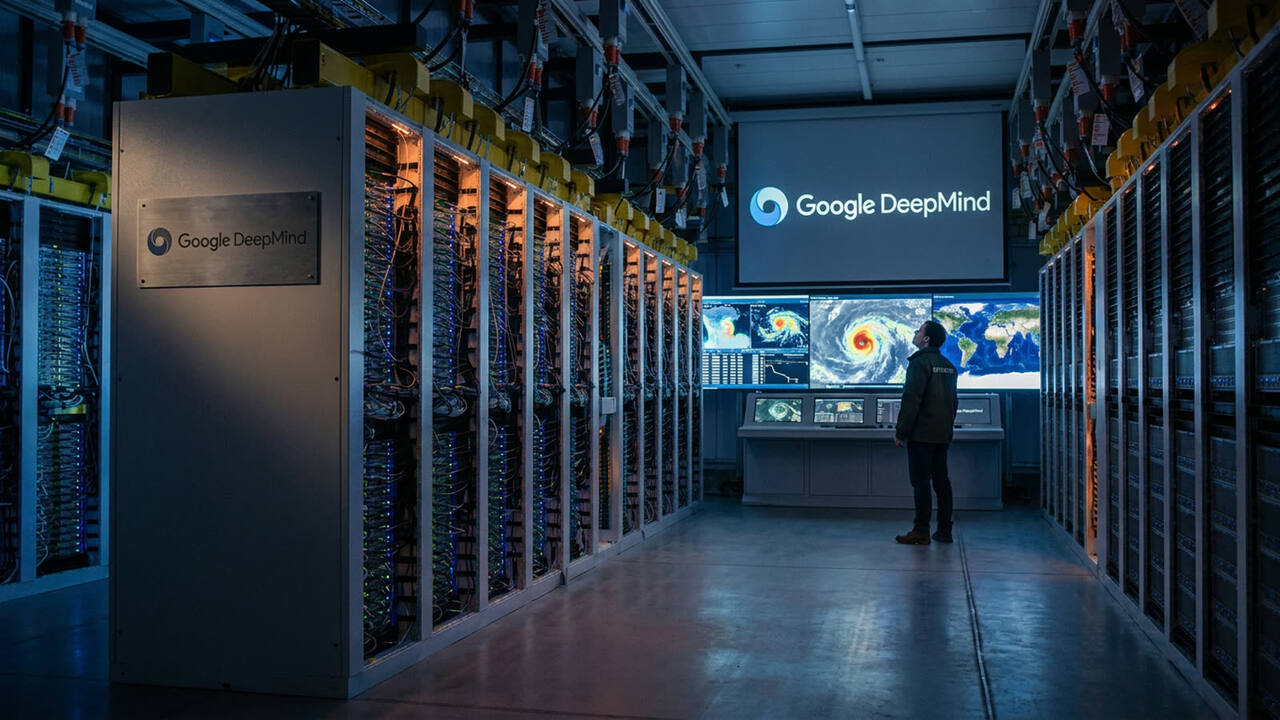
Then, starting around 2022, something unexpected happened. Machine learning models trained on decades of historical weather data began matching—and in some cases beating—the physics-based systems that had taken generations to develop. Google's GraphCast, Huawei's Pangu-Weather, and Nvidia's FourCastNet demonstrated that neural networks could produce ten-day forecasts in minutes rather than hours, using a fraction of the computational power.
The strange victory of pattern recognition
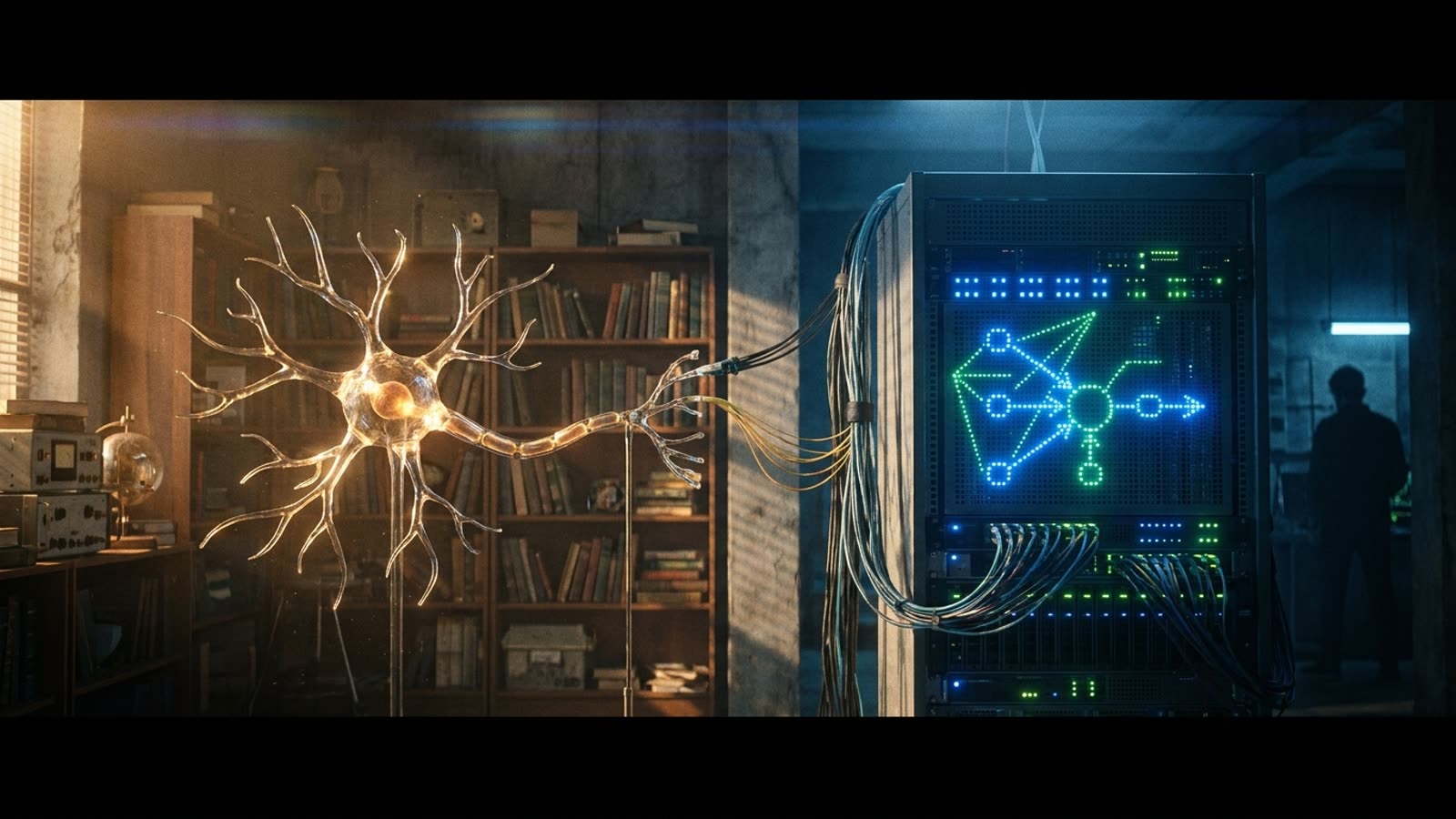
The success of AI weather models presents a philosophical puzzle. Physics-based forecasting works from first principles: we know how air masses move, how pressure gradients form, how moisture condenses. Machine learning models know none of this. They have simply observed millions of examples of what the atmosphere looked like on one day and what it looked like the next, learning statistical relationships too complex for humans to articulate.
This is not how scientific progress is supposed to work. We expect understanding to precede prediction. Yet here, prediction has leapfrogged understanding entirely. The neural networks cannot explain why a particular storm system will intensify—they simply recognize patterns that historically preceded intensification.
Crucially, the AI models are not replacing the physics. They are trained on output from physics-based models, learning to approximate decades of supercomputer simulations in a single forward pass through a neural network. The physics remains the foundation; the machine learning is a remarkably efficient compression of that knowledge.
What the machines still cannot see
The limitations are instructive. AI weather models struggle with rare events—the once-in-a-century storms that, by definition, appear infrequently in training data. They have difficulty with rapidly intensifying hurricanes, where small changes in ocean temperature or wind shear can produce dramatically different outcomes. And they cannot yet incorporate real-time observations the way physics models can, making them less useful for nowcasting the next few hours.
There is also the problem of trust. When a physics-based model predicts a hurricane track, meteorologists can interrogate the reasoning: they can see the steering currents, the high-pressure ridges, the factors driving the prediction. An AI model offers no such transparency. It simply outputs coordinates.
National weather services have responded cautiously, using AI forecasts as one input among many rather than as a replacement for traditional methods. The human forecaster remains in the loop, synthesizing multiple model outputs with local knowledge and professional judgment.
Our take
Weather forecasting offers a preview of how AI will transform expertise-heavy fields: not by replacing human judgment wholesale, but by compressing decades of accumulated knowledge into tools that make experts faster and more accurate. The meteorologist of 2030 will likely toggle between physics simulations and AI ensembles, using each where it excels. The interesting question is not whether AI will replace forecasters—it will not—but whether the next generation will understand the physics well enough to know when the machines are wrong. Pattern recognition is powerful until the pattern breaks.