The profession of museum curator has always been part scholar, part storyteller, part diplomat navigating the competing demands of donors, boards, and the public. Now it is becoming something else: part prompt engineer.
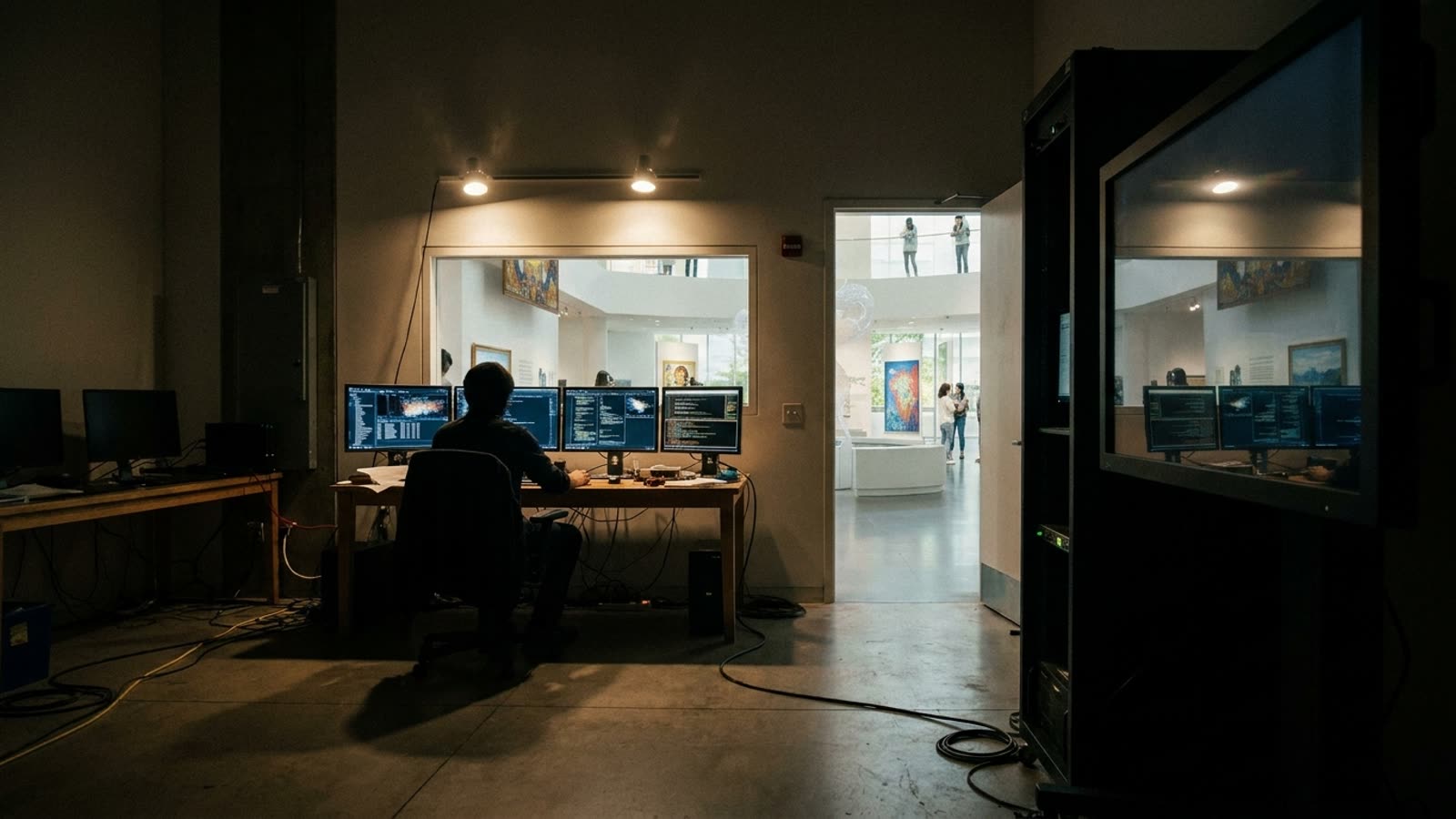
Across major institutions from the Smithsonian to the Rijksmuseum, artificial intelligence tools have infiltrated nearly every stage of curatorial work. They analyze visitor flow patterns to optimize gallery layouts. They surface connections between artworks that human experts might miss—or might never have thought to look for. They draft wall text, generate accessibility descriptions, and increasingly help decide which pieces emerge from storage and which remain in darkness. The curator's eye remains essential, but it now shares the room with something that never blinks.
The invisible assistant
The most widespread application is also the least glamorous: collections management. A major museum might hold hundreds of thousands of objects, the vast majority unseen by the public. AI systems can now cross-reference provenance records, flag conservation concerns, and identify works that share thematic or formal qualities across departments that rarely communicate. A Renaissance painting might be linked to an African textile through color analysis, prompting an exhibition concept no human would have proposed.
This capacity for unexpected connection is both the technology's greatest promise and its subtlest danger. Algorithms trained on existing scholarship tend to reinforce established canons. They find what resembles what has already been found interesting. The truly radical curatorial insight—the recognition of something overlooked precisely because it fits no existing category—may be the one thing machine learning struggles to replicate.
The authorship question
When an AI system suggests an exhibition theme, drafts interpretive text, and recommends a sequence of galleries, who is the curator? The question is not merely philosophical. Museums are institutions of authority; their presentations shape public understanding of history, culture, and value. If those presentations are increasingly co-authored by systems whose reasoning is opaque even to their operators, the social contract between museum and visitor becomes murkier.
Some institutions have begun disclosing AI assistance in their processes, though practices vary widely. Others argue that the tools are no different from any research technology—databases, image analysis software, climate-controlled storage—that has always mediated between curator and collection. The distinction may be that previous technologies extended human capacity without claiming to think.
What remains human
The curators who have most successfully integrated AI into their practice describe a division of labor rather than a replacement. The machine excels at pattern recognition across vast datasets, at surfacing options, at the tedious work of metadata reconciliation. The human excels at judgment: knowing which unexpected connection is genuinely illuminating and which is merely surprising, understanding what a community needs to see and why, taking responsibility for the story being told.
This division mirrors what is happening across knowledge professions, but museums present it in unusually stark relief. An exhibition is a public argument made in physical space. Someone must stand behind it.
Our take
The quiet integration of AI into curatorial practice is neither the democratization its boosters promise nor the cultural catastrophe its critics fear. It is something more mundane and more interesting: a test case for how institutions of cultural authority adapt when their core competency—the exercise of educated judgment—can be partially automated. The museums that will thrive are those honest enough to acknowledge the collaboration and wise enough to understand what only humans can bring to it. The ones that pretend nothing has changed will eventually find their audiences have noticed.