The transformation happened so gradually that most clients never noticed. Somewhere between 2020 and the present, the junior associate pulling an all-nighter to review ten thousand documents became an anachronism. The paralegal manually searching through decades of case law became unnecessary. The first draft of a contract, once the province of a second-year lawyer billing four hundred dollars an hour, became the work of software that never sleeps and never bills.
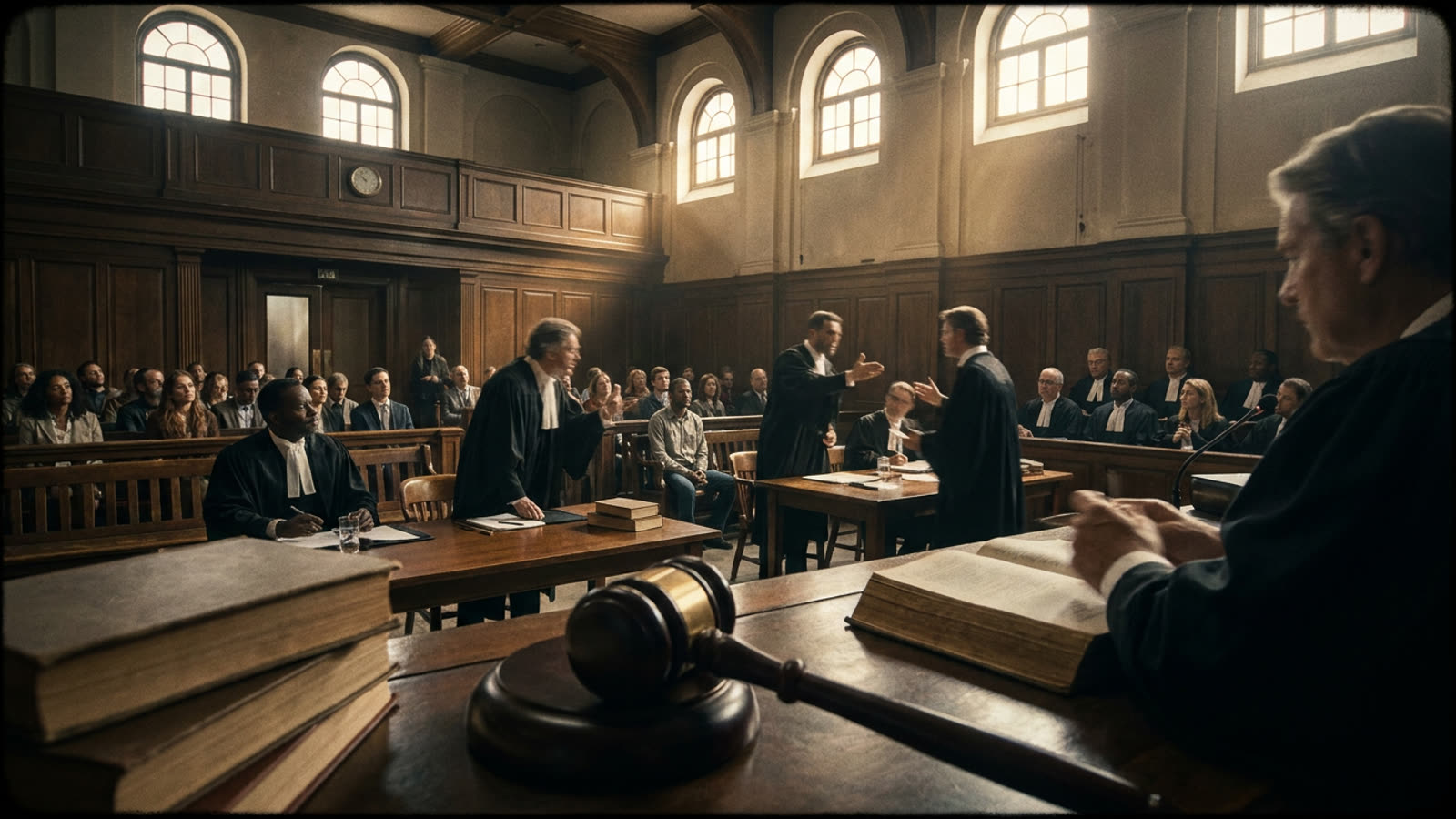
Yet step into any courtroom and you will find the same theater that has played out for centuries: a human being standing before a judge, making arguments, reading the room, adjusting in real time to the subtle cues that determine whether a jury believes a witness or a judge finds an argument persuasive. The gap between these two realities tells us something profound about the nature of legal work and, by extension, about the limits of what artificial intelligence can automate.
The back office revolution
Document review, once the lucrative misery that funded law firm profits, has been transformed beyond recognition. Large language models can now process contracts, depositions, and regulatory filings at speeds that make human review economically irrational for most routine matters. A task that once required a team of associates working for weeks can be completed in hours. The cost savings are real, the accuracy is often superior, and the associates who once did this work have been reassigned or, in many cases, never hired at all.
Legal research has undergone a similar metamorphosis. The art of finding the right precedent, of threading together a chain of cases that supports a novel argument, was once a skill that took years to develop. Now it is a capability that any lawyer with access to modern tools can deploy instantly. The democratization is genuine: a solo practitioner can now conduct research that rivals what a large firm could produce a decade ago.
The courtroom's stubborn resistance
But the courtroom remains a fortress. Trial lawyers report using AI for preparation—drafting opening statements, organizing evidence, anticipating opposing arguments—while finding it nearly useless for the actual work of persuasion. The reason is not technological limitation in any simple sense. It is that trials are fundamentally about human judgment, social dynamics, and the irreducibly embodied act of one person convincing another.
A jury does not evaluate arguments in isolation. They evaluate the person making them. They watch for hesitation, for confidence, for the micro-expressions that signal belief or doubt. They respond to presence, to voice, to the ineffable quality that separates a competent presentation from a compelling one. No language model, however sophisticated, can stand in a courtroom and be believed.
This creates a strange bifurcation in the legal profession. The preparatory work—research, drafting, document analysis—has been substantially automated. The performative work—trials, negotiations, client counseling—remains almost entirely human. The lawyer of today spends less time writing and more time talking, less time finding information and more time deciding what to do with it.
Our take
The legal profession's uneven automation offers a useful corrective to both AI hype and AI dismissal. The technology is genuinely transformative for certain categories of cognitive work, particularly those involving pattern recognition across large datasets and the synthesis of existing text. But it remains incapable of replacing activities that depend on physical presence, social trust, and real-time human judgment. The lawyers who thrive in this environment will be those who recognize that their value lies not in knowing the law—machines can retrieve that—but in the irreducibly human act of standing before other humans and being persuasive. The brief may be written by machine, but the case will still be won by a person.