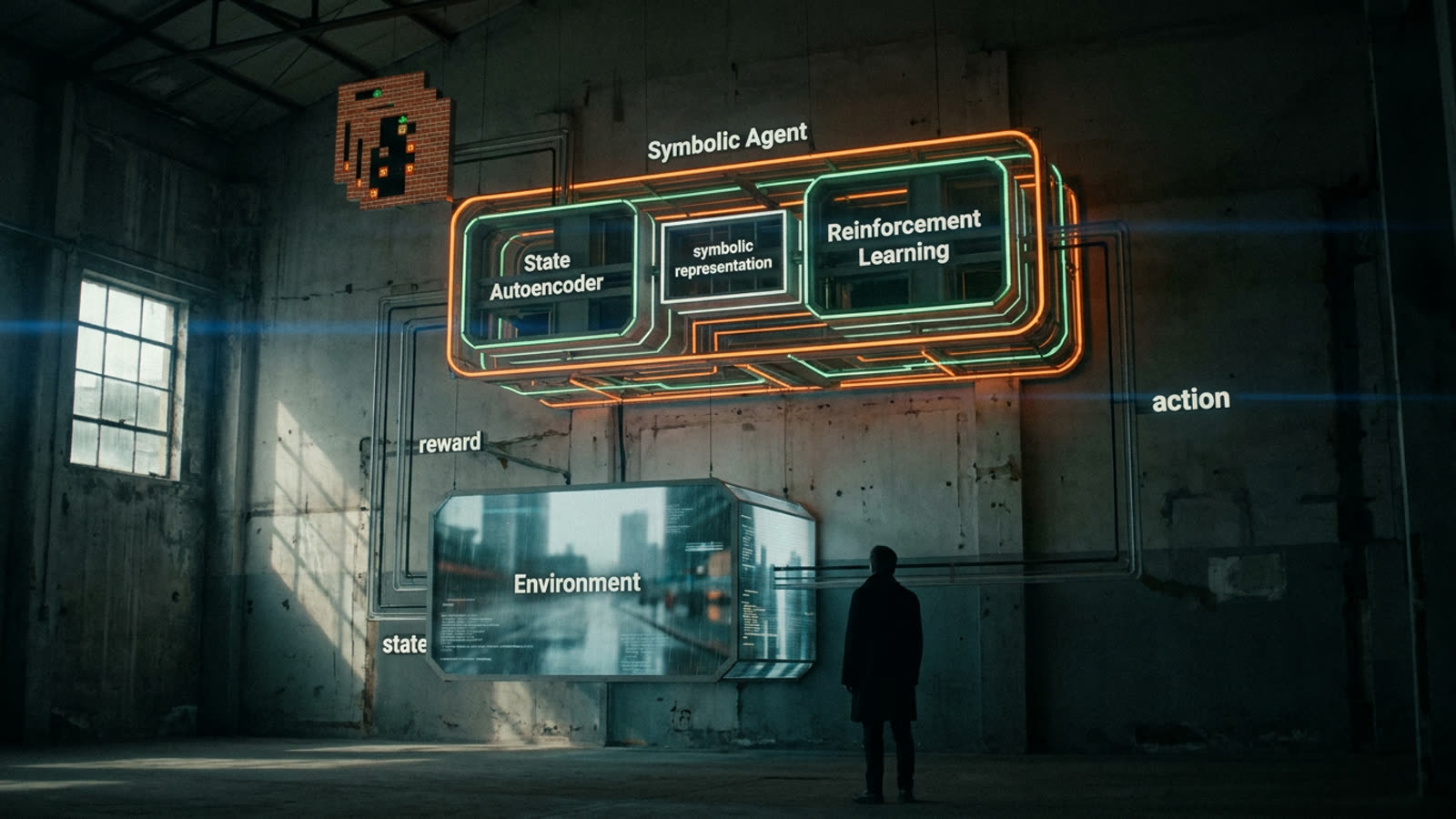
Every large language model operates under a constraint so basic it rarely gets discussed: they have never experienced anything. They have read billions of words about coffee but have never felt the warmth of a mug, never startled at the bitterness of an over-extracted shot, never associated the smell with a particular morning or a particular person. This is not a temporary limitation awaiting the next parameter count increase. It is the foundation.
The implications ripple through every interaction. When an AI writes about grief, it draws on patterns from texts about grief—memoirs, condolence letters, psychology papers—but it has no phenomenological anchor. It cannot distinguish between grief that manifests as numbness and grief that manifests as rage except through the proxy of how other humans have described those states. The model is, in a precise sense, always working from hearsay.
The compression problem
Language is humanity's greatest compression algorithm. We distill the blooming, buzzing confusion of experience into discrete symbols that can be transmitted across time and space. But compression is lossy. The word "red" carries none of the qualia of seeing red. The phrase "sharp pain" is not painful. Large language models are trained exclusively on the compressed signal, never the source.
This creates a curious inversion. Humans learn language to describe experiences they have already had. Language models learn language to simulate experiences they never will. The directionality matters. A child who burns a hand on a stove acquires the concept "hot" through flesh, then later maps the word onto the memory. An AI encounters the word "hot" thousands of times in thousands of contexts and builds a statistical model of its usage patterns—but the usage patterns are not the thing itself.
Where the gap shows
The disembodiment becomes visible in predictable places. Ask an AI to describe what it feels like to be dizzy, and it will produce fluent prose assembled from medical texts and first-person accounts. The prose will be accurate in the way a travel guide is accurate: it will tell you what to expect without giving you the experience. This is useful—travel guides are useful—but it is not understanding in the way humans use that word.
The gap also appears in physical reasoning. Language models struggle with tasks that require intuitive physics: predicting how a stack of oddly shaped objects will fall, understanding why you cannot push a rope, grasping that a glass of water carried upside-down will spill. Humans solve these problems effortlessly because we have spent a lifetime interacting with matter. The physics is in our bodies. For a model trained on text, physics is a set of propositions, not a felt constraint.
What this means for users
None of this makes language models useless. They are extraordinarily powerful tools for tasks that operate in the domain of language: summarization, translation, brainstorming, code generation, stylistic transformation. The error is category confusion—expecting embodied understanding from a system that, by design, has none.
The practical upshot: trust AI outputs on matters that can be verified through text (does this code compile? is this summary accurate?) and be appropriately skeptical on matters that require experiential judgment (is this meal delicious? is this room cozy? will this joke land?). The model is not lying when it answers such questions; it is doing the only thing it can do, which is pattern-matching against what humans have written. Sometimes that is good enough. Often it is not.
Our take
The current discourse oscillates between AI-as-god and AI-as-fraud, and both framings miss the point. Large language models are genuinely novel: statistical engines of extraordinary scale that have learned to manipulate symbols with eerie fluency. They are also genuinely limited: disembodied minds, if we can call them minds at all, processing the world through the pinhole of text. Recognizing both truths simultaneously is not fence-sitting. It is the only honest position.