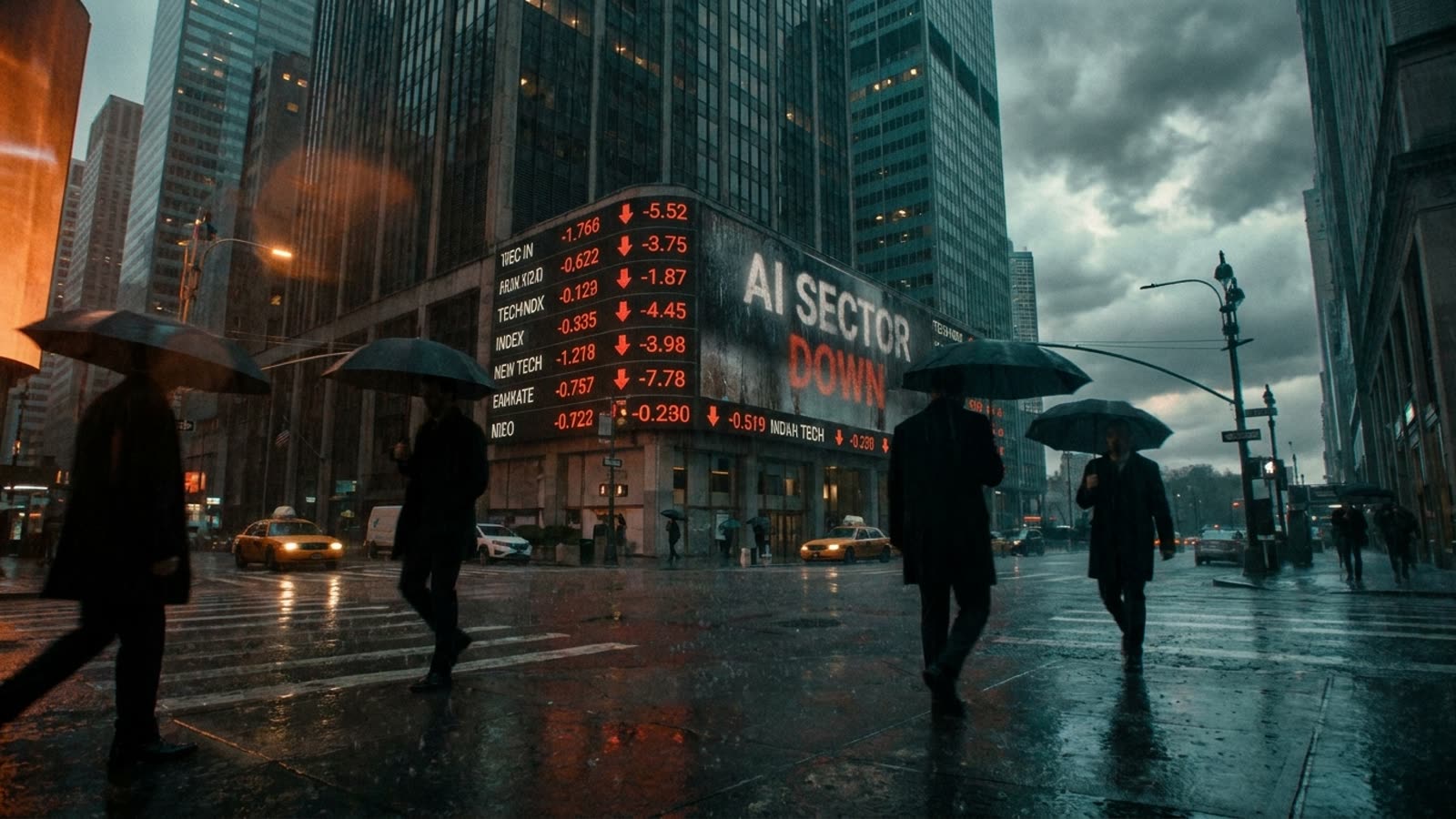
The great AI reckoning has arrived not with a dramatic safety failure or a regulatory crackdown, but with the dull, implacable force of monetary policy. The Nasdaq just posted its worst monthly performance in more than a year, and the proximate cause was not some revelation about large language models hallucinating or autonomous systems misbehaving — it was the Federal Reserve's continued insistence that interest rates will remain elevated for the foreseeable future.
This should surprise no one who has lived through previous technology cycles. The price of money is, and always has been, the pin that deflates speculative bubbles. When capital is cheap, investors tolerate — even celebrate — companies that promise transformative returns in some distant future. When capital is expensive, those same investors suddenly rediscover the appeal of present-day cash flows.
The mechanics of deflation
AI companies, particularly those building foundation models, are capital-intensive in ways that would have seemed absurd a decade ago. Training runs cost tens of millions of dollars. Data center buildouts require billions. The entire thesis has depended on the availability of patient capital willing to wait years for profitability. At a 2% risk-free rate, that patience is affordable. At 5% or higher, the opportunity cost becomes punishing.
The market is now doing the math it should have done eighteen months ago. Nvidia, the de facto toll collector of the AI boom, has seen its forward multiple compress significantly. The hyperscalers — Microsoft, Google, Amazon — are facing investor pressure to demonstrate that their AI infrastructure spending will generate returns before the decade is out. Smaller AI startups, many of which raised at valuations that assumed perpetual zero-interest-rate conditions, are discovering that their next funding rounds may come with painful terms, if they come at all.
What the safety debate missed
The irony is considerable. For years, the loudest critics of AI focused on existential risk, alignment problems, and the potential for catastrophic misuse. These concerns are not frivolous, and recent safety breaches at leading labs have raised legitimate questions about whether the industry can keep increasingly powerful systems under control. But the market, it turns out, was never particularly worried about superintelligent machines escaping their constraints. It was worried about the same thing it always worries about: whether the numbers work.
The safety discourse, for all its urgency, never threatened the AI boom the way a sustained period of expensive money could. Regulators move slowly. Existential risks are hard to price. But a 5.25% federal funds rate is immediate, concrete, and affects every discounted cash flow model on Wall Street.
Our take
This correction is healthy, even if it arrives with the usual collateral damage to portfolios and careers. The AI industry was building on a foundation of cheap capital that was never going to last, and the reckoning was always a matter of when, not whether. The technology itself remains genuinely transformative — the models are better than they were a year ago, and the use cases are multiplying. But transformation on a realistic timeline, funded at realistic costs of capital, looks very different from the fever dreams of 2024 and 2025. The survivors of this shakeout will be the companies that can generate actual revenue, not just impressive demos. That is how it should be.