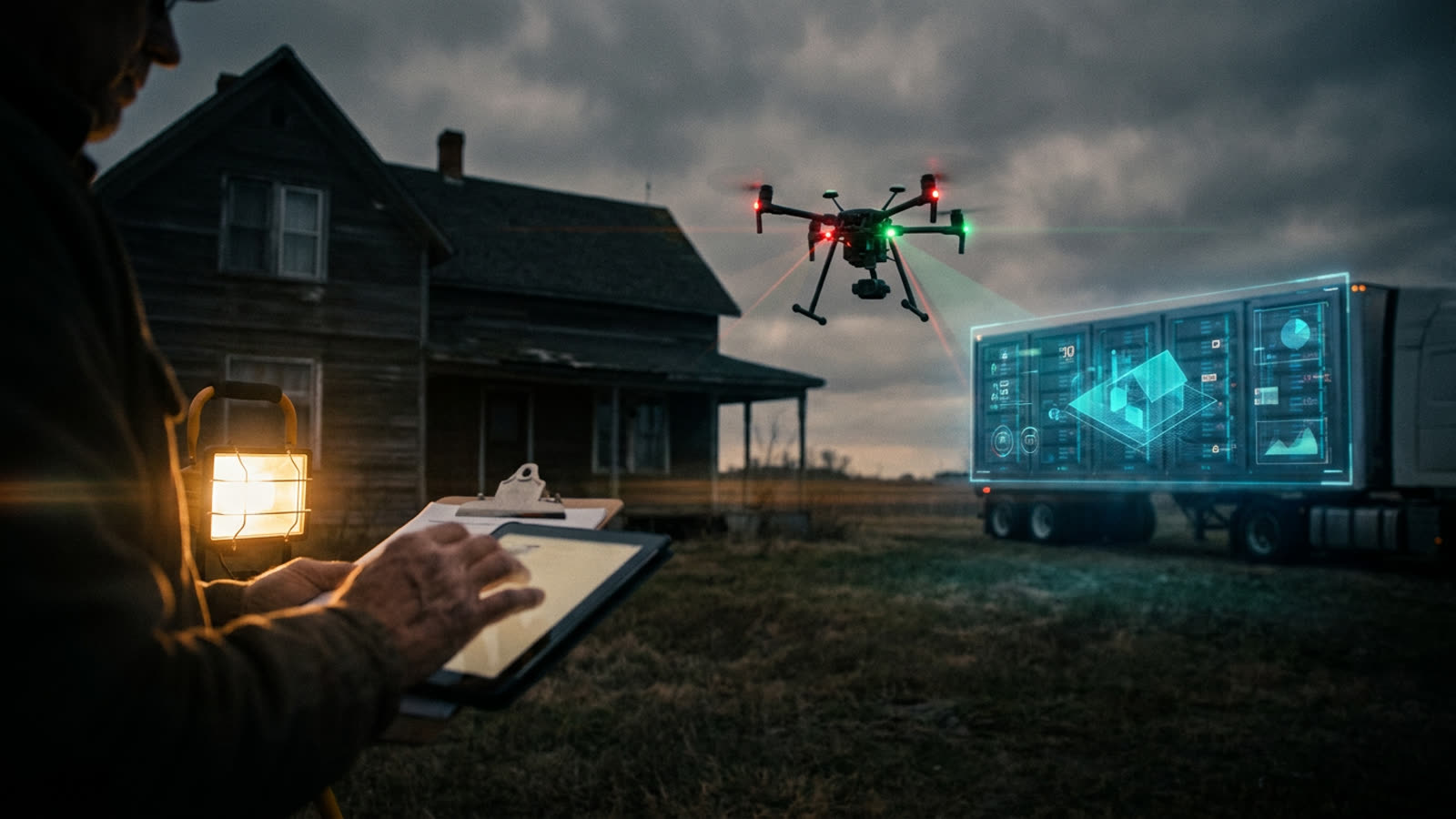
For most of the twentieth century, determining a home's value required a human being with a clipboard, a tape measure, and an encyclopedic knowledge of neighborhood sales. The appraiser was part detective, part accountant, part local historian—someone who could explain why the colonial on Maple Street was worth more than the seemingly identical colonial on Oak. That expertise commanded respect and, not incidentally, fees that could run several hundred dollars per assessment.
Today, when you apply for a mortgage or refinance your home, there is an excellent chance no human appraiser will ever cross your threshold. Automated valuation models, or AVMs, now process millions of property assessments annually, drawing on vast databases of sales records, tax assessments, satellite imagery, and even smartphone photos uploaded by homeowners. The shift has been gradual enough that most consumers barely noticed, yet profound enough to fundamentally alter a profession that once seemed immune to automation.
The rise of the machine assessor
AVMs are not new—Freddie Mac introduced its first automated model in the mid-1990s—but their accuracy and adoption have accelerated dramatically. Modern systems ingest not just comparable sales data but also permit records, school district ratings, walkability scores, and hyperlocal economic indicators. Machine learning algorithms identify patterns that human appraisers might miss: the precise premium buyers pay for south-facing windows in northern climates, or the discount attached to homes near cell towers. For straightforward transactions in data-rich markets, these models now match or exceed human accuracy at a fraction of the cost and time.
Lenders have embraced the technology enthusiastically. Fannie Mae and Freddie Mac both accept AVM-based appraisals for certain refinancing transactions, and desktop appraisals—where a human reviews algorithmic output without visiting the property—have become standard for many loan products. The pandemic accelerated this trend, as social distancing made in-person inspections impractical, but the shift has proven sticky.
Where humans still matter
Yet the profession has not vanished. Instead, it has bifurcated. For cookie-cutter suburban homes in markets with robust transaction data, algorithms dominate. But for unusual properties—historic homes, rural acreage, mixed-use buildings, anything that defies easy comparison—human judgment remains essential. Appraisers increasingly find themselves handling the hard cases: the converted barn, the waterfront lot with erosion issues, the neighborhood in rapid transition where last year's sales data may already be obsolete.
This shift has changed what it means to be good at the job. Technical competence with valuation software is now table stakes. The differentiating skill is the ability to explain and defend valuations that algorithms struggle to reach—to articulate why a property's quirks add or subtract value in ways the data cannot capture. Appraisers have become, in effect, appellate judges for algorithmic decisions, called in when the machine's answer seems wrong or when stakes are high enough to demand human accountability.
The bias question
Automation has also surfaced uncomfortable questions about fairness. Studies have documented persistent gaps in how AVMs value homes in predominantly Black neighborhoods compared to similar properties in white areas, echoing longstanding concerns about human appraisal bias. The difference is that algorithmic bias operates at scale and can be harder to detect or challenge. Regulators are now grappling with how to audit systems whose inner workings are often proprietary, and some advocacy groups argue that removing human judgment has simply laundered old prejudices into new technology.
Our take
The appraiser's fate offers a preview of how many knowledge professions will evolve alongside AI: not extinction, but transformation into something more specialized and, arguably, more intellectually demanding. The routine work goes to machines; the judgment calls remain human. Whether that bargain proves sustainable depends on whether the profession can articulate its value clearly enough to justify its continued existence—and whether regulators insist on human oversight where algorithmic shortcuts carry real social costs. The clipboard may be gone, but the need for someone who can explain why this house, on this street, is worth what it is has not disappeared. It has simply become harder to monetize.