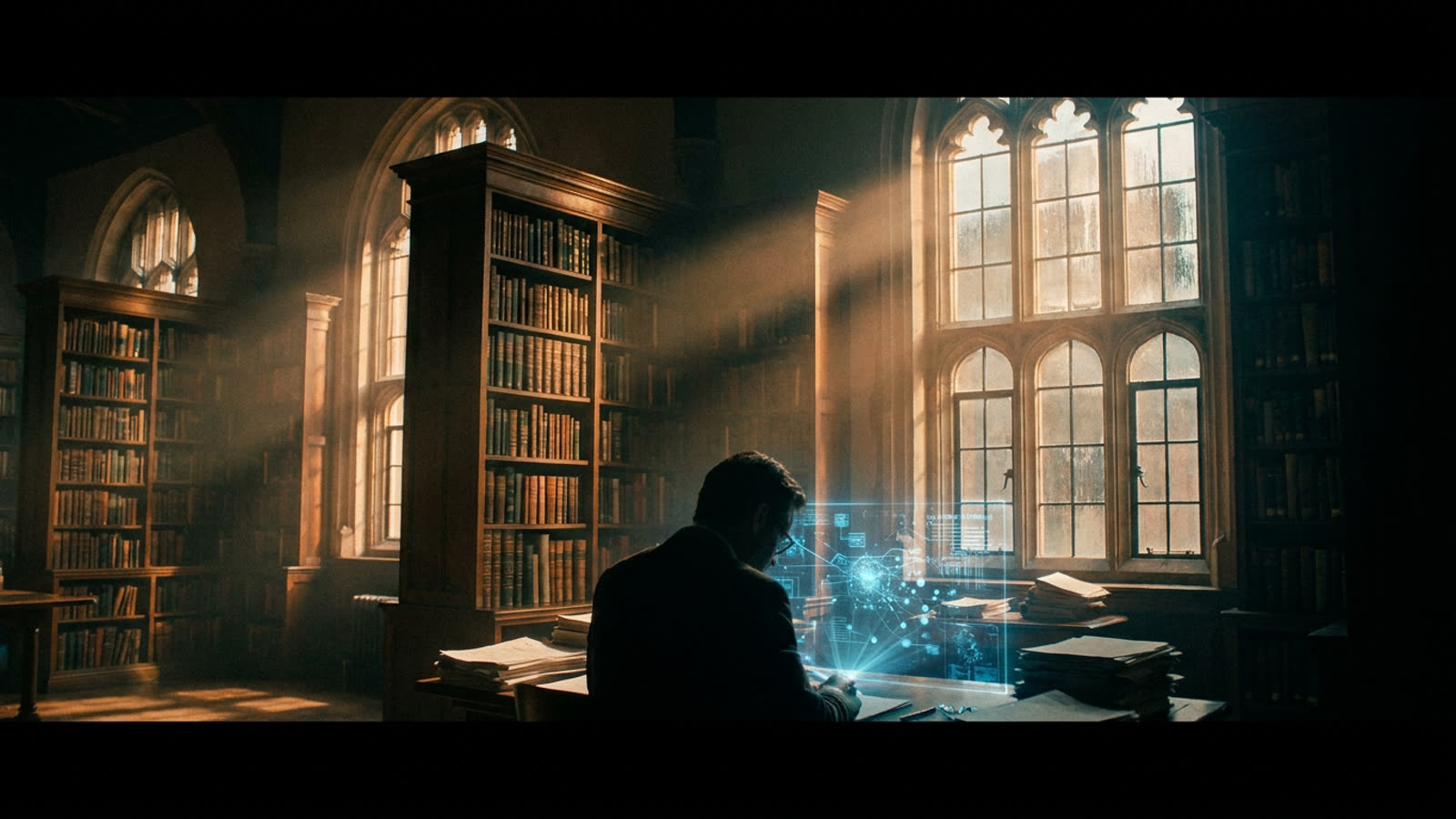
The patent examiner has long occupied one of modernity's stranger professional niches: a civil servant tasked with reading the future. Each day brings applications claiming novelty — a new drug formulation, a faster chip architecture, a method for training neural networks. The examiner must determine whether the invention is genuinely new, whether it would have been obvious to someone skilled in the art, and whether it deserves the extraordinary prize of a two-decade legal monopoly. It is painstaking, consequential work. And it is being quietly transformed by the very technology it increasingly evaluates.
Patent offices in the United States, Europe, Japan, China, and South Korea have all deployed machine learning systems to assist examiners. The tools vary in sophistication, but the core function is similar: they search vast databases of prior art — existing patents, academic papers, technical disclosures — to surface documents relevant to the application under review. What once required hours of manual keyword searching can now happen in minutes.
The productivity promise
The appeal is obvious. The world's major patent offices face staggering backlogs. Examiners are expensive to train, and the technical complexity of applications grows relentlessly. AI-assisted search tools promise to let each examiner handle more cases without sacrificing quality. Some offices report that examiners using these systems find relevant prior art they would have missed entirely through traditional methods.
The gains are real but uneven. AI excels at finding textually similar documents — helpful when an applicant uses standard terminology. It struggles more with conceptual similarity, the kind of lateral thinking a skilled examiner brings when recognizing that a claimed invention in one field mirrors an old technique from another. The technology augments pattern recognition; it does not yet replicate judgment.
The stakes of the search
This matters because prior art search is not a neutral administrative task. It is the foundation of patent validity. An examiner who misses a relevant document may grant a patent that should never have issued, creating a legal weapon that can be wielded against competitors, sometimes for decades. An examiner who finds too little may reject a genuinely novel invention, discouraging the disclosure that patents are meant to incentivize.
AI tools shift this calculus in subtle ways. They may reduce certain errors while introducing others — algorithmic blind spots that become systematic across thousands of examinations. If every examiner uses the same search tool trained on the same corpus, they may all miss the same categories of prior art. The diversity of human search strategies, for all its inefficiency, provided a kind of redundancy.
Our take
The integration of AI into patent examination is neither salvation nor catastrophe. It is a case study in how algorithmic assistance reshapes expert work — amplifying certain capabilities, atrophying others, and creating new forms of institutional risk. The examiners themselves are not being replaced; they are being given different tools that change what their expertise means. The question is whether patent offices are tracking these shifts with the rigor they deserve, or simply celebrating efficiency gains while the deeper transformation goes unexamined. For a system that grants monopolies over ideas, the answer matters more than most bureaucratic reforms.