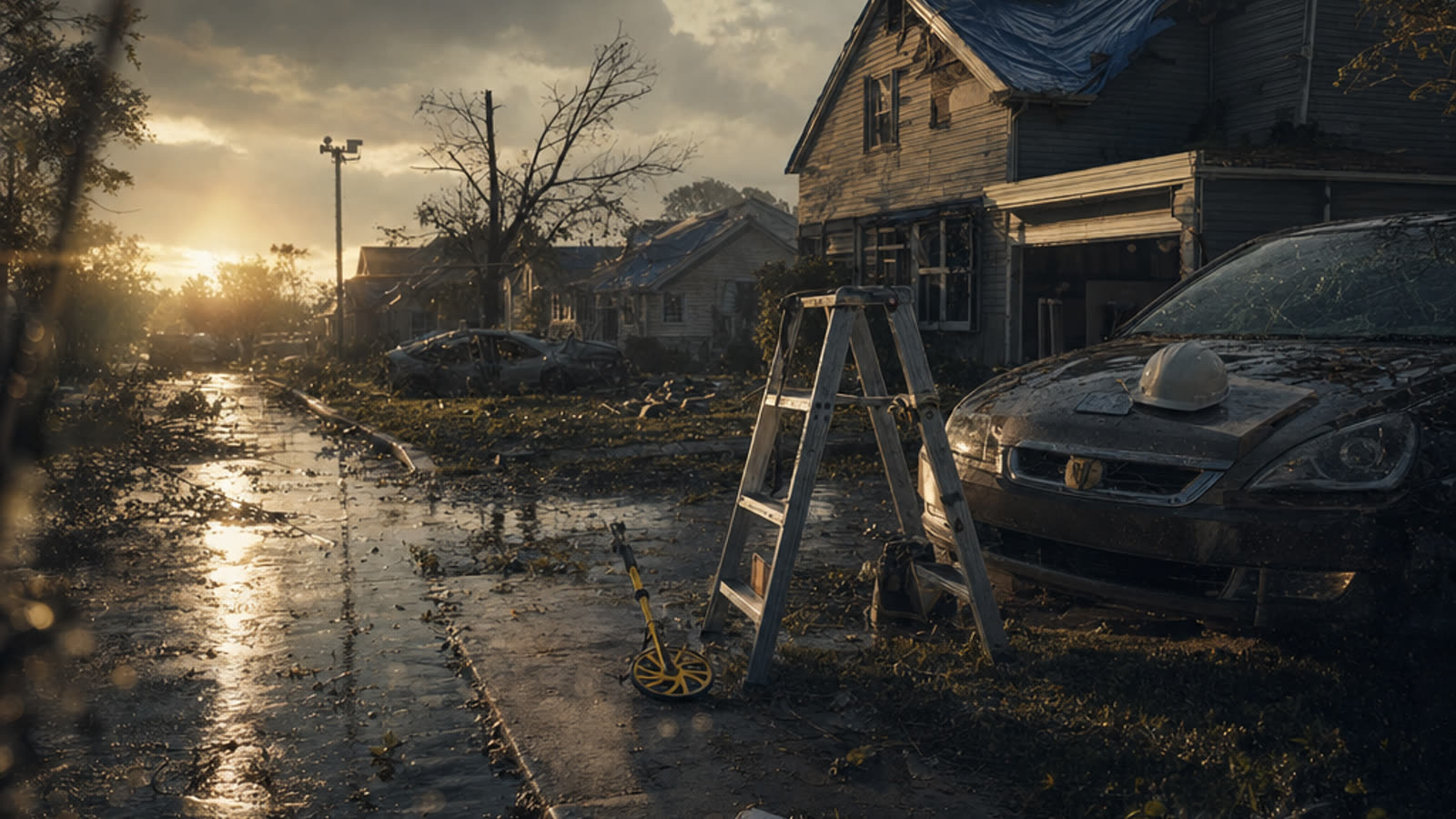
The property insurance adjuster used to be a figure of minor suburban mythology: the clipboard-wielding professional who arrived after the storm, climbed onto your roof, and rendered judgment on your claim. That person still exists, technically. But the job has been hollowed out from the inside, transformed by artificial intelligence into something closer to quality assurance than independent assessment.
Across the American insurance industry, which employs roughly 300,000 claims adjusters and examiners, machine learning systems now handle the cognitive work that once defined the profession. Satellite imagery analyzed by computer vision determines roof damage before any human sets foot on a property. Natural language processing extracts relevant details from policyholder statements. Predictive models flag potentially fraudulent claims with accuracy rates that would have seemed fantastical a decade ago. The adjuster remains in the loop, but the loop has grown very small.
The quiet displacement
Unlike the dramatic confrontations between AI and creative professionals—the writers' strikes, the artist manifestos, the existential debates about authorship—the transformation of insurance adjustment has proceeded with almost no public controversy. The reasons are instructive. Insurance adjusters lack the cultural cachet of screenwriters. Their work, however economically significant, does not produce artifacts that inspire passionate defense. And the industry itself has strong incentives to downplay the shift: insurers want to project stability to policyholders, while adjusters themselves have little to gain from advertising their diminished autonomy.
The pattern is worth studying because it likely previews what awaits other professions where the work is consequential but unglamorous. Loan officers, compliance analysts, procurement specialists—these roles share the adjuster's vulnerability: heavy reliance on pattern recognition, extensive documentation, and decisions that can be reduced to probabilistic assessments. They also share the adjuster's invisibility, which may be precisely why they will be transformed without the fanfare that accompanies AI incursions into more visible fields.
What remains human
The insurance industry has not eliminated adjusters entirely, and likely will not for years. Catastrophic events still require physical presence. Complex commercial claims demand negotiation skills that remain beyond algorithmic reach. And regulatory frameworks in most jurisdictions still mandate human sign-off on claim decisions above certain thresholds. But these carve-outs increasingly resemble the exceptions that prove the rule. The median adjuster today spends far more time reviewing AI-generated assessments than conducting independent investigations.
This is not necessarily worse for policyholders. Studies suggest algorithmic assessment reduces both the time to settlement and the variance in outcomes—two metrics that matter enormously to people waiting to rebuild after disasters. The losers are the adjusters themselves, who find their expertise devalued and their career trajectories flattened, and perhaps the broader economy, which must absorb workers displaced from a profession that once offered stable middle-class employment without requiring advanced degrees.
Our take
The insurance adjuster's quiet obsolescence offers a useful corrective to the AI discourse's obsession with creative destruction. The most significant labor market disruptions may not come for the jobs we romanticize, but for the jobs we barely notice—the vast middle of the economy where millions of people perform cognitively demanding work that nonetheless follows patterns machines can learn. These workers deserve the same attention we lavish on actors and illustrators, even if their displacement makes for less compelling headlines.