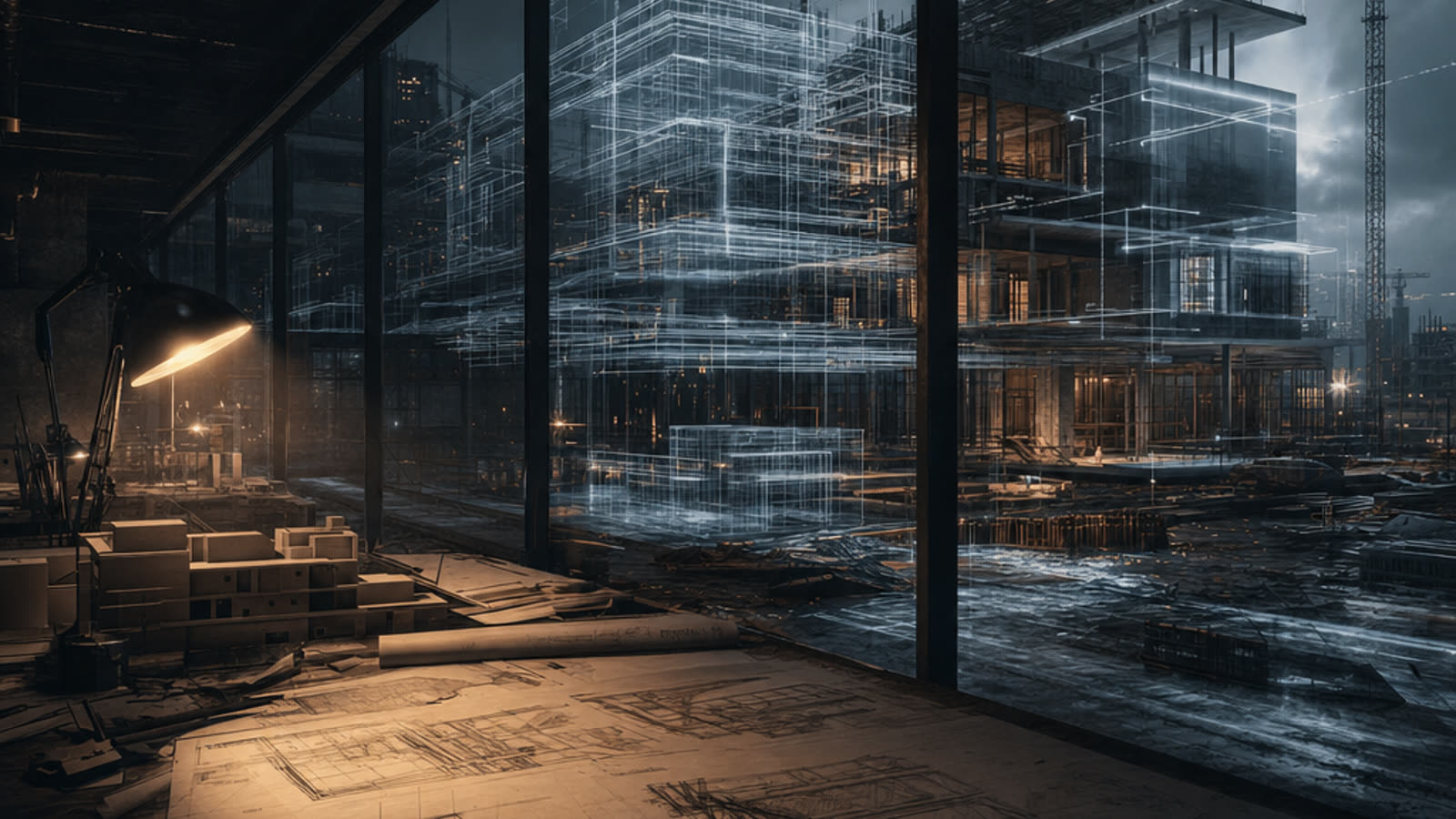
Architecture has always been a profession caught between art and engineering, between the sketch and the spreadsheet. Now it finds itself caught between human intuition and machine generation, and the discomfort is palpable in studios from Copenhagen to São Paulo.
The shift happened gradually, then all at once. Text-to-image tools began producing building concepts that looked eerily professional. Parametric design software started suggesting structural optimizations that junior architects would have spent weeks calculating. AI assistants learned to navigate zoning codes and generate permit-ready documentation. What once required a team of twelve can now be roughed out by a team of three with the right subscriptions.
The labor question nobody wants to answer
Architecture firms have historically operated on a pyramid model: a handful of principals at the top, a larger cohort of project architects in the middle, and a broad base of junior staff grinding through construction documents and renderings. That base is eroding. The tasks that trained young architects—the tedious but educational work of drawing details, checking dimensions, producing variations—are precisely the tasks that AI handles competently.
This creates an uncomfortable apprenticeship problem. How do you develop the judgment to know when a machine's suggestion is structurally sound or aesthetically wrong if you never learned to make those drawings yourself? The profession risks producing a generation of architects who can curate AI output but cannot fundamentally create without it.
What machines still cannot see
For all their fluency, generative tools remain stubbornly literal. They can produce a building that looks like a museum but cannot understand what it means for a community to finally have a museum. They optimize for stated parameters but miss the unstated ones—the way light should fall in a hospice room, the acoustic intimacy a concert hall requires, the subtle hierarchy of space that makes a courthouse feel like justice rather than bureaucracy.
Architecture at its best is an act of translation: taking human needs, cultural memory, site constraints, and material realities and synthesizing them into form. AI excels at the synthesis but struggles with the translation. It can generate a thousand variations of a facade but cannot tell you which one will age gracefully, which will feel welcoming rather than imposing, which will still make sense when the neighborhood around it transforms.
The firms that are adapting
The most thoughtful practices are treating AI as they once treated CAD software—as a tool that changes the workflow without changing the mission. They use generative tools for early-stage exploration, producing dozens of massing studies in hours rather than weeks. They deploy AI for the compliance drudgery that consumed junior staff time. But they guard the conceptual phase jealously, insisting that the initial vision emerge from human conversation, site visits, and the irreducibly analog process of understanding a client's unarticulated desires.
Some firms have restructured entirely, eliminating the traditional junior-to-senior pipeline in favor of smaller teams where everyone engages with both concept and execution. Others have doubled down on craft, positioning handmade models and hand-drawn sketches as markers of premium service in a market flooded with AI-generated renderings.
Our take
Architecture will survive this disruption, but it will not emerge unchanged. The profession is being forced to articulate what, exactly, human architects provide that machines cannot—and that articulation is overdue. For too long, architecture has justified its fees through mystique rather than clarity. AI is calling that bluff. The architects who thrive will be those who can explain, to clients and to themselves, why their judgment matters. The rest will find themselves competing with software on price, which is a race they cannot win.