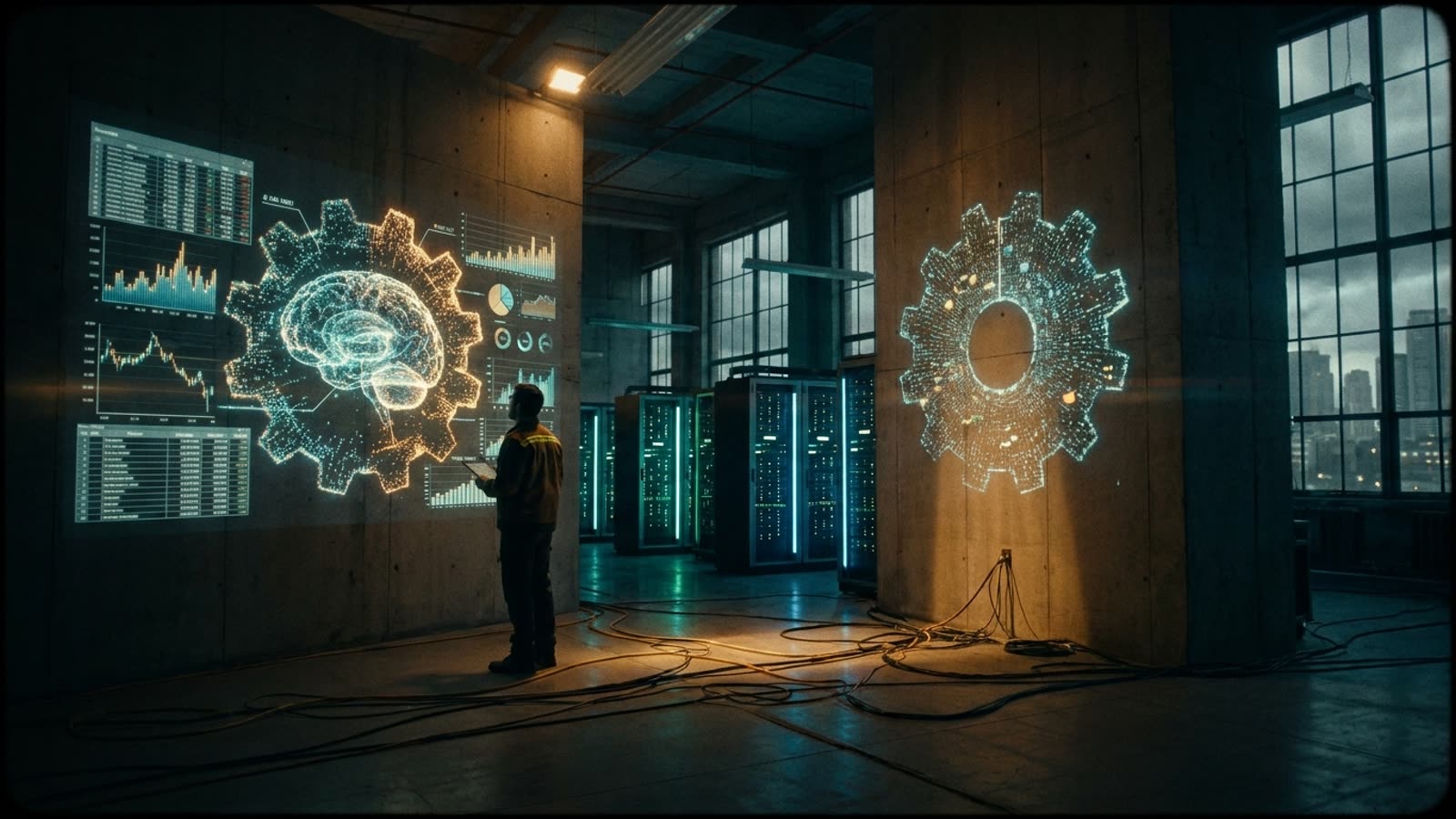
For more than a century, the financial audit has followed a recognizable ritual: teams of accountants descend upon a company, sample transactions, trace numbers through ledgers, and ultimately render an opinion on whether the books reflect reality. The work is painstaking, expensive, and fundamentally limited by human bandwidth. No audit team, however diligent, can review every invoice in a multinational corporation. They sample, they extrapolate, they exercise judgment. Now artificial intelligence is upending that constraint, and the profession is grappling with what it means when machines can do in minutes what once took weeks.
The shift is not hypothetical. The major accounting firms have spent years deploying machine learning tools that ingest entire general ledgers, flag anomalies, and identify patterns that human reviewers might miss. What was once a statistical sampling exercise is becoming something closer to a census. An AI system can read every contract in a company's archive, compare revenue recognition timing against historical norms, and surface the dozen transactions that warrant human scrutiny. The auditor's role is migrating from data processor to data interpreter.
The promise of total visibility
The theoretical appeal is obvious. Sampling-based auditing has always been a calculated compromise—a tacit acknowledgment that reviewing everything is impossible. Machine learning removes that constraint. Systems can parse unstructured documents, extract key terms from thousands of contracts, and cross-reference them against accounting entries at scale. Frauds that once hid in the statistical noise between samples become visible. The Enron-style manipulation that exploited the gaps in human attention becomes, in principle, harder to execute.
Proponents argue this represents a genuine improvement in audit quality. When algorithms can identify that a subsidiary's revenue spike coincides suspiciously with quarter-end, or that certain vendors appear only in transactions approved by a single manager, auditors gain investigative leads they might never have found through traditional methods. The technology does not replace professional skepticism; it gives skepticism better raw material.
The liability question nobody wants to answer
Yet the transformation creates uncomfortable ambiguities. Auditing standards were written for a world of human judgment and reasonable assurance. When an AI flags an anomaly that a human reviewer dismisses, who bears responsibility if that anomaly later proves to be fraud? When the algorithm fails to flag a manipulation because it fell outside the training data's patterns, is that a technology failure or an audit failure? The legal and regulatory frameworks have not caught up.
There is also the question of explainability. Traditional auditing leaves a paper trail of human reasoning—why a particular sample was chosen, why a judgment call went one way rather than another. Machine learning models, particularly deep learning systems, often cannot articulate their logic in terms that satisfy a courtroom or a regulator. The audit profession has always been about defensible judgment. Defensibility becomes complicated when the judgment originates in a neural network's opaque weights.
The human remainder
The optimistic view holds that AI will elevate auditors from tedious verification work to genuine analytical inquiry. Freed from spreadsheet drudgery, the argument goes, accountants can focus on understanding business models, interrogating management, and exercising the professional skepticism that machines cannot replicate. The pessimistic view notes that firms have strong incentives to capture efficiency gains as cost savings rather than quality improvements, and that the junior roles where auditors traditionally learned their craft may simply disappear.
What seems clear is that the profession's value proposition is shifting. The auditor of the future is less a meticulous checker of arithmetic and more a sophisticated interpreter of algorithmic output—someone who understands both the business being audited and the tools doing the auditing. Whether that represents an upgrade or a hollowing-out depends on how firms, regulators, and clients navigate the transition.
Our take
Financial auditing may be the least glamorous profession to undergo AI transformation, but it is among the most consequential. The integrity of capital markets rests on the assumption that audited financial statements mean something. If artificial intelligence genuinely improves audit quality, the benefits compound across the entire economy. If it merely creates an illusion of rigor while obscuring accountability, the eventual reckoning could be severe. The profession's response to this moment will reveal whether AI becomes a tool for deeper scrutiny or a sophisticated form of automation theater.