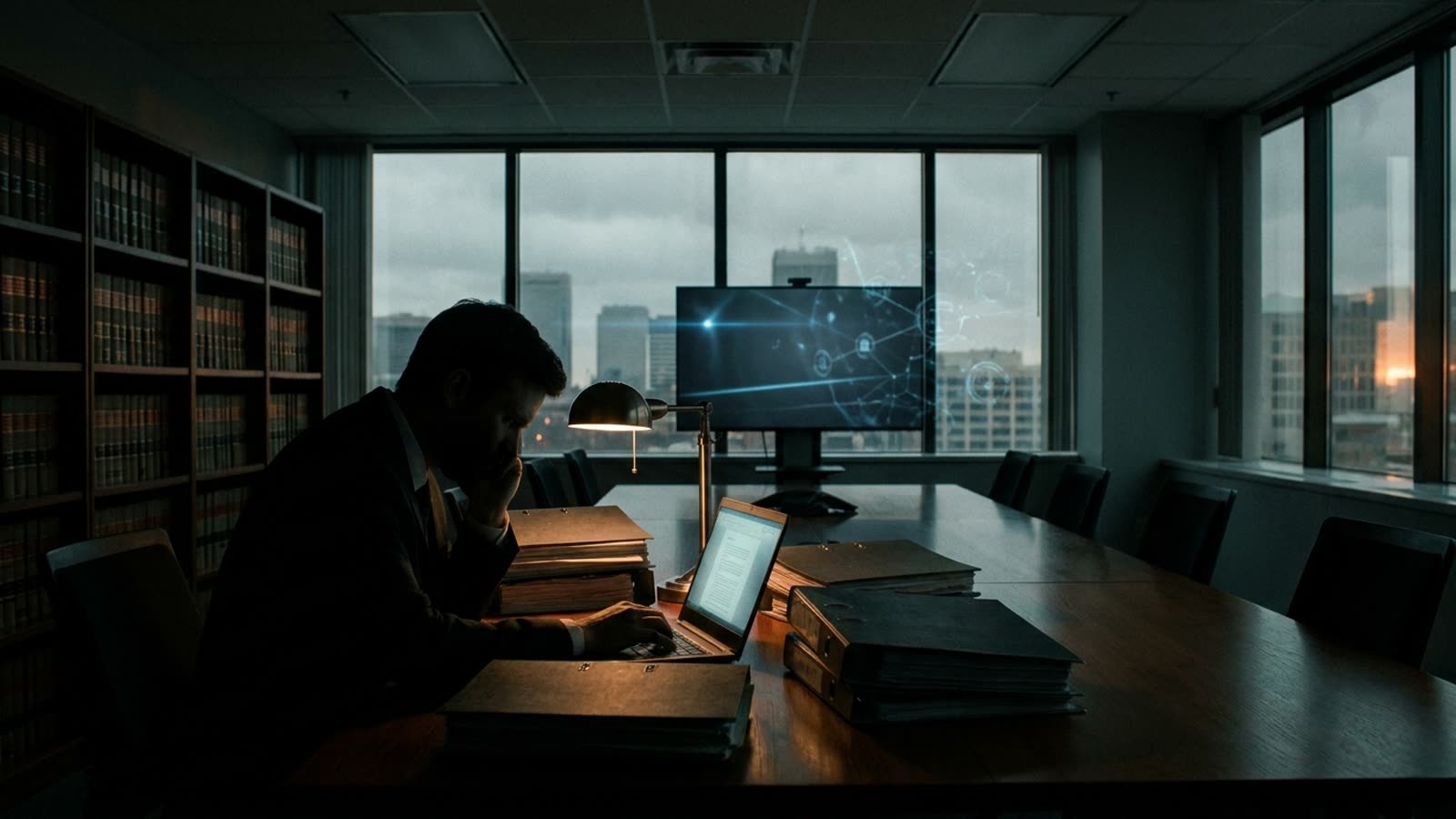
For generations, the path into corporate law ran through a purgatory called document review. Young associates would spend months in windowless conference rooms, sorting through boxes—later hard drives—of contracts, emails, and memos, hunting for the handful of documents that might prove relevant to a case. It was tedious, expensive, and universally loathed. It was also, partners insisted, essential training: the only way to develop an instinct for how deals go wrong and disputes take shape.
That rite of passage is disappearing faster than most clients realize. Large language models can now process millions of documents in the time a human team would need for thousands, flagging privilege issues, identifying key custodians, and surfacing patterns that exhausted associates might miss on their third consecutive late night. The economics are brutal and obvious. What once generated substantial billable hours can now be accomplished for a fraction of the cost. Law firms that resist look inefficient; those that embrace the technology must confront an awkward question: if juniors no longer review documents, how will they ever become seniors?
The apprenticeship problem
Law has always been learned by doing. Medical residents have patients; young lawyers had discovery. The grunt work taught them to read contracts with suspicion, to notice when a timeline didn't add up, to understand how ordinary business communications could become litigation exhibits. Senior partners speak of document review the way retired athletes speak of two-a-days: brutal, formative, irreplaceable.
AI doesn't just accelerate this work; it abstracts it. When an algorithm surfaces the twenty documents that matter from a universe of two hundred thousand, the associate sees conclusions without context. They never develop the peripheral vision that comes from wading through the irrelevant ninety-nine percent. Some firms are experimenting with hybrid models—having juniors audit AI outputs, or deliberately assigning small manual reviews for training purposes—but these feel like compromises rather than solutions.
Winners and losers inside the firm
The disruption is not evenly distributed. Partners with client relationships remain valuable; their judgment and courtroom presence cannot be automated. Specialists in niche regulatory areas have breathing room. But the middle ranks—associates who built careers on being reliable workhorses—face a narrowing path. Firms are already hiring fewer first-years in litigation departments, and the ones they do hire are expected to add value faster, with less time to learn.
Meanwhile, a new class of legal professional is emerging: the prompt engineer who understands both technology and doctrine, who can design queries that extract maximum value from AI systems while avoiding hallucinated citations. These roles barely existed half a decade ago. They now command premiums.
The client's dilemma
General counsels are caught between opportunity and anxiety. They want the cost savings—discovery budgets that once ran into the millions can now be cut dramatically—but they worry about what they're not seeing. AI systems are only as good as their training and their prompts. A poorly designed review might miss the smoking-gun email that human eyes, bleary as they were, would have caught. The legal profession's entire insurance and malpractice framework was built around human error, not algorithmic failure. No one is quite sure who bears liability when the machine gets it wrong.
Our take
The legal profession has survived the photocopier, the fax machine, and Westlaw. It will survive this too, but not unchanged. The honest answer is that no one knows how to train lawyers without the crucible of document review, and the profession is conducting a live experiment on an entire generation of associates. Some will emerge as more strategic, more technologically fluent attorneys than their predecessors. Others will reach partnership without ever having read a contract the hard way. The profession's intellectual foundation is being rebuilt in real time, and the blueprints are still being drafted.