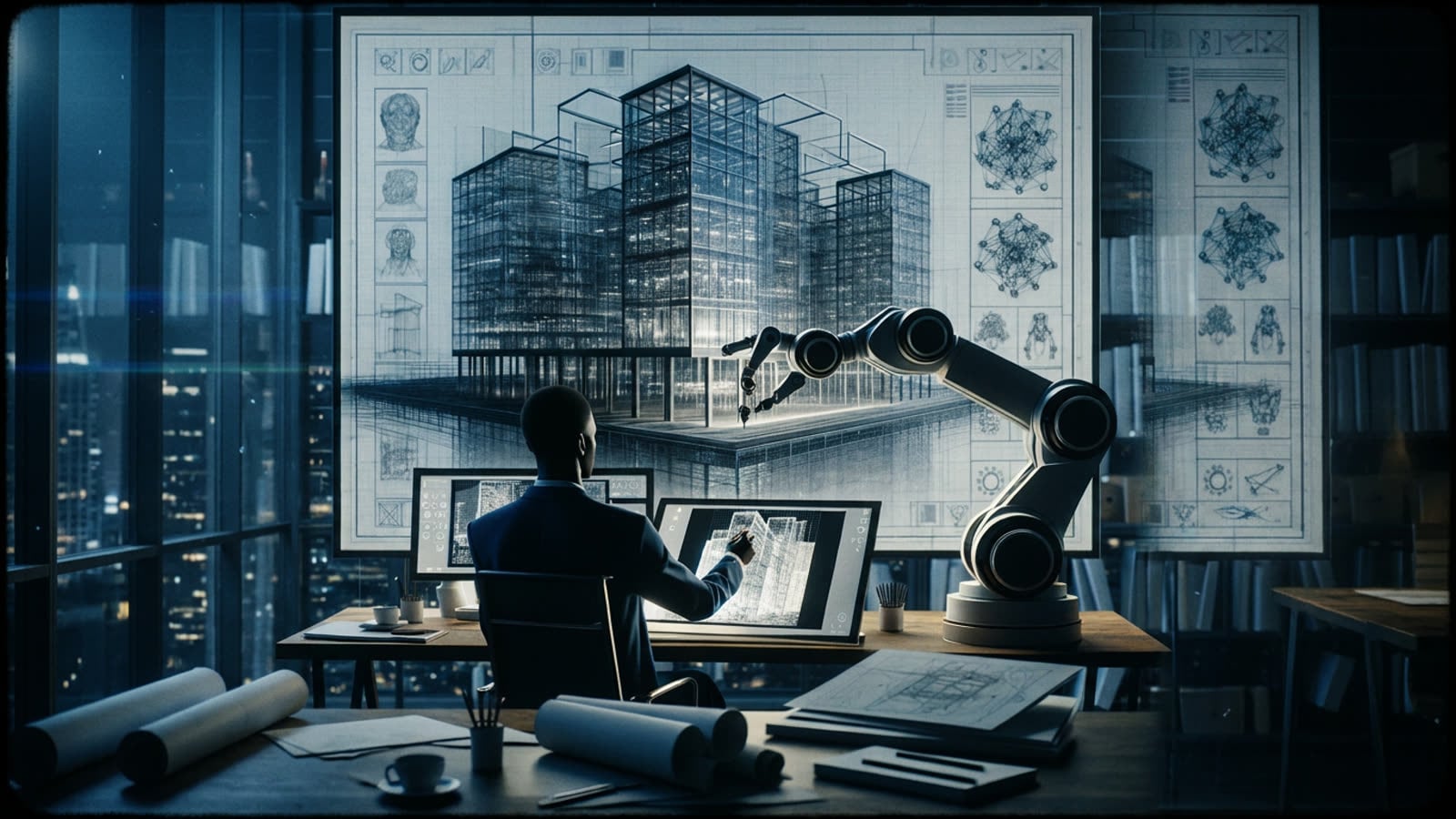
The most consequential shift in architectural practice since computer-aided design arrived in the 1980s is happening without fanfare, one rendering at a time.
Architects have always been synthesizers—translating client wishes, site constraints, building codes, and aesthetic ambitions into coherent structures. But the synthesis is increasingly performed by algorithms. Generative design tools can now produce hundreds of floor plan variations optimized for natural light, egress requirements, and construction costs in the time it once took a junior associate to sketch three options by hand. The architect's role is migrating from creator to curator, from draftsman to editor of machine-generated possibilities.
The parametric takeover
The shift began with parametric modeling software that let designers define relationships between building elements rather than drawing each one individually. Change the roof pitch, and the window proportions adjust automatically. But the new generation of AI tools goes further. Feed the system a site boundary, local zoning rules, and a target square footage, and it will generate buildable massing studies that would have consumed weeks of studio time. Firms report that schematic design phases that once stretched across months now compress into weeks.
The efficiency gains are real, but so is the anxiety. Architecture schools still teach hand sketching as foundational, yet graduates increasingly find themselves evaluating algorithmic outputs rather than producing original drawings. The pencil hasn't disappeared, but its centrality has.
Code compliance as competitive advantage
Building codes are notoriously dense—thousands of pages governing everything from stairwell widths to fire-rated assemblies. Historically, ensuring compliance required experienced architects who had internalized the rules through years of practice. Now, AI systems trained on code databases can flag violations in real time as designs evolve, catching errors that might otherwise surface only during permit review.
This automation democratizes access to expertise. Smaller firms without deep regulatory specialists can compete for complex projects. But it also commoditizes knowledge that once distinguished senior practitioners. When the machine knows the code better than you do, what exactly are you being paid for?
The aesthetic question
Generative tools excel at optimization problems with clear metrics—minimize corridor length, maximize rentable area, ensure every office has a window. They struggle with the ineffable qualities that distinguish memorable buildings from competent ones. A hospital that meets every functional requirement can still feel institutional and cold. A concert hall with perfect acoustics can still lack grandeur.
Architects who thrive in the AI era will likely be those who can articulate what the algorithms cannot measure—the experiential qualities that make spaces feel humane. The profession may bifurcate: a technical track focused on managing generative systems, and a design track focused on the poetic dimensions machines cannot yet grasp.
Our take
Architecture has always absorbed new tools without losing its identity. Steel frames, air conditioning, and CAD each prompted existential hand-wringing, yet the profession adapted and often improved. AI will be no different, though the adaptation will be uncomfortable for those who defined their value by tasks now delegated to software. The architects who flourish will be those who treat generative tools as collaborators rather than threats—and who remember that buildings are ultimately for people, not parameters.