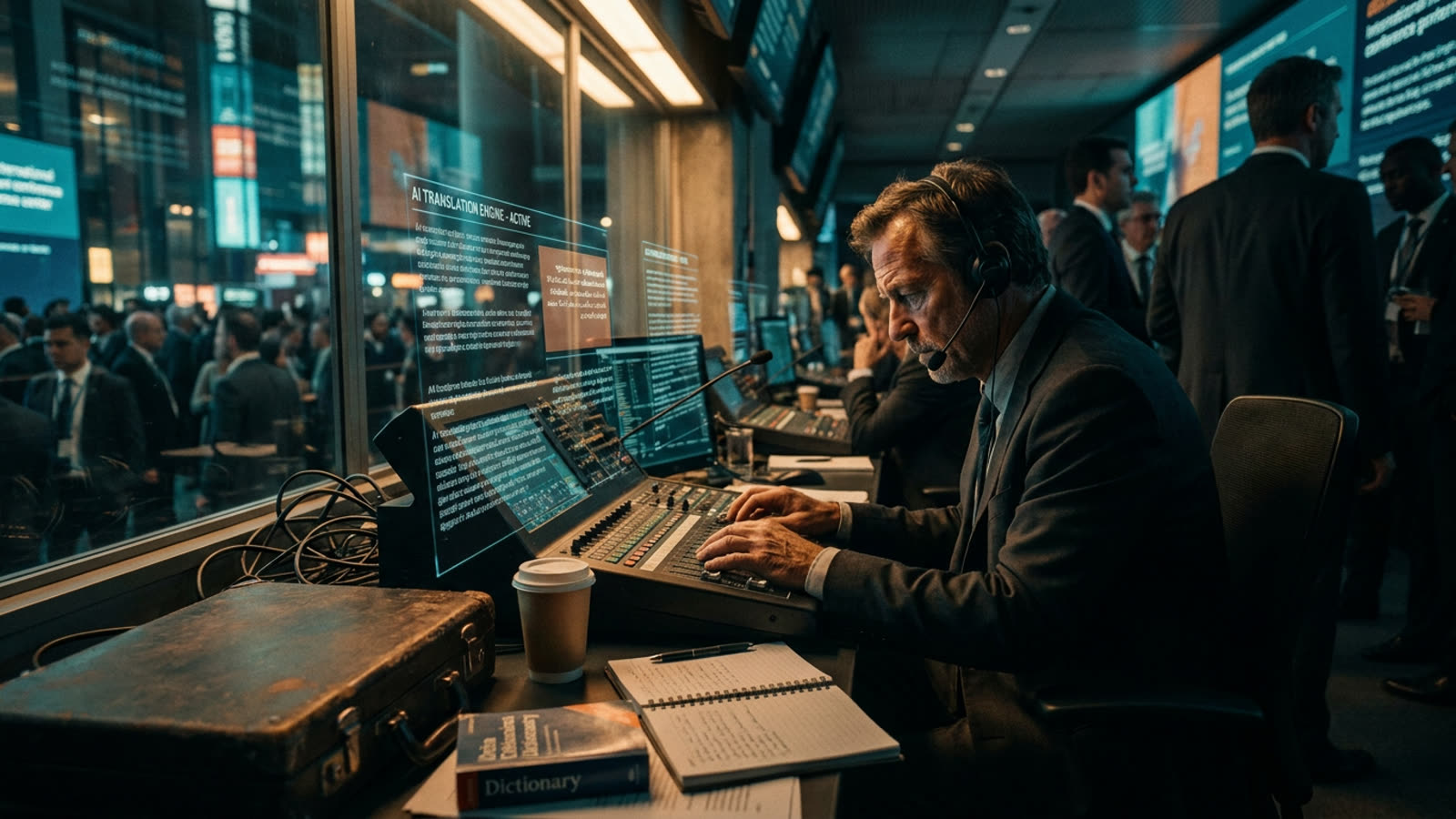
For more than a century, the actuary occupied a peculiar throne in the financial world: respected, essential, and almost entirely invisible. These were the people who could tell you, with unsettling precision, the probability that a forty-three-year-old nonsmoker in Cleveland would die before paying off her mortgage. They built the mathematical scaffolding beneath every life insurance policy, pension fund, and annuity contract. And for most of that history, their tools were elegant but fundamentally static — mortality tables, compound interest formulas, and the quiet accumulation of historical data.
That world has not vanished, but it has been infiltrated. The modern actuary increasingly works alongside machine learning systems that can process variables no human could reasonably track: satellite imagery of flood plains, real-time telematics from automobiles, granular health data from wearable devices. The question is no longer whether actuaries can calculate risk. It is whether they can explain why their calculations differ from what the algorithm suggests.
The shift from calculation to interpretation
The traditional actuarial exam system — a brutal gauntlet of ten or more professional examinations spanning years — trained candidates to master deterministic models. You learned to price a whole life policy by hand. You understood the mathematical derivation of reserve requirements. This knowledge remains foundational, but the daily work has migrated elsewhere.
At major insurers, actuaries now spend substantial portions of their time validating machine learning outputs, stress-testing algorithmic assumptions, and translating model behavior for regulators who remain deeply skeptical of black-box pricing. The actuary has become, in effect, an interpreter between two worlds: the statistical traditions that regulators understand and the predictive systems that increasingly drive commercial decisions.
The regulatory friction
Insurance regulators in most jurisdictions still require that pricing decisions be explainable in traditional actuarial terms. A neural network might identify that customers who buy premium roadside assistance are statistically less likely to file collision claims, but regulators want to know why — and "the model found a correlation" is not an acceptable answer in a rate filing.
This creates a peculiar dynamic. Actuaries are not being replaced by algorithms; they are being positioned as the human buffer between algorithmic insight and regulatory approval. The job has become less about discovering risk patterns and more about justifying them in language that predates the technology.
What the profession is becoming
Younger actuaries entering the field report that their training now includes Python, SQL, and machine learning fundamentals alongside traditional exam material. The Society of Actuaries has added predictive analytics modules to its credentialing pathway. But the deeper transformation is cultural rather than technical.
The actuary of the mid-twentieth century was a solitary figure, trusted precisely because the work was arcane and the conclusions unimpeachable. The actuary of the present is a collaborator, working with data scientists, software engineers, and compliance officers. The mystique has faded. What remains is a profession that must continuously justify its relevance in a landscape where the machines can often calculate faster, if not always more wisely.
Our take
The actuarial profession is not dying — it is being humbled. For decades, actuaries benefited from the opacity of their craft; few executives questioned the mortality assumptions because few executives understood them. Machine learning has democratized suspicion. Now everyone can see that alternative models exist, that different assumptions yield different prices, that the actuary's judgment is precisely that — judgment, not revelation. This is probably healthy. A profession forced to explain itself tends to get sharper. But the romantic image of the actuary as oracle, alone with a calculator and a table of death rates, is fading into history. What replaces it is something more mundane and more honest: a specialist who helps organizations navigate uncertainty, one algorithm at a time.