Chess was supposed to be the canary in the coal mine. When IBM's Deep Blue defeated Garry Kasparov in 1997, the obituaries wrote themselves: human cognition had met its match, and the ancient game would never recover its mystique. What actually happened was far more interesting. Chess didn't die—it mutated. And the grandmasters who adapted to the silicon invasion didn't become obsolete. They became something new.
The transformation began quietly. In the years after Deep Blue, professional players started using chess engines not as opponents but as tutors. At first, they studied computer analysis the way a medical student studies an anatomy textbook—with respect but also distance. The machine's suggestions were often baffling. Moves that violated centuries of positional wisdom. Pawn structures that looked ugly to the trained eye. Piece placements that seemed to serve no coherent plan.
The aesthetic revolution
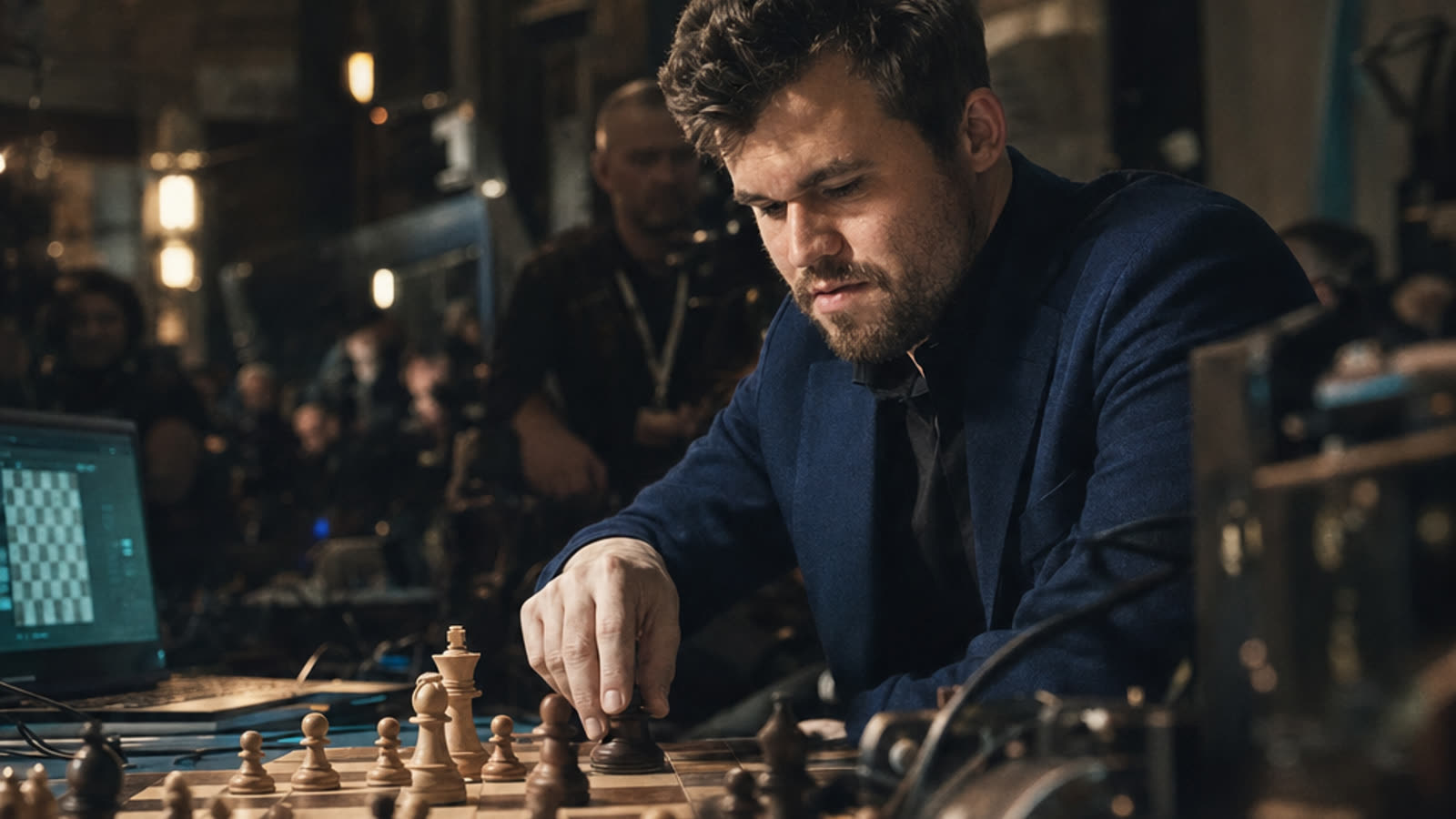
Then something shifted. A generation of players raised on engine analysis began to internalize its alien logic. Magnus Carlsen, who became world champion in 2013, exemplified this new breed. His style was notoriously difficult to categorize because it drew from both classical principles and computer-derived insights. He could play like Capablanca in one game and like no human who ever lived in the next.
The engines didn't just change what moves players made—they changed what players considered beautiful. Traditional chess aesthetics prized clarity: the elegant combination, the crushing attack, the perfectly coordinated pieces. Computer chess introduced a different kind of beauty, one rooted in concrete calculation over abstract harmony. A move could be ugly and still be right. A position could look chaotic and still be winning.
The preparation arms race
Modern elite chess has become, in part, a contest of preparation. Players and their teams analyze opponents' games with engines, searching for novelties—new moves in well-known positions that might catch an adversary off guard. The opening phase of the game, once a realm of memorized theory stretching perhaps fifteen moves deep, now extends in some lines past move thirty. Players arrive at the board having already calculated variations that would have taken Kasparov's generation hours to work through.
This has created a strange dynamic. The players who thrive are not necessarily those with the deepest understanding of chess principles but those who can most effectively integrate computer analysis into their own thinking. They must be part scholar, part detective, part systems engineer. The romantic image of the lone genius staring at a board has given way to something more collaborative—human and machine working in tandem, each compensating for the other's blind spots.
Our take
The chess world's accommodation with artificial intelligence offers a template that other fields would do well to study. The grandmasters didn't resist the machines or surrender to them. They absorbed what the machines could teach and remained, stubbornly, themselves. The game they play today is deeper and more computationally rigorous than anything Kasparov faced, yet it still rewards intuition, psychology, and the capacity to perform under pressure. The machines changed the humans, yes—but the humans changed too, in ways the machines could never have predicted.