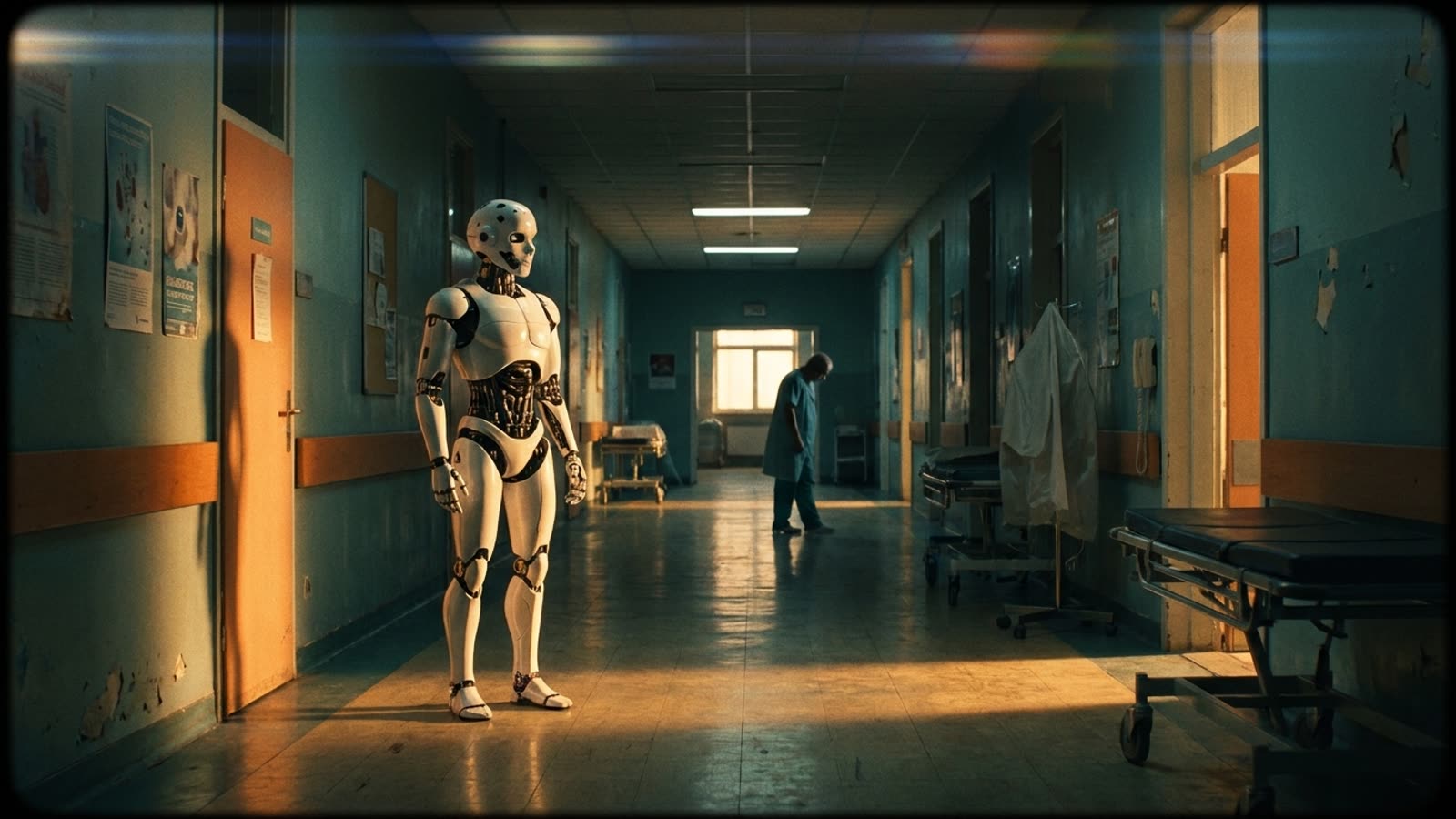
In teaching hospitals across three continents, a peculiar ritual has emerged. Radiologists begin their shifts by reviewing cases that an algorithm has already flagged, sorted, and in some instances, preliminarily diagnosed. The human physician's role has shifted from first reader to second opinion—and the profession is still working out what that means.
Radiology was always going to be the proving ground. Medical imaging produces structured, digital data in enormous quantities. A single CT scan generates hundreds of images. A busy hospital produces thousands of studies daily. The cognitive load on human readers has grown unsustainable, and the pattern-recognition capabilities of deep learning systems seemed purpose-built for the task. What nobody quite anticipated was how quickly the technology would move from research curiosity to clinical deployment, nor how complicated the human response would be.
The quiet integration
The AI systems now embedded in radiology workflows are not the autonomous diagnosticians that early hype predicted. They are, for the most part, triage tools and second readers. An algorithm might flag a chest X-ray as high priority for pneumothorax, ensuring it reaches a physician's eyes within minutes rather than hours. Another might highlight regions of a mammogram that warrant closer inspection. The radiologist still makes the call, signs the report, and bears the legal responsibility.
This division of labor has proven more durable than the "radiologists will be replaced" predictions that circulated years ago. The algorithms excel at specific, well-defined tasks—detecting nodules, measuring tumor volumes, flagging acute findings—but struggle with the contextual reasoning that experienced physicians perform automatically. A radiologist reading a chest film considers the patient's surgical history, their medications, the clinical question being asked. The algorithm sees pixels.
Yet the relationship is not static. As AI systems handle more of the pattern-recognition workload, the nature of radiological expertise is shifting. Younger physicians spend less time developing the visual acuity that their mentors honed over decades of reading films. Some training programs have begun to worry about a deskilling effect—what happens when the algorithm fails and the human backup has never learned to read without it?
The liability vacuum
Malpractice law has not caught up with algorithmic medicine. When an AI system misses a cancer that a radiologist subsequently fails to catch, who bears responsibility? The physician who trusted the tool? The hospital that purchased it? The vendor who trained the model on data that may not have represented the patient population in question?
Courts have not yet definitively answered these questions, and the uncertainty shapes clinical behavior in subtle ways. Some radiologists have become more cautious, spending additional time on cases the algorithm marked as normal—precisely the opposite of the efficiency gains the technology was supposed to deliver. Others have grown perhaps too comfortable with algorithmic assistance, their attention drifting during reviews of pre-screened studies.
The professional societies have issued guidelines, but guidelines are not law. Insurance companies are still working out how to price policies for AI-augmented practice. And patients, for the most part, have no idea that their scans were ever touched by an algorithm at all.
The workforce question
Radiology residency positions remain competitive, and salaries have not collapsed. The apocalyptic predictions have not materialized—yet. But the economics of the specialty are shifting in ways that may take years to fully manifest. If AI systems can handle a significant portion of routine screening work, hospitals may need fewer radiologists to process the same volume of studies. Alternatively, they may use the efficiency gains to expand imaging services, maintaining headcount while increasing throughput.
The optimistic case is that AI liberates radiologists from tedium, allowing them to focus on complex cases, procedural work, and direct patient care. The pessimistic case is that it commoditizes the interpretive work that defined the specialty, reducing physicians to algorithm supervisors.
Our take
Radiology offers a preview of how AI will reshape knowledge work more broadly: not through dramatic replacement, but through gradual redefinition. The technology is genuinely useful, the integration is genuinely complicated, and the long-term consequences remain genuinely uncertain. What radiology has learned—about liability, about training, about the irreducible value of human judgment—will matter far beyond the reading room. The machines are not taking over. They are moving in, and everyone is still figuring out the living arrangements.