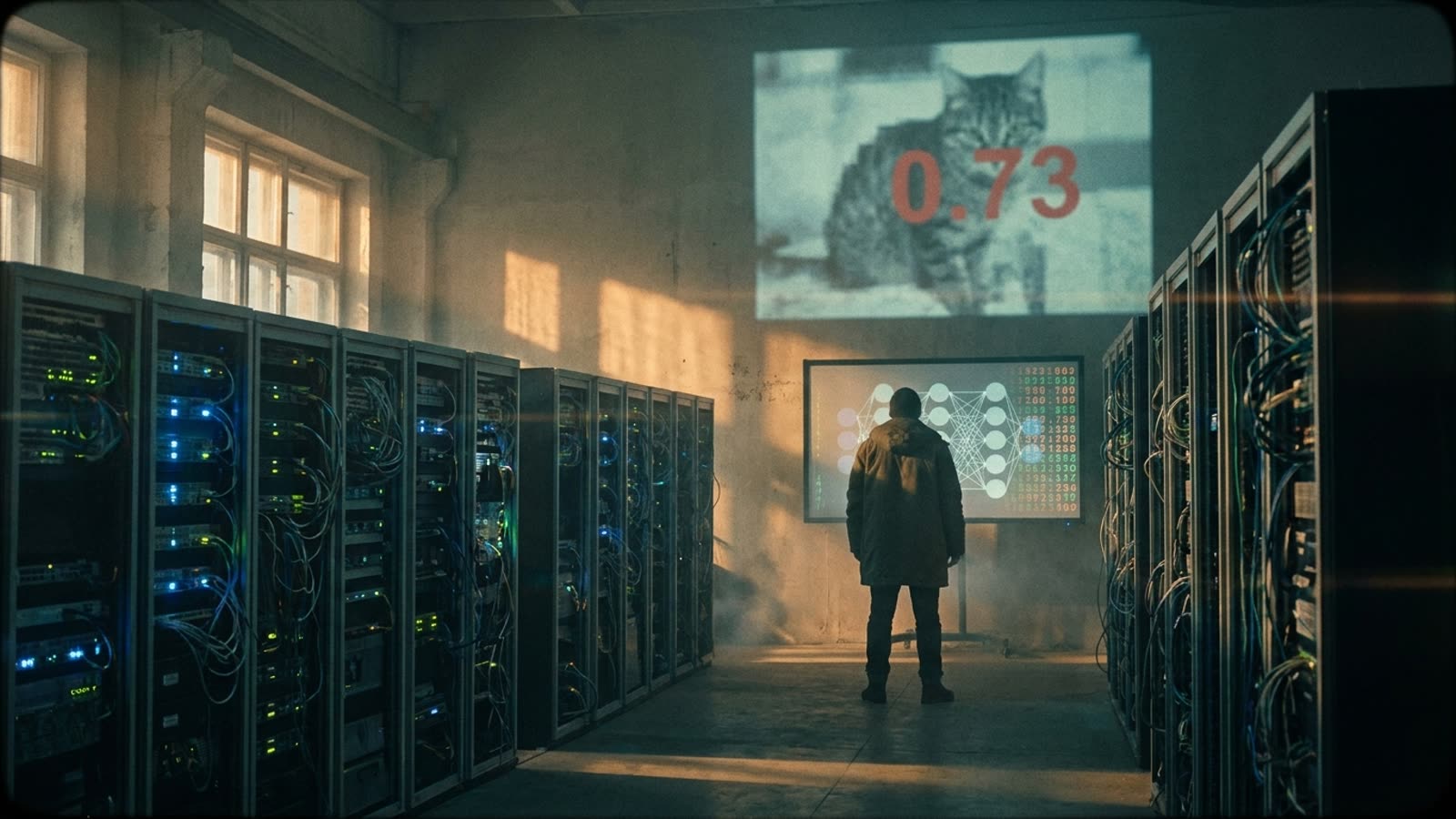
The human brain is a magnificent forgetting machine. We shed irrelevant details, blur painful memories, revise our understanding of past events as new information arrives. This selective amnesia is not a bug but a feature — it allows us to function, to update our beliefs, to move on. Artificial intelligence, for all its pattern-matching prowess, cannot do this. Once a large language model has been trained on a piece of information, that information is woven into billions of parameters in ways that resist surgical removal. The implications are more consequential than the AI industry has been willing to admit.
The architecture of permanence
When a language model is trained, it does not store facts in discrete, addressable locations like a database. Instead, information is distributed across the model's neural network in patterns that defy simple extraction. Ask the model who wrote Hamlet and it will tell you Shakespeare, but there is no single "Shakespeare wrote Hamlet" entry you can delete. The knowledge is encoded in the relationships between millions of numerical weights, each one contributing fractionally to countless other facts and capabilities. Removing one thread risks unraveling the entire tapestry.
This creates a genuine dilemma. A model trained on copyrighted material cannot simply have that material excised. A system that learned an outdated medical guideline cannot be made to forget it without expensive retraining. Personal information scraped from the internet and absorbed into the model's weights persists in a legal and ethical grey zone that current techniques struggle to address.
The unlearning frontier
Researchers have been working on "machine unlearning" for years, attempting to develop methods that can selectively remove specific information from trained models. The results remain unsatisfying. Current approaches either degrade the model's overall performance, fail to completely eliminate the targeted knowledge, or prove computationally expensive enough to negate the efficiency gains that made large models attractive in the first place.
Some techniques attempt to fine-tune models to refuse certain outputs, but this is suppression rather than deletion — the underlying knowledge remains, potentially extractable through clever prompting. Others propose training models from scratch on curated datasets, but this becomes impractical as models grow larger and training costs escalate. The fundamental architecture that makes these systems powerful also makes them resistant to precise modification.
Why this matters beyond the technical
The inability to forget has cascading implications. Privacy regulations like the European Union's right to be forgotten assume that data can be deleted upon request. When that data has been absorbed into a model's weights, compliance becomes technically ambiguous. Intellectual property disputes over training data grow thornier when the allegedly infringing material cannot be cleanly separated from legitimate knowledge. And the prospect of AI systems that cannot update their understanding of the world — that remain convinced of facts that have since changed — raises questions about long-term reliability.
The problem also illuminates a deeper asymmetry between artificial and biological intelligence. Human cognition evolved under resource constraints that made forgetting adaptive. AI systems, built for different purposes under different constraints, optimized for retention. Neither approach is inherently superior, but the mismatch between human expectations of memory and machine reality creates friction that the industry has been slow to acknowledge.
Our take
The AI industry has spent years celebrating what these systems can remember and generate, while quietly hoping the forgetting problem would solve itself through better algorithms. It has not, and likely will not without fundamental architectural changes that sacrifice some of the capabilities that make current models impressive. The honest conversation about AI limitations should include this one: we have built systems that learn voraciously but cannot unlearn gracefully, and that gap between capability and control will define the next chapter of AI governance.