Every conversation with an AI system begins the same way: from zero. The model that just helped you draft a contract has already forgotten you exist. Ask it a follow-up question in a new session and you are a stranger again, your preferences, your context, your entire history erased as if it never happened. Yet somewhere in its billions of parameters, the model retains fragments of every Reddit thread, academic paper, and fan fiction it consumed during training. This asymmetry between permanent statistical memory and absent episodic memory is not a bug awaiting a fix. It is a fundamental architectural feature that explains why AI feels simultaneously omniscient and amnesiac.
The distinction matters because it shapes what these systems can and cannot become. A human assistant who forgets your name every morning but somehow recalls the plot of every novel ever written would be useful in narrow circumstances and maddening in most others. That is roughly the situation with current large language models.
The two kinds of remembering
When researchers discuss AI memory, they are usually conflating two entirely different phenomena. The first is parametric memory: knowledge baked into the model's weights during training. This is why GPT-style systems can explain quantum mechanics or recite Shakespeare without consulting a database. The information is not stored as discrete facts but as statistical patterns distributed across the network. The model does not know that Paris is the capital of France the way you know your phone number. It has learned that in contexts where "capital" and "France" appear, "Paris" is a high-probability continuation.
The second type is context memory: the ability to track information within a single conversation. Modern models can hold perhaps 100,000 tokens in their context window, roughly the length of a novel. But when that window closes, everything vanishes. There is no mechanism for a model to decide that your preference for formal language or your allergy to peanuts should persist into future interactions. Each session is a clean slate, which is why AI assistants ask the same clarifying questions session after session.
Why forgetting is hard to engineer
The obvious solution—letting models update their own weights based on conversations—creates problems that researchers have struggled with for years. Continuous learning tends to cause catastrophic forgetting, where new information overwrites old knowledge unpredictably. A model that learns your name might simultaneously forget how to conjugate verbs. The training process that produces capable models requires careful curation over months; allowing real-time updates risks destabilizing the entire system.
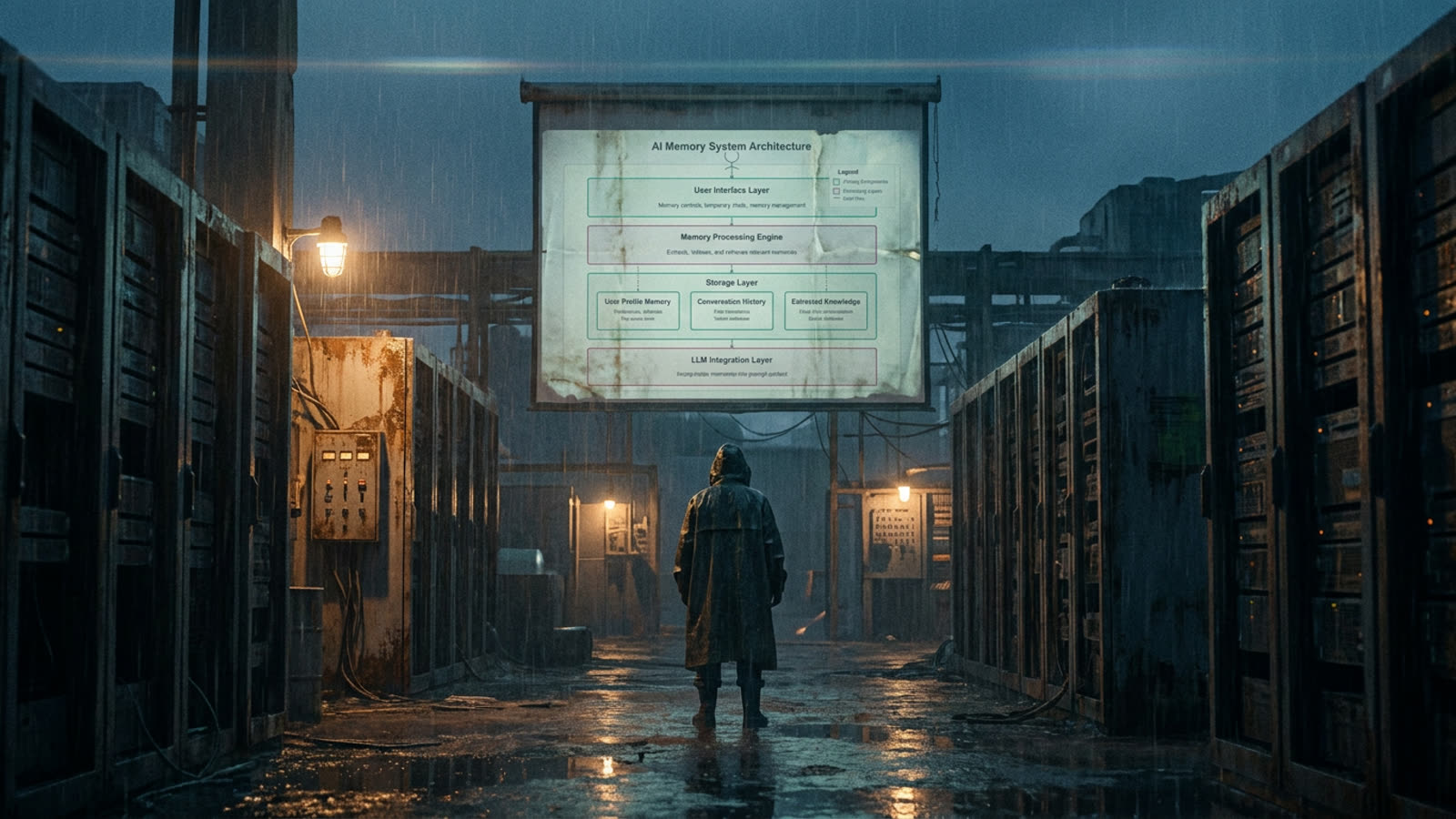
External memory systems offer a workaround. Retrieval-augmented generation lets models consult databases of past interactions, essentially giving them a notebook to flip through. But this is memory by prosthesis, not memory by design. The model still cannot decide what matters enough to remember. It cannot form the kind of compressed, emotionally weighted recollections that define human experience.
Our take
The memory paradox reveals something important about the current AI moment. These systems are not nascent minds gradually acquiring human-like capabilities. They are a genuinely alien form of intelligence with their own strange topology of strengths and gaps. The inability to forget training data raises urgent questions about privacy and copyright. The inability to remember users raises questions about whether AI relationships can ever feel continuous rather than transactional. Both limitations stem from the same architectural reality, and neither has an obvious solution. The companies racing to deploy AI assistants into every corner of daily life are building on a foundation that cannot yet support the kind of persistent, contextual understanding that makes assistance feel human. That gap will define the next phase of the industry's evolution.