The past fortnight has delivered something useful to investors who have spent three years wondering when the artificial-intelligence trade might unwind: a dress rehearsal. Not the full catastrophe — not yet — but enough of a tremor to reveal which load-bearing walls are structurally sound and which are held together by narrative alone.
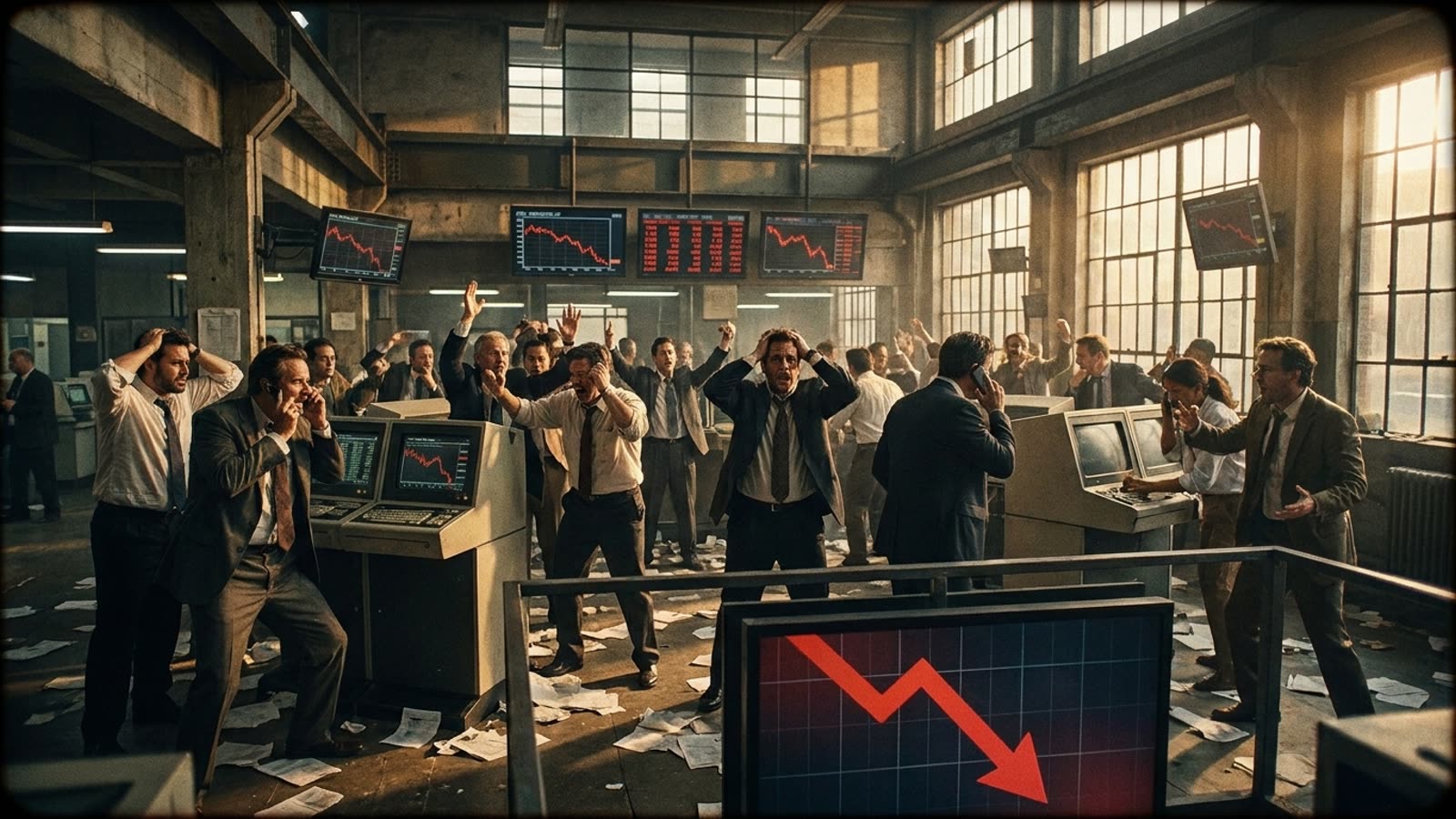
The trigger was mundane: a handful of quarterly reports that merely met expectations rather than exceeding them, combined with a bankruptcy filing from a once-hyped chatbot platform and rising borrowing costs for companies still burning cash in pursuit of artificial general intelligence. Individually, none of these events warranted panic. Collectively, they produced a three-day selloff that erased roughly $400 billion in market capitalisation from the Magnificent Seven and their hangers-on.
The mechanics of a sentiment shift
What made this episode instructive was its speed. AI stocks did not drift lower over weeks; they lurched. The pattern was familiar to anyone who traded crypto in 2022 or dot-coms in 2000: momentum strategies that had compounded gains on the way up amplified losses on the way down. Leveraged ETFs tracking semiconductor names saw redemptions that forced mechanical selling. Retail investors who had treated Nvidia calls as savings accounts discovered that implied volatility cuts both ways.
The contagion was selective but revealing. Companies with actual revenue — cloud hyperscalers, enterprise software firms with AI features bolted onto existing products — fell less and recovered faster. Pure-play AI labs, many of which remain private but whose fortunes are telegraphed through their lenders and partners, saw credit spreads widen. The message from markets was clear: show us cash flow or show us the door.
What a real burst would require
A dress rehearsal is not the performance. For the AI bubble to truly pop, one of two things would need to happen. Either the technology would have to disappoint at scale — enterprises cancelling cloud contracts, autonomous systems failing publicly, regulators imposing crippling restrictions — or the cost of capital would have to rise enough that even the best-funded labs could no longer outrun their burn rates.
Neither condition holds today. Enterprise adoption remains robust, if slower than the hype suggested. And while borrowing costs have climbed, the largest players still enjoy access to patient capital. Anthropic's recent debt deal, offering double-digit yields to Blackstone, is expensive but not existential. The AI trade is wounded, not dead.
Our take
The lesson of the past two weeks is not that AI is a fraud — it plainly is not — but that valuations had priced in a future where every company becomes an AI company overnight and every AI company becomes profitable eventually. Reality is messier. Some bets will pay off spectacularly; others will join the long list of technologies that changed the world without enriching their early investors. The dress rehearsal reminded markets that distinguishing between the two requires more than vibes. It requires patience, scepticism, and an allergy to narratives that sound too clean. Those qualities have been in short supply. Perhaps that is starting to change.