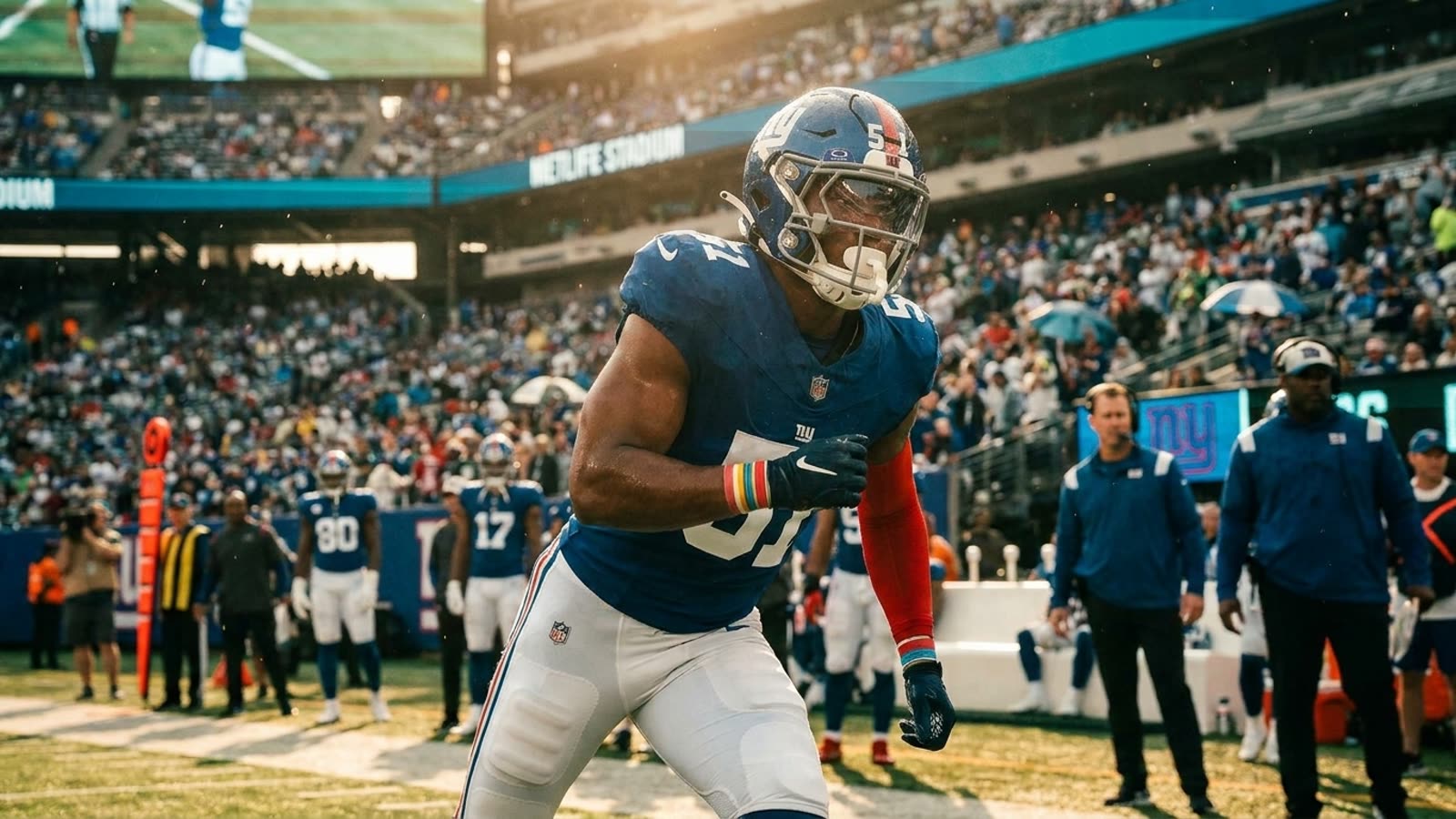
The New York Giants have not fielded a genuinely terrifying pass rush since the halcyon days of Jason Pierre-Paul's firework-adjacent prime. Abdul Carter, the Penn State linebacker they selected with their top pick in April's draft, is supposed to change that—and based on the breathless coverage of his first organized team activities, the franchise is treating him less like a rookie project and more like a finished product.
Carter, 21, arrived in East Rutherford with a highlight reel that made defensive coordinators wince and a combine performance that confirmed the tape wasn't lying. At Penn State, he recorded double-digit sacks in his final season while displaying the kind of sideline-to-sideline range that modern NFL defenses covet. The Giants, desperate for a defensive identity after years of mediocrity, handed him a locker and what appears to be the keys to the entire edge-rushing operation.
The weight of expectations
Rookie linebackers are not typically asked to anchor a defensive scheme. The learning curve from college to professional football is notoriously steep for edge rushers, who must suddenly contend with offensive tackles who are larger, faster, and considerably more experienced at neutralizing raw athleticism. Carter's early OTA footage—clips of him blowing past blockers in non-contact drills—has nonetheless been treated as evidence of imminent dominance.
The Giants' social media operation has leaned into the hype, posting slow-motion videos of Carter's first step with the reverence usually reserved for religious iconography. Head coach Brian Daboll has offered the standard coachspeak about "taking it one day at a time," but the organization's actions suggest they expect immediate impact. Carter is being installed as a starter, not eased into a rotation.
New York's defensive gamble
The broader context matters here. New York's defense ranked in the bottom third of the league in sacks last season, and the front office made no significant veteran additions at edge rusher this offseason. The implication is clear: Carter is the plan, not part of a plan. If he struggles with the adjustment—as most rookies do—the Giants have no obvious fallback.
This is either visionary roster construction or organizational malpractice, depending on whether Carter can translate his college dominance immediately. The franchise is essentially betting that a 21-year-old can skip the developmental phase that even elite pass rushers typically require.
Our take
Abdul Carter may well become the generational defender the Giants believe they've drafted. The talent is obvious, the athleticism is rare, and the motor runs hot. But the pressure being placed on a rookie's shoulders—before he has played a single regular-season snap—feels less like confidence and more like desperation. New York needs Carter to be great immediately because they have constructed no alternative. That's a lot to ask of anyone, let alone someone who was in a college dormitory eighteen months ago.