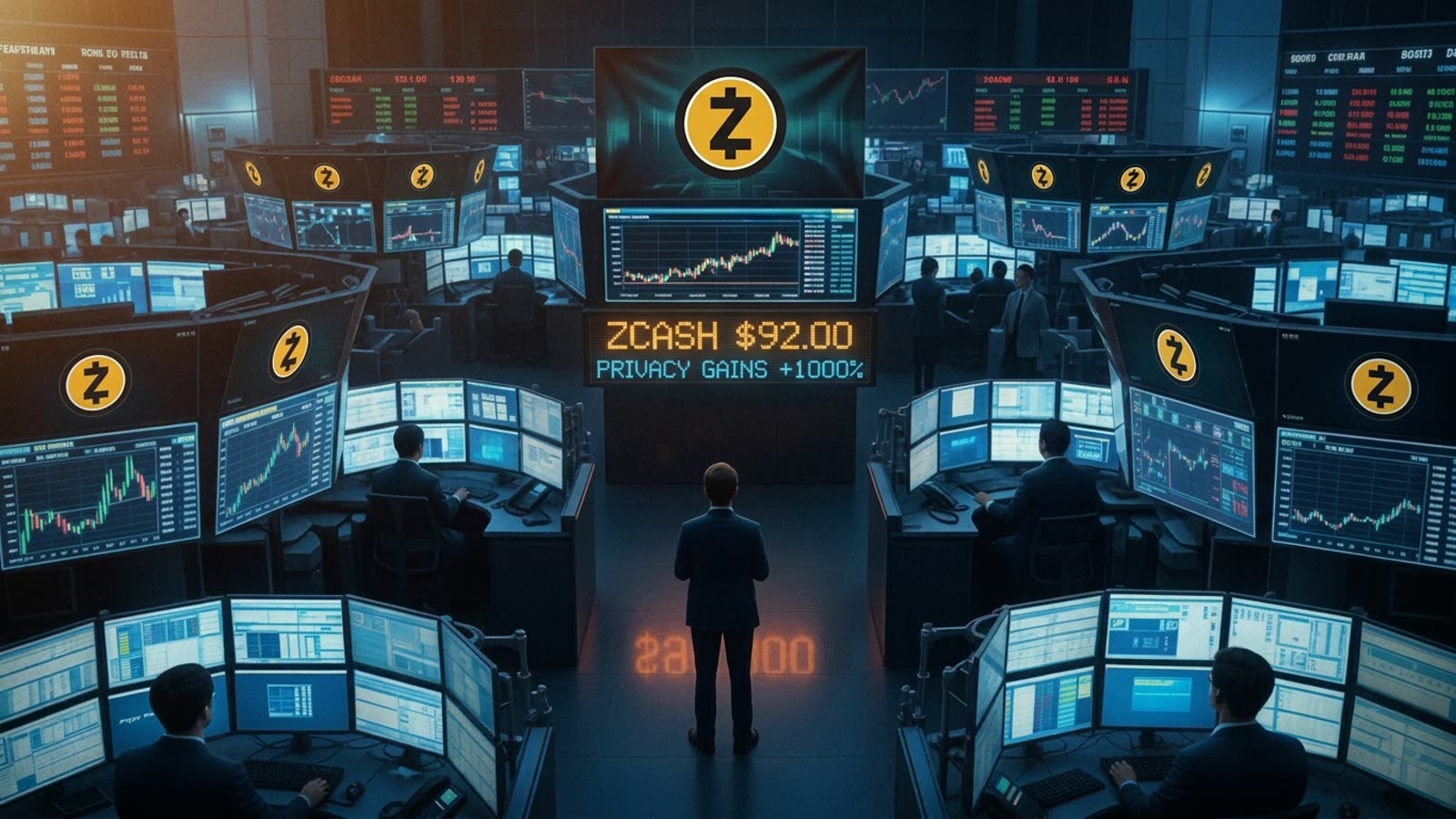
A cryptocurrency designed to be invisible is suddenly impossible to ignore. Zcash, the privacy-focused blockchain launched in 2016, has surged past $500 — a move representing gains of more than ten-fold over the past twelve months. The rally places ZEC among the best-performing major digital assets of the cycle, and it arrives at precisely the moment when financial regulators have declared war on transaction anonymity.
The timing is either exquisite or catastrophic, depending on whom you ask.
The privacy premium returns
Zcash pioneered zk-SNARKs, the zero-knowledge cryptographic proofs that allow transactions to be verified without revealing sender, recipient, or amount. For years, the technology was a solution in search of a problem large enough to justify its complexity. Bitcoin worked fine for most users; Monero attracted the privacy faithful; Zcash languished in the middle, respected by cryptographers but ignored by speculators.
What changed? The regulatory environment, primarily. The European Union's new anti-money-laundering framework, which took effect earlier this year, effectively bans privacy coins from licensed exchanges operating in the bloc. The United States Treasury has intensified enforcement against mixing services. And yet — or therefore — demand for genuinely private transactions has spiked. Zcash's shielded transaction volume has climbed steadily, suggesting the rally reflects actual usage rather than pure speculation.
The delisting paradox
Here is the uncomfortable math: every exchange that removes Zcash to satisfy regulators makes the remaining liquidity more valuable to users who actually need privacy. The delistings that were supposed to kill privacy coins may instead be concentrating their user bases into harder, more committed communities. Zcash has been dropped by Coinbase in certain jurisdictions, by Kraken in others, and by virtually every exchange operating under Singapore's licensing regime. The price kept climbing.
This is not a story of mass adoption. It is a story of niche utility commanding a premium. The question is whether that niche can sustain a market capitalization now approaching $10 billion, or whether regulators will find ways to squeeze the remaining on-ramps until the asset becomes effectively untradeable for anyone without a peer-to-peer network and a high tolerance for counterparty risk.
Our take
Zcash's rally is a referendum on whether privacy retains economic value in an age of total financial surveillance. The answer, apparently, is yes — at least for now. But the same forces driving demand are also painting a target on the asset. Regulators have proven willing to pursue not just exchanges but developers; the Tornado Cash precedent looms. Zcash's Electric Coin Company has operated transparently and within U.S. borders, which offers some legal cover but also some legal exposure. The thousand-percent gain is real. So is the thousand-percent increase in regulatory attention. Investors buying here are not betting on a coin; they are betting on a philosophical position — that privacy is a feature, not a bug, and that enough of the world will continue to agree.