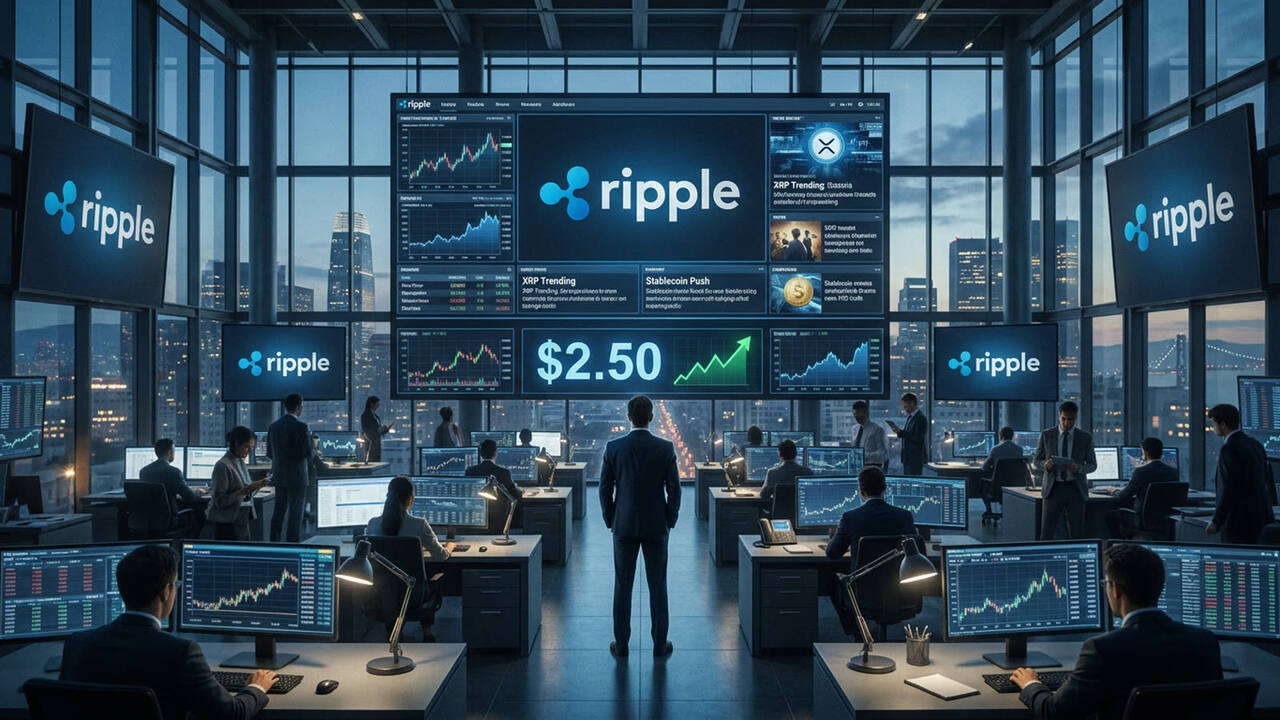
XRP is having a moment, and for once it is not because of a court ruling or a celebrity endorsement gone wrong. The token is trending across CoinGecko and social platforms, sitting comfortably in the top ten by market capitalization while the broader altcoin market continues its extended malaise. The catalyst appears to be Ripple's aggressive expansion into stablecoins and cross-border payments infrastructure—a pivot that positions the company less as a speculative vehicle and more as actual financial plumbing.
Ripple's RLUSD stablecoin, launched in late 2024, has quietly accumulated meaningful volume on the XRP Ledger. Unlike the token speculation that defined Ripple's earlier years, stablecoins represent recurring transaction fees and institutional relationships—the kind of boring, sustainable revenue that crypto projects rarely achieve. The company has been signing partnerships with regional banks across Southeast Asia and Latin America, markets where dollar-denominated remittances remain expensive and slow through traditional rails.
The regulatory thaw
The SEC's 2023 partial victory against Ripple—which established that programmatic XRP sales to retail investors were not securities—has aged remarkably well for the company. While other crypto firms continue to fight existential regulatory battles, Ripple operates with unusual legal clarity in the United States. This advantage has compounded as the current administration has signaled a more accommodating stance toward digital assets broadly. Ripple has been hiring aggressively from traditional finance, including several former Swift executives.
Why the skeptics remain unconvinced
XRP's tokenomics continue to trouble serious analysts. Ripple Labs still controls a substantial portion of the total supply, releasing tokens on a schedule that critics argue dilutes existing holders. The XRP Ledger, while fast and cheap, has never achieved the developer ecosystem of Ethereum or even Solana. Most DeFi activity bypasses it entirely. The token's price action remains heavily correlated with retail sentiment rather than fundamental usage metrics—a pattern that has persisted for nearly a decade.
The trending status also reflects something less flattering: XRP has always commanded an unusually loyal retail following, one that has survived multiple market cycles through sheer conviction. When XRP trends, it often signals that the faithful are amplifying rather than that new institutional interest has arrived.
Our take
Ripple has executed better than almost anyone expected after its near-death regulatory experience. The stablecoin strategy is sound, the partnerships are real, and the legal clarity is genuinely valuable. But XRP the token remains a bet on whether Ripple's corporate success will translate into token demand—a connection that has proven tenuous throughout crypto's history. The trending spike is worth noting, not because it signals a breakout, but because it reminds us that XRP refuses to fade into irrelevance the way most 2017-era tokens have. Whether that persistence reflects underlying value or merely the stubbornness of true believers remains, as always, the central question.