The 2026 World Cup arrives with an expanded 48-team field, three host nations, and a format so convoluted that even FIFA's own explainer documents require a glossary. Attempting to predict every match outcome is, by any rational measure, absurd—yet the exercise reveals something useful about the state of international football heading into the most commercially ambitious tournament ever staged.
The core tension is straightforward: can the United States, Mexico, and Canada convert home advantage into deep runs, or will the tournament follow the familiar script of European and South American powers dividing the spoils? History suggests the latter. No host nation outside Europe or South America has won a World Cup since the competition began in 1930, and the structural advantages of playing at home—crowd support, no jet lag, familiar pitches—have never been enough to overcome the quality gap.
The favorites and their fragilities
France enters as the consensus top seed, but Didier Deschamps' squad carries the weight of a generation nearing its end. Kylian Mbappé, now 27, remains the tournament's most dangerous attacker, yet the midfield that powered two consecutive finals appearances has aged visibly. England, perpetually cursed by expectation, fields perhaps its deepest squad ever but must answer the same question that has haunted it since 1966: can talent translate to tournament success when it matters? Brazil, rebuilding under a new coaching philosophy, and Argentina, defending champions but without the same Messi of 2022, round out the top tier.
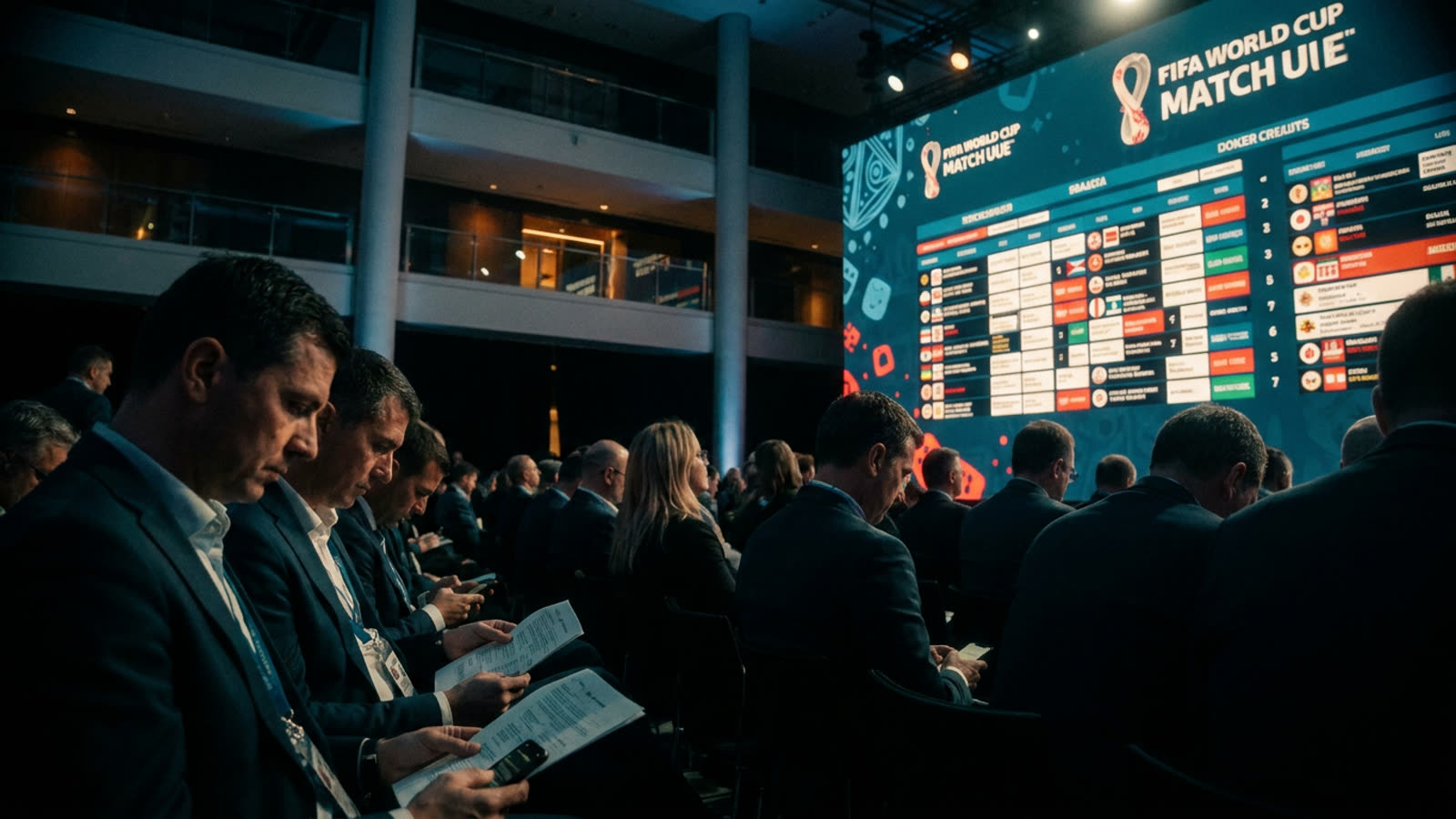
The expanded format—12 groups of four, with the top two plus eight best third-place finishers advancing—mathematically favors depth over brilliance. A single bad day no longer eliminates contenders in the group stage. This benefits the Europeans, whose qualifying gauntlet produces match-hardened rosters, and punishes smaller federations who relied on the chaos of three-team calculations.
The host nation calculus
The United States presents the most intriguing variable. A generation of players developed in European academies—Christian Pulisic at Milan, Weston McKennie at Juventus, Tyler Adams at Leeds—has produced the most technically accomplished American squad in history. The USMNT drew a manageable group and will play its knockout matches in front of crowds that treat soccer with the fervor once reserved for the NFL. Yet the Americans have never advanced past a quarterfinal, and the pressure of hosting may prove as much burden as blessing.
Mexico, by contrast, enters with diminished expectations after a dismal 2022 campaign. The tri-host arrangement means El Tri plays fewer home matches than anticipated, and the aging of their golden generation has not been offset by emerging talent. Canada, appearing in only its second World Cup, is the wild card—a team with nothing to lose and enough Premier League quality to upset established powers.
Our take
Prediction models are theater, not science. The value lies not in getting results right—no one will—but in forcing honest assessment of where teams actually stand versus where their reputations suggest they should be. This World Cup will be decided by which aging star finds one more great tournament, which young player announces himself on the global stage, and which federation handles the logistical nightmare of a continent-spanning event. France has the best squad. England has the best depth. The United States has the crowd. None of that guarantees anything, which is precisely why we watch.