The World Bank's latest Global Economic Prospects report lands with the subtlety of a brick through a window: worldwide GDP growth will decelerate to levels not seen since the acute phase of the COVID-19 crisis, and the culprit is armed conflict rather than a novel pathogen.
The institution's economists point to a confluence of ongoing and escalating wars—Ukraine's grinding stalemate, renewed tensions in the Middle East, and simmering disputes across the Indo-Pacific—as the primary drag on output. Unlike pandemic-era disruptions, which were sharp but eventually self-limiting, war-driven slowdowns tend to metastasize. Supply chains reroute permanently, insurance premiums on shipping spike, and capital flows toward defense rather than productive investment.
The numbers behind the gloom
The Bank now forecasts global growth in the low-two-percent range for the coming year, a figure that would have seemed unthinkable during the post-vaccine rebound. Emerging markets, which typically outperform during recoveries, are expected to underperform their long-run averages as commodity-price volatility and tighter dollar liquidity squeeze their fiscal space. Advanced economies, meanwhile, face the awkward arithmetic of elevated defense spending colliding with already-stretched public balance sheets.
Central banks are caught in a bind. Inflation remains sticky in services sectors, yet the growth outlook argues for accommodation. The Federal Reserve and the European Central Bank have both signaled caution, but neither has committed to a clear easing path while geopolitical risk premiums remain elevated.
Why markets shrugged—for now
Equity indexes barely flinched at the report's release, a testament to how thoroughly investors have priced in a "muddle-through" scenario. The S&P 500 continues to hover near record highs, buoyed by a handful of mega-cap tech names whose earnings appear insulated from ground wars. Bond markets, however, tell a different story: the yield curve remains inverted in key tenors, a signal that fixed-income traders see recession risk the equity crowd prefers to ignore.
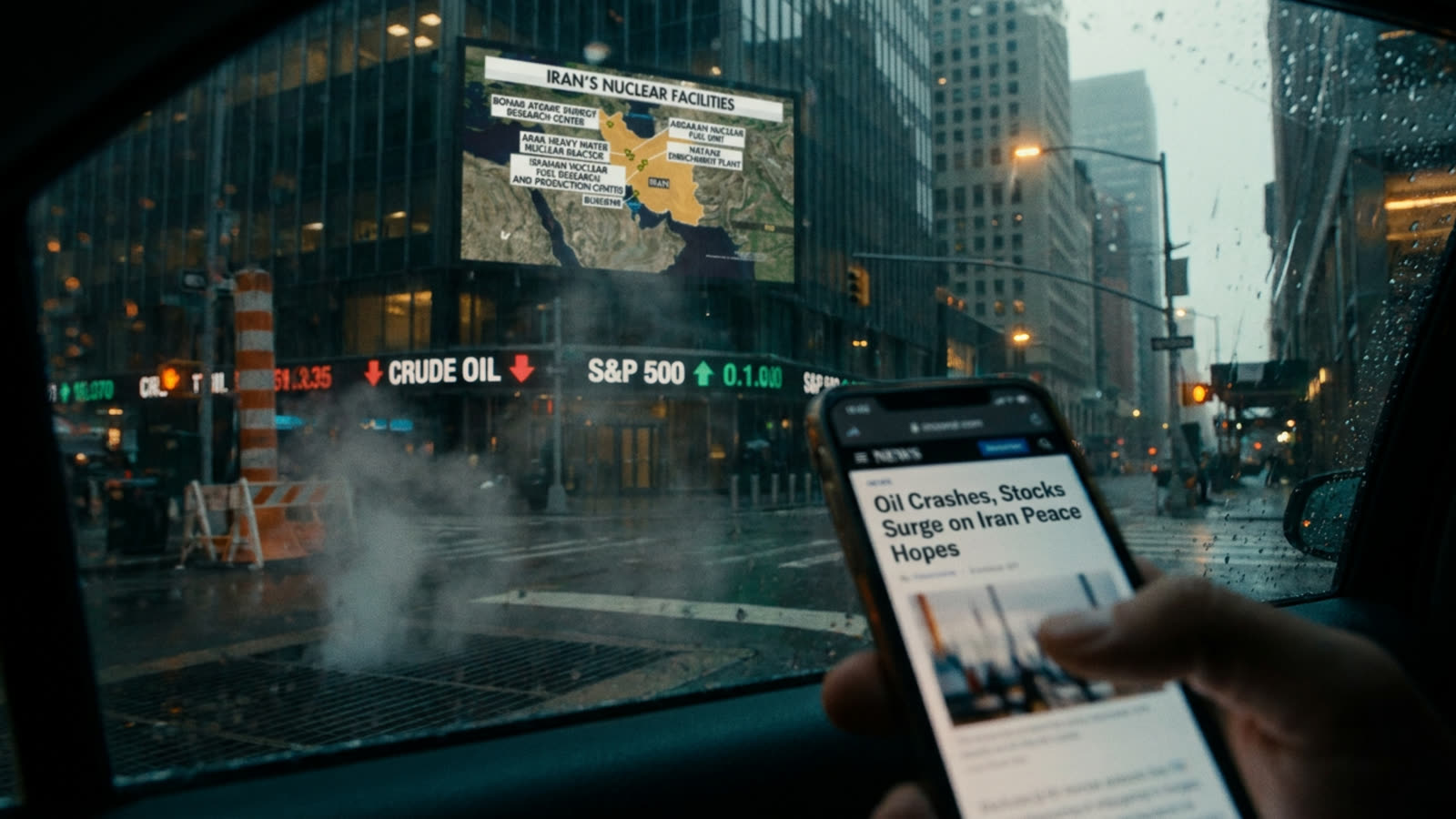
Oil prices, paradoxically, have softened in recent sessions on hopes of diplomatic progress in the Middle East, but the World Bank warns that any renewed escalation could send Brent back above $100 a barrel, reigniting the inflationary pressures central banks thought they had tamed.
The development cost
Perhaps the most sobering section of the report concerns low-income countries. Debt distress is spreading: more than half of the world's poorest nations are now in or at high risk of default. Aid budgets in donor countries are being crowded out by domestic defense priorities, and multilateral lending capacity is stretched thin. The Bank's economists warn that a lost decade of development gains is no longer a tail risk but a baseline scenario.
Our take
The World Bank's forecast is less a prediction than a diagnosis. The global economy is not suffering from a cyclical downturn amenable to rate cuts and stimulus checks; it is suffering from a geopolitical order that has fractured and shows no sign of mending. Markets can ignore this reality for a while—liquidity and momentum are powerful anesthetics—but the underlying condition will eventually demand attention. The question is whether policymakers will treat the disease or merely manage the symptoms.