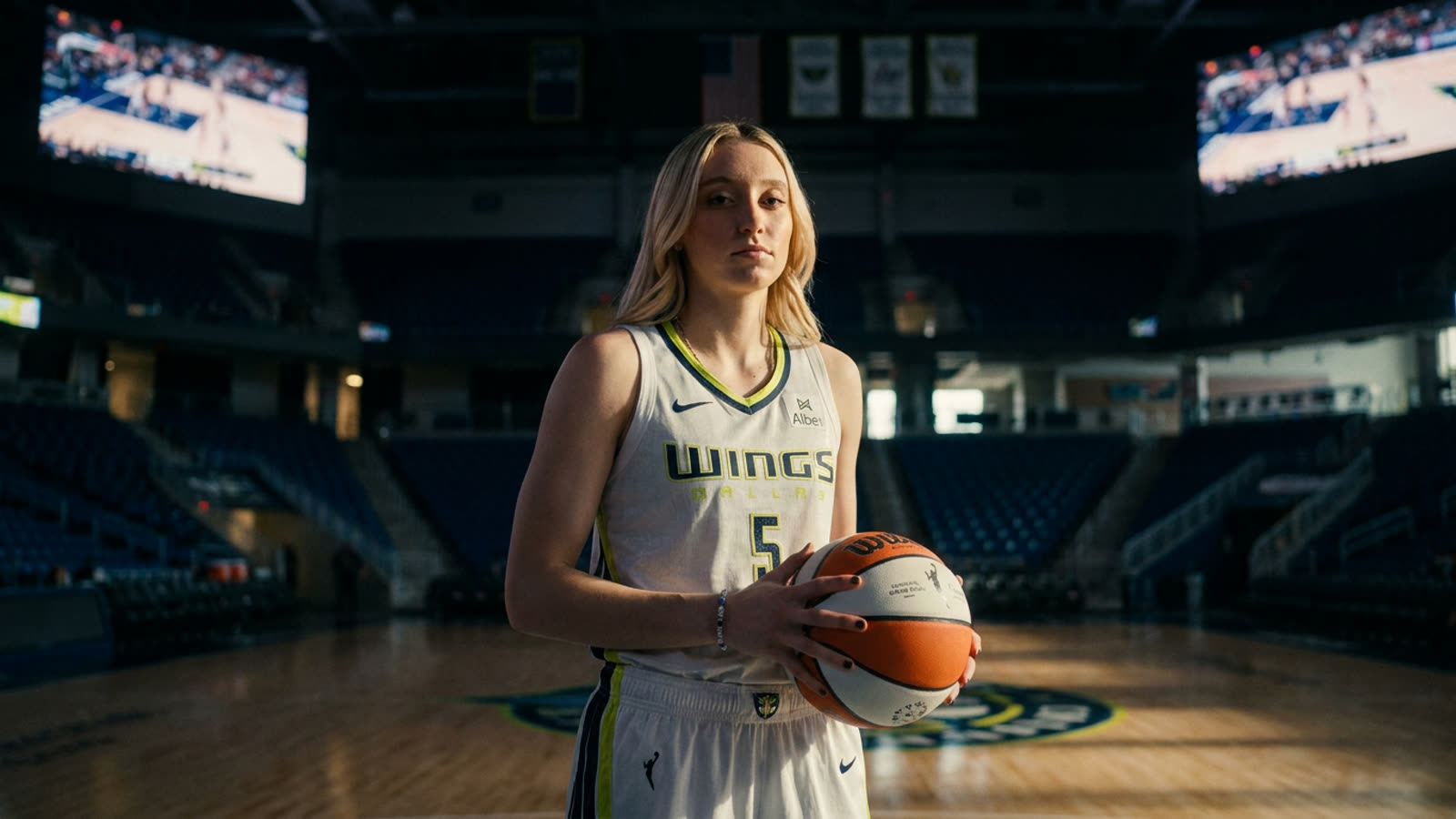
The WNBA wants Paige Bueckers to be its next transcendent star. It also, apparently, wants her to celebrate like she's at a funeral.
The league announced Sunday it had rescinded a technical foul assessed to Bueckers during a recent game for the crime of clapping—not at an official, not in someone's face, but in apparent celebration of a play. The reversal is an implicit admission that the call was absurd, but it arrives too late to matter for the game in question and raises an obvious question: why are referees making calls so obviously wrong that the league office feels compelled to publicly overrule them?
The star problem
Bueckers arrived in the WNBA trailing clouds of hype unseen since Caitlin Clark's debut last year. The former UConn phenom is supposed to be one of the faces that carries the league into its next phase of commercial expansion, complete with new television deals and rising attendance figures. She is precisely the kind of player the WNBA needs fans to fall in love with—charismatic, supremely talented, and prone to the kind of emotional displays that make for compelling television.
Technical fouls for clapping cut directly against that narrative. The league cannot simultaneously market its young stars as dynamic personalities and then penalize them for showing any personality whatsoever. The rescission acknowledges this tension without resolving it.
A pattern, not an anomaly
This is not an isolated incident. The WNBA has struggled for years with officiating consistency, a problem exacerbated by the league's relatively small referee pool and compressed schedule. Players have complained publicly about quick triggers on technical fouls, particularly for emotional reactions that would barely register in the NBA. The disparity creates an awkward optic: women's basketball, supposedly the more fundamentally sound and team-oriented product, policed more strictly for displays of individual emotion than the men's game.
The league's willingness to rescind the Bueckers technical suggests internal awareness that something is broken. But rescissions are a band-aid. They fix the statistical record while doing nothing to address why referees are making these calls in real time, when they actually affect outcomes.
Our take
The WNBA is experiencing a genuine popularity surge, driven largely by compelling young players like Bueckers and Clark who bring emotion and personality to the court. Penalizing that emotion is self-sabotage. The league needs to decide what it wants: buttoned-up professionalism enforced by referees who whistle enthusiasm, or the kind of passionate, star-driven spectacle that actually sells tickets and television packages. It cannot have both, and the Bueckers clapping incident suggests it hasn't figured out which path to choose.