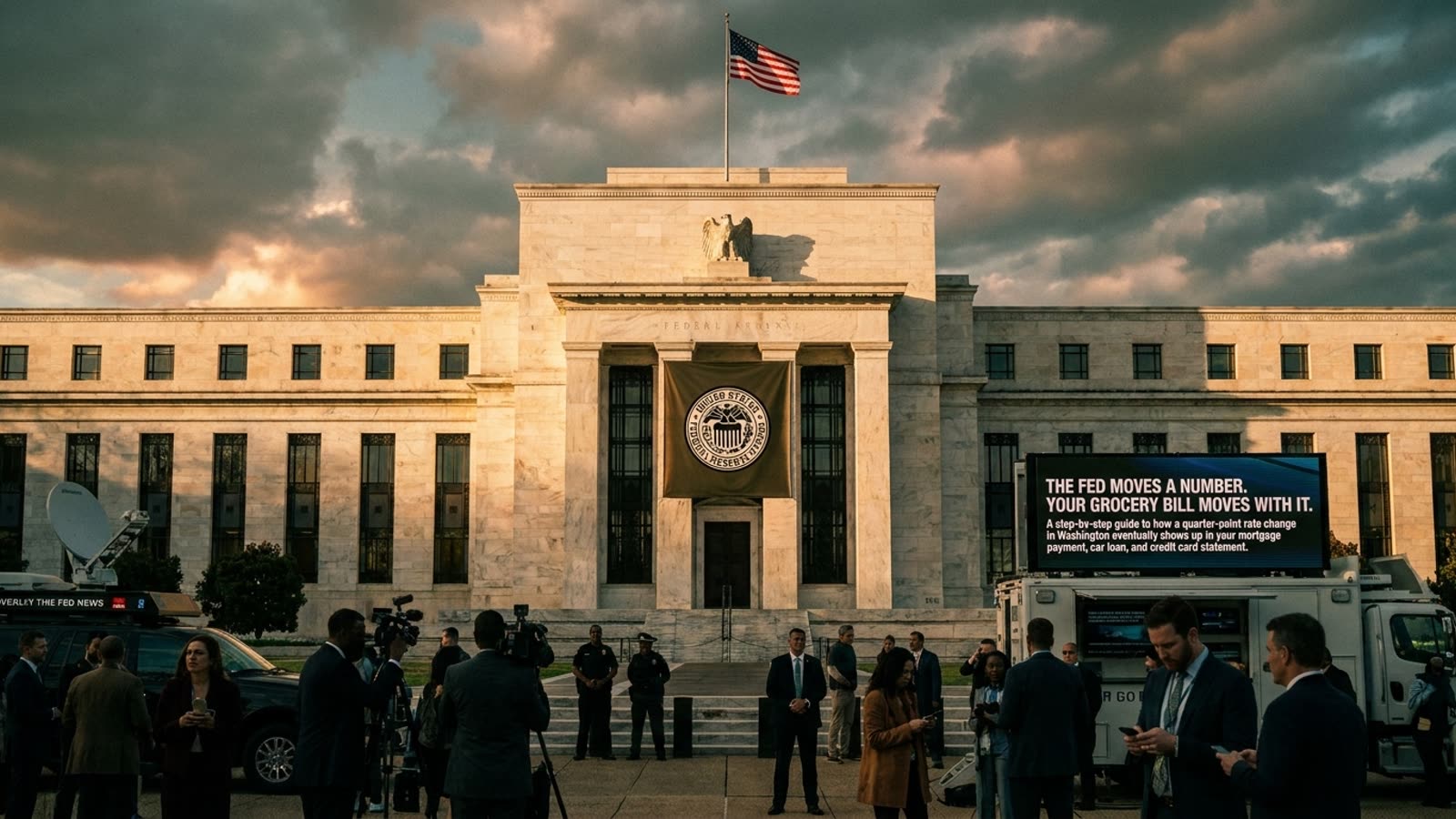
When a central bank announces a rate decision, financial markets react in milliseconds. Your electricity bill, your rent check, and the price of eggs at the supermarket operate on an entirely different clock—one measured in months, sometimes years, and occasionally not at all.
This disconnect is not a bug in the system. It is the system. Monetary policy was never designed to be a precision instrument for household economics. It is a blunt tool aimed at aggregate demand, and the path from a policy rate to a family's monthly outgoings runs through so many intermediaries, contracts, and behavioral quirks that the original signal often arrives unrecognizable.
The transmission maze
Economists call it the "monetary transmission mechanism," which sounds technical because it is. When a central bank raises its policy rate, commercial banks face higher costs for overnight borrowing. In theory, they pass this along: savings accounts offer better returns, mortgages become pricier, business loans cost more. Companies invest less, consumers spend less, demand cools, and inflation eases.
In practice, each link in this chain introduces friction. Banks compete for deposits and may absorb some rate increases rather than lose customers. Mortgages in many countries are fixed for years or decades, insulating homeowners from rate changes until refinancing. Businesses with strong balance sheets ignore rate movements entirely. And consumers—irrational, hopeful, forgetful—often keep spending until something forces them to stop.
The lag between a rate change and its economic effect is typically estimated at twelve to eighteen months, but this figure conceals enormous variation. Some channels work faster: adjustable-rate debt reprices within weeks. Others barely work at all: if you rent from a landlord with a fixed-rate mortgage, their financing costs are irrelevant to your lease negotiation.
Where groceries come from
Food prices illustrate the problem beautifully. The cost of bread depends on wheat futures, diesel prices, labor costs, packaging materials, supermarket rent, and competitive dynamics among retailers. Interest rates touch some of these—a trucking company with floating-rate debt feels higher rates immediately—but not others. Weather in Kansas matters more than the federal funds rate for wheat prices. A labor shortage at a processing plant matters more than the European Central Bank's deposit facility.
This is why inflation can persist in specific categories even as headline numbers fall. Energy and food prices are notoriously volatile and often driven by supply shocks that monetary policy cannot address. A central bank raising rates to fight grocery inflation is like turning down the thermostat to fix a broken window.
The wealth effect, unevenly distributed
There is one channel through which rate changes reach households quickly: asset prices. Higher rates typically depress stock and bond valuations, making wealthy households feel poorer and theoretically spend less. Lower rates do the reverse, inflating portfolios and encouraging consumption.
But this mechanism is profoundly unequal. Households with substantial financial assets experience rate changes viscerally; those living paycheck to paycheck do not. The Fed's decisions matter enormously to someone with a brokerage account and barely at all to someone whose wealth consists of a used car and next week's wages. Monetary policy, in this sense, is a tool that grips the economy unevenly, squeezing some households while others slip through its fingers.
Our take
The honest answer to "when will I feel this rate cut in my budget?" is: maybe never, at least not directly. Monetary policy shapes the broad economic weather—employment levels, credit availability, the general mood of businesses—but the connection to any individual line item in your expenses is tenuous and slow. Central bankers know this, which is why they speak in probabilities and projections rather than promises. The rest of us would do well to remember it when the next rate decision lands. The Fed moves; your grocery bill, indifferent, moves on its own schedule.