Central banks declare victory, economists nod approvingly at charts trending toward two percent, and yet the prevailing mood among consumers remains one of quiet fury. The disconnect is not imaginary, nor is it evidence of mass economic illiteracy. It reflects something more interesting: the architecture of inflation statistics was never designed to capture how price increases actually feel.
The substitution illusion
Most major inflation indices, including the Consumer Price Index used in the United States and similar measures in Europe, rely on a concept called substitution weighting. When steak becomes expensive, the model assumes you buy chicken instead. When brand-name cereal surges, it pencils in the store brand. This is methodologically defensible—economists are trying to measure the cost of maintaining a constant standard of living, not the cost of buying the exact same basket forever. But it creates a quiet sleight of hand. The index tells you that your standard of living costs only three percent more. What it does not tell you is that maintaining your actual life—the steak, the brand you trust, the apartment in the neighborhood you chose—may cost considerably more.
The gap compounds over time. A few years of modest official inflation can obscure a much larger shift in what specific goods and services actually cost. Housing is the starkest example. Shelter calculations in many indices rely on a concept called owners' equivalent rent, an imputed figure estimating what homeowners would pay to rent their own homes. This smooths out the wild swings of actual housing markets, which is useful for monetary policy but alienating for anyone who recently signed a lease or a mortgage.
Frequency bias and the psychology of pain
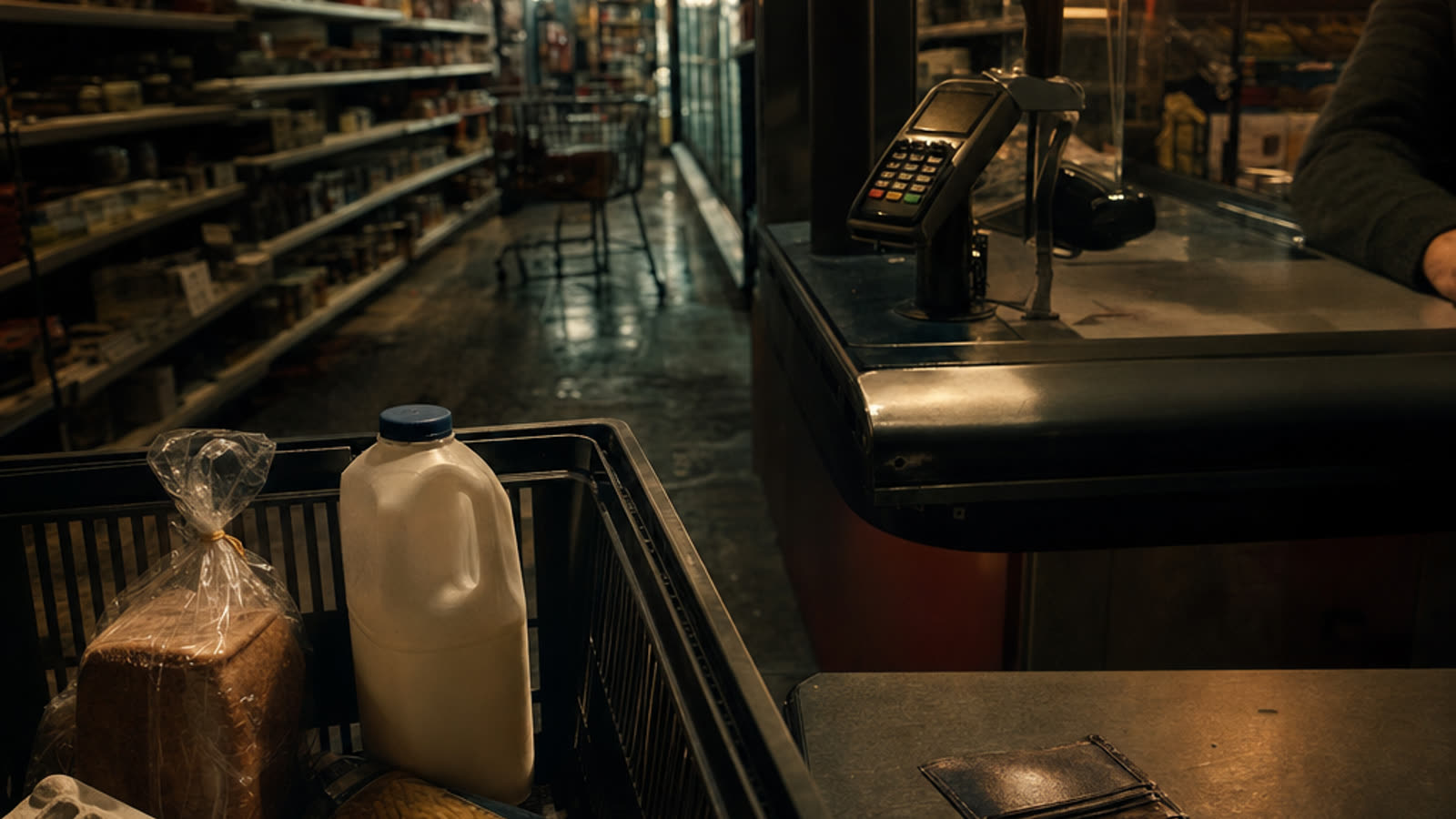
Humans do not experience inflation as an annual average. We experience it at the grocery checkout, the gas pump, the restaurant bill—high-frequency purchases that occupy an outsized share of our attention. Economists call this frequency bias. A ten percent increase in egg prices registers viscerally in a way that a ten percent increase in the cost of a washing machine, purchased once a decade, simply does not. Official statistics weight items by their share of total spending, which is rational. Human memory weights items by how often we confront them, which is also rational, just differently so.
This explains why inflation often feels worse during periods of food and energy volatility, even when core inflation—which strips out those categories—remains subdued. The items excluded from core are precisely the ones we cannot avoid buying every week.
The baseline problem
Inflation measures the rate of change, not the level. When officials announce that inflation has fallen from eight percent to three percent, they are not saying prices have dropped. They are saying prices are still rising, just more slowly. The cumulative effect of several high-inflation years does not reverse when the rate normalizes. A loaf of bread that cost two dollars before a price surge and now costs three dollars will still cost three dollars—or more—after inflation cools. The index is back to normal; your grocery bill is not.
This is not a flaw in the statistics. It is a feature that policymakers understand but rarely explain. Disinflation is not deflation. The price level has permanently shifted upward, and wages may or may not have kept pace.
Our take
The gap between official inflation and felt inflation is not a failure of measurement so much as a failure of communication. Statisticians are answering one question—how much more does it cost to achieve a constant utility?—while consumers are asking another: why does everything feel so expensive? Both questions are valid. The frustration arises when authorities treat the first answer as if it resolves the second. It does not. A more honest public conversation would acknowledge that inflation indices are tools for macroeconomic management, not mirrors of household experience. Until that distinction is made explicit, the numbers will keep saying one thing and the wallet will keep saying another.