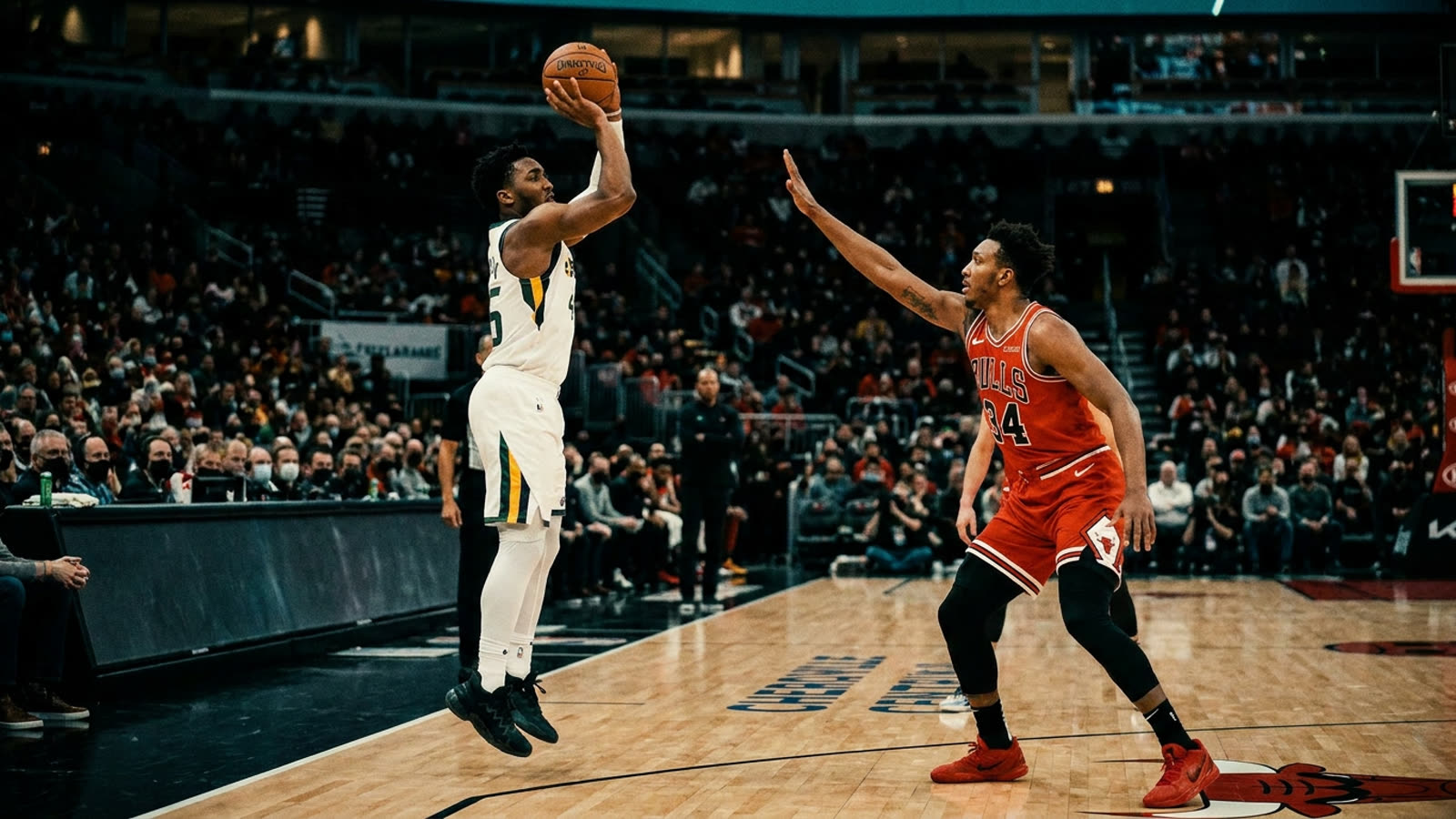
The mid-range jumper—that pull-up from fifteen feet, the elbow fadeaway, the free-throw-line floater—was once the signature of basketball greatness. Michael Jordan built a dynasty on it. Kobe Bryant made it an art form. Tim Duncan's bank shot from the block was so reliable it became boring. Now the shot barely exists at the professional level, sacrificed on the altar of points per possession.
The math is brutally simple. A league-average mid-range shot converts at roughly 40 percent, yielding 0.80 points per attempt. A league-average three-pointer converts at around 36 percent, yielding 1.08 points per attempt. A layup or dunk converts at better than 60 percent. The mid-range, in this calculus, is the worst shot in basketball—a trap for the undisciplined, a relic for the sentimental.
The Houston experiment that changed everything
The Houston Rockets under Daryl Morey became the laboratory for this revolution. By the mid-2010s, Houston had essentially banned the mid-range shot from its offensive vocabulary. The team's shot charts looked like a dumbbell: threes and layups, nothing in between. James Harden, perhaps the most skilled isolation scorer of his generation, was trained to either step back behind the arc or barrel to the rim. The results were impressive—Houston routinely topped the league in offensive efficiency—but the product was polarizing. Purists found it unwatchable. Analysts called it optimal.
Other franchises followed. Within a decade, the mid-range shot went from comprising roughly a third of all field goal attempts to barely a tenth. Young players stopped practicing it. Coaches stopped teaching it. The shot that defined basketball for generations became an anachronism.
What the numbers miss
The efficiency argument is mathematically sound but strategically incomplete. A mid-range game creates advantages that don't appear in shot-selection models. It forces defenses to guard more floor. It punishes switching schemes. It provides a release valve when three-point shooters go cold or the paint gets clogged. The teams that have won recent championships—with rare exceptions—have featured at least one player willing to take and make contested mid-range shots when the postseason tightens.
There's also the matter of watchability. Basketball's aesthetic appeal has always derived from variety: the contrast between power and finesse, the full spectrum of scoring options. A game reduced to threes and dunks is efficient but monotonous, like a restaurant that serves only appetizers and dessert because the margins are better.
Our take
The mid-range jumper will return, not because coaches rediscover romance but because defenses will eventually force the correction. As three-point shooting has proliferated, so has three-point defense—longer, more athletic wings, sophisticated switching schemes, relentless contests at the arc. The mid-range will become valuable again precisely because everyone abandoned it. Some young star will rediscover the pull-up eighteen-footer, dominate a playoff series with it, and suddenly the analytics community will discover that efficiency is contextual. Until then, we're stuck watching the most skilled athletes on earth take the same two shots, over and over, because a spreadsheet told them to.