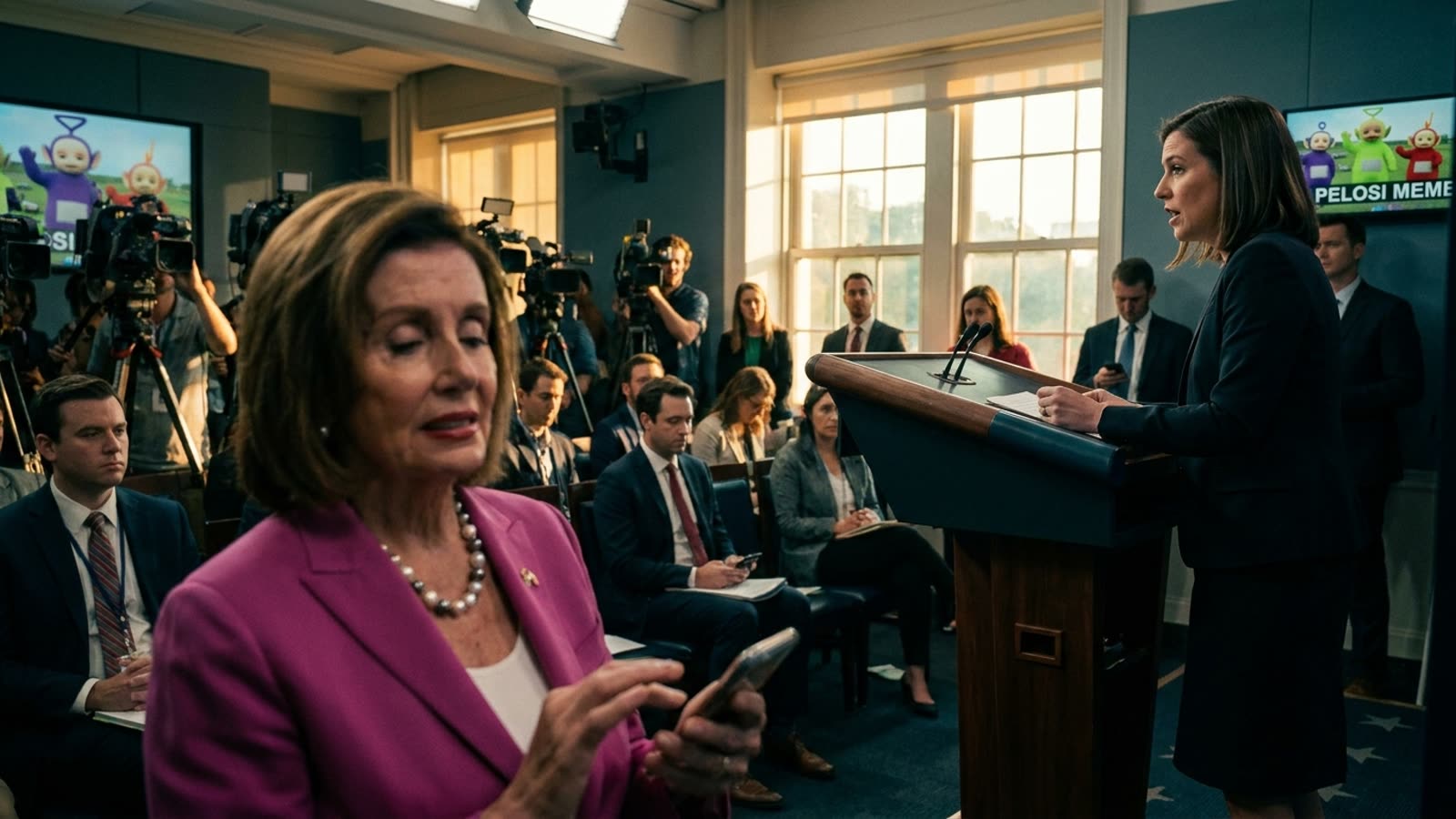
The White House official social media account has posted many things over the years—policy announcements, holiday greetings, the occasional photograph of a president with a dog. What it posted this weekend was a video celebrating "6/7 Day" featuring former House Speaker Nancy Pelosi's face superimposed onto the sun from Teletubbies, the British children's television program best known for its surreal imagery and target audience of toddlers.
The video, which circulated widely before anyone could decide whether to laugh or wince, represents a new frontier in executive branch communications: the deliberately cringey political shitpost, designed less to persuade than to provoke sharing through sheer bewilderment.
The aesthetics of institutional trolling
There is nothing new about political figures being mocked through memes. What distinguishes this moment is the source. The White House—an institution that once employed teams of speechwriters to craft messages of solemn national purpose—has apparently decided that its communications strategy should resemble a Discord server run by teenagers who just discovered Photoshop.
The Pelosi-as-Teletubbies-sun image is not clever satire. It is not even particularly good as an insult. It is, instead, a piece of content engineered to generate screenshots, quote-tweets, and cable news segments asking "can you believe they posted this?" The answer, increasingly, is yes.
Why June 7th?
The "6/7 Day" framing remains somewhat opaque. Unlike 4/20 or Pi Day, June 7th carries no obvious cultural significance that would warrant presidential commemoration. The date appears to have been chosen primarily because it existed on the calendar and someone in the social media office had a Pelosi graphic ready to deploy.
This is governance by content calendar—the logic of influencer marketing applied to the executive branch. The goal is not to communicate policy or even to land a coherent political blow. The goal is engagement, measured in views and shares, regardless of whether those shares come from supporters laughing along or critics sharing in disbelief.
Our take
Every White House eventually discovers that dignity is a depletable resource. The Teletubbies video is not a scandal; it is barely even news in the traditional sense. But it is a data point in the ongoing transformation of American political communication from rhetoric into content. When the most powerful office in the world decides that its voice should sound like a reply guy with a Canva subscription, something has shifted—not dramatically, not catastrophically, but perceptibly. The sun baby is watching, and it has Nancy Pelosi's face, and nobody in the building thought to ask whether this was a good idea.