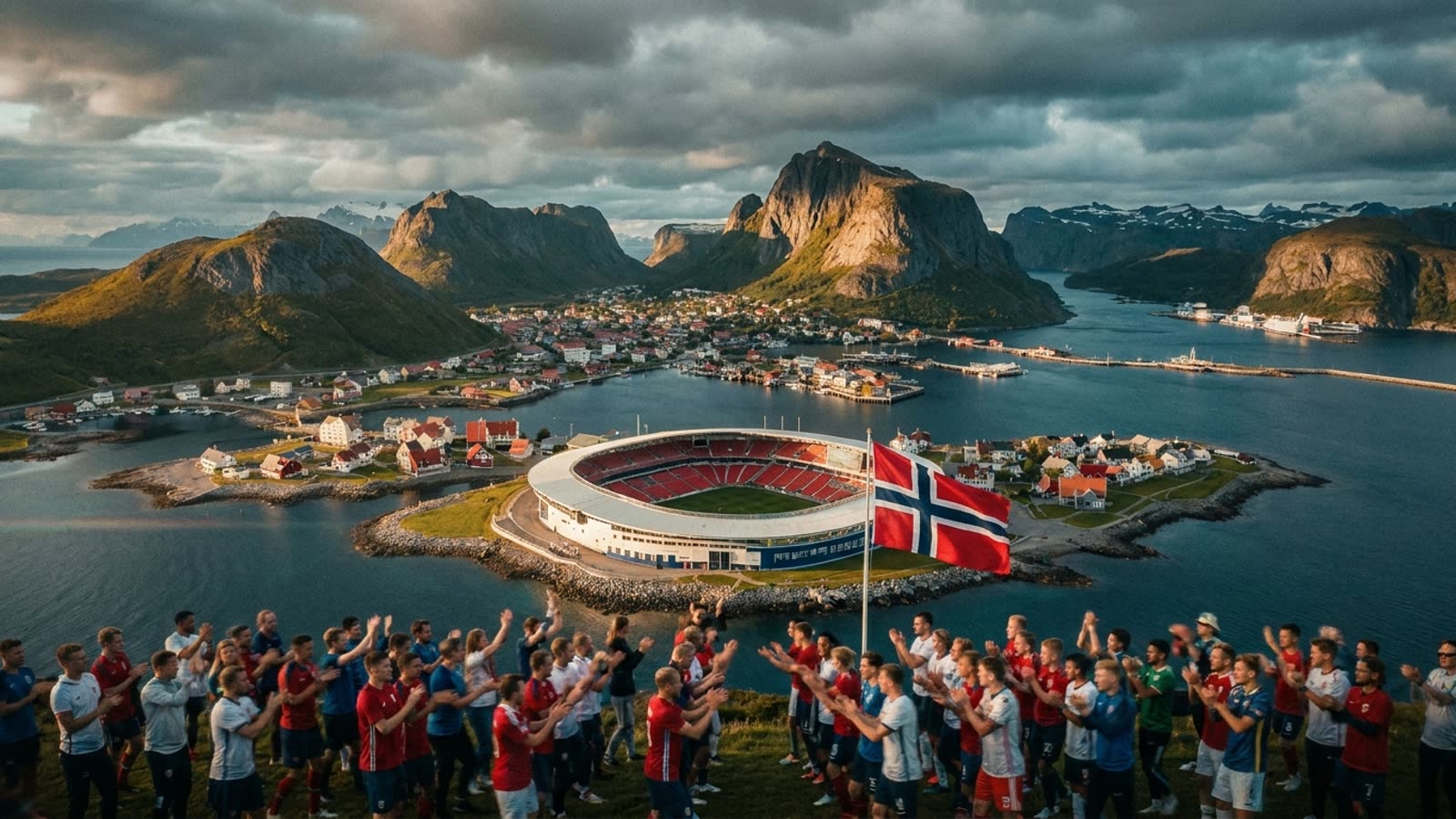
The most memorable image from the 2026 World Cup is not a goal, a save, or a tactical masterpiece. It is twenty-three Norwegian players and staff standing shoulder to shoulder, arms raised, clapping in thunderous unison while sixty thousand spectators mirror them back. The Viking Row—or "Viking Clap" as casual observers call it—has transcended its origins as a niche Scandinavian tradition to become this tournament's inescapable cultural export.
Norway's improbable run to the quarterfinals has given the celebration maximum exposure. After each victory, the squad gathers before their supporters, raises their arms, and begins a slow, rhythmic clap that accelerates into a frenzy. The crowd responds in kind. The effect is hypnotic, tribal, and impossibly photogenic—a ready-made viral clip that has accumulated hundreds of millions of views across platforms.
Borrowed thunder
The ritual is not Norwegian by birth. Iceland's national team popularized it during their shock run at Euro 2016, though Icelandic supporters claim they adopted it from Scottish club Motherwell, who themselves borrowed it from French side Lens. The genealogy is contested and probably irrelevant. What matters is that Norway's 2026 squad has performed it with such conviction—and such success—that they have claimed ownership in the global imagination.
The timing helps. Norway entered this World Cup as unseeded outsiders, ranked outside the top twenty. Their group-stage wins over Mexico and host nation Canada, followed by a Round of 16 demolition of Senegal, have made them the tournament's sentimental favorite. The Viking Row now punctuates each upset, a ritualized exclamation point that opposing fans have begun imitating, sometimes mockingly, sometimes in genuine tribute.
Imitation as flattery
Social media has done what social media does. TikTok is saturated with Viking Row parodies: office workers clapping at departing colleagues, toddlers mimicking the motion, wedding parties deploying it after first dances. The Norwegian tourism board has leaned in heavily, releasing a campaign inviting visitors to "find your own row" in the fjords. Erling Haaland, the squad's talismanic striker, has become the face of the phenomenon despite rarely leading the clap himself—his mere presence in the line is enough.
The celebration's appeal is partly its accessibility. Unlike elaborate choreography or individualistic showboating, the Viking Row requires only arms, rhythm, and collective will. It flatters participants by making them feel part of something ancient and muscular, even if the actual history is a patchwork of borrowed gestures. In an era of atomized fandom, it offers a rare moment of synchronized belonging.
Our take
Every World Cup produces an iconic image that outlasts the final score: Maradona's fist pump in 1986, Brandi Chastain's sports bra in 1999, the Icelandic clap itself a decade ago. Norway's Viking Row is 2026's entry, and its staying power will depend on whether the team's run continues. A semifinal appearance would cement it; a title would canonize it. Either way, the next time you see a stadium full of strangers clapping in unison at a concert, a rally, or a corporate retreat, you will know where the gesture came from—even if the genealogists disagree.